No backyard? No problem. If you’ve been dreaming of a pool but feel your outdoor space is too limited, a compact pool could be the perfect solution you’ve been overlooking.
Homeowners with small backyards, tight courtyards, and urban spaces are increasingly realising that bigger isn’t always better—especially when it comes to pools. A well-designed small pool can deliver everything you need: relaxation, hydrotherapy, a way to cool off on hot days, and a striking visual centrepiece, all without requiring a large footprint.
In this guide, you’ll discover 8 brilliant small pool ideas specifically created for limited spaces. Whether you’re working with a narrow side yard, a cosy courtyard, or even a rooftop terrace, there’s a design here to suit your space, your style, and your budget.
From in-ground fibreglass options to portable above-ground solutions, each idea includes practical design tips, cost insights, and expert advice to help you make the smartest choice for your home.
What Is a Plunge Pool?
If you’ve never heard the term before, you’re not alone. Many homeowners discover plunge pools only after realising a full-sized swimming pool simply won’t fit their outdoor space.
A plunge pool is a small, compact pool typically 2 to 7 metres long, designed for cooling off, hydrotherapy, and relaxation rather than swimming laps. It fits comfortably in tight outdoor spaces where a traditional swimming pool cannot.
Unlike a standard swimming pool that demands a large open yard, a plunge pool works brilliantly in courtyards, narrow backyards, rooftop terraces, and urban gardens. It is designed with one goal in mind: maximum enjoyment in minimum space.
Plunge Pool vs Swimming Pool vs Spa
Many people confuse these three options. Here is a simple breakdown:
| Feature | Plunge Pool | Swimming Pool | Spa |
|---|---|---|---|
| Average Size | 2m x 4m | 8m x 4m | 2m x 2m |
| Primary Use | Cooling, relaxation, hydrotherapy | Lap swimming, recreation | Heated relaxation |
| Space Required | Small | Large | Very Small |
| Average Cost | $15,000 to $35,000 | $40,000 to $100,000+ | $5,000 to $15,000 |
| Installation Time | 1 to 4 weeks | 6 to 12 weeks | 1 to 2 weeks |
A plunge pool sits in the sweet spot between a spa and a full swimming pool. It gives you the refreshing water experience of a pool with the compact footprint closer to a spa, making it the smartest choice for tiny spaces.
Why Plunge Pools Are Perfect for Small Spaces?
There are several reasons why plunge pools have surged in popularity among homeowners with limited outdoor areas:
- They require as little as 2 metres by 3 metres of space to install
- They cost significantly less than full-sized swimming pools
- They use less water, less energy, and fewer chemicals to maintain
- They can be customised to fit unusual or awkwardly shaped outdoor spaces
- They add genuine property value even in compact urban homes
According to pool industry data, the plunge pool market has grown steadily as urban housing blocks continue to shrink in size, with more homeowners choosing smaller, smarter water features over traditional large pools.
Quick Facts About Plunge Pools
- Average length: 2 to 7 metres
- Average width: 1.5 to 3 metres
- Average depth: 1 to 1.5 metres
- Average cost: $15,000 to $50,000, depending on material and design
- Most popular materials: fibreglass, concrete, modular prefab
Now that you know exactly what a plunge pool is and why it works so well in small spaces, let’s look at what you need to consider before choosing yours.
What to Consider Before Choosing a Plunge Pool for a Small Space?
Before you fall in love with a design and start digging, there are a few important factors every homeowner should think through carefully. Taking the time to plan properly will save you money, stress, and costly mistakes down the track.
Available Space and Dimensions
The first question to answer is simple: how much space do you actually have?
A plunge pool can fit into surprisingly tight areas, but you still need to measure your available outdoor space accurately before choosing a design or size. As a general rule:
- The minimum space recommended for a plunge pool is approximately 2 metres wide by 3 metres long
- You should also allow at least 1 metre of clearance around the pool for safety, access, and landscaping
- Consider the shape of your space. Narrow yards suit lap-style plunge pools, while square courtyards suit compact square designs
Always measure twice and consult a professional pool builder before committing to any design.
Budget Planning
Your budget will heavily influence the type of plunge pool you can install. Costs vary widely depending on the material, size, features, and complexity of installation. Here is a general guide:
| Pool Type | Budget Range |
|---|---|
| Portable Above-Ground Plunge Pool | $2,000 to $10,000 |
| Fibreglass Plunge Pool | $15,000 to $30,000 |
| Spa-Pool Hybrid | $20,000 to $45,000 |
| Concrete Plunge Pool | $25,000 to $50,000 |
Remember to factor in additional costs such as fencing, lighting, landscaping, heating systems, and ongoing maintenance when setting your total budget.
Council Permits and Regulations
In most regions, installing a plunge pool requires council approval and compliance with local safety regulations. Requirements typically include:
- Compliant pool fencing with a self-closing, self-latching gate
- A minimum fence height, usually 1.2 metres or higher, depending on your local council
- Approval of drainage and water management plans
- A certificate of compliance upon completion
Always check with your local council before beginning any plunge pool installation. Skipping this step can result in heavy fines and forced removal of the pool.
Plunge Pool Material Options
Choosing the right material is one of the most important decisions you will make. Each option comes with its own set of advantages and trade-offs:
- Fibreglass Plunge Pool: Pre-made shell that is quick to install, low maintenance, smooth finish, and durable. Best for most small spaces and budgets
- Concrete Plunge Pool: Fully customisable in shape and size, extremely durable, but more expensive and takes longer to install
- Modular or Prefab Plunge Pool: Affordable, fast to install, and ideal for renters or those who want a portable solution with minimal construction work
Sunlight, Privacy, and Positioning
Many homeowners overlook positioning when planning their plunge pool. Consider the following before finalising your location:
- Choose a spot that receives good sunlight to naturally warm the water
- Think about privacy from neighbours, especially in urban or semi-detached homes
- Avoid positioning the pool directly under large trees, as falling leaves and roots can cause ongoing maintenance problems
- Check for underground utilities such as gas lines, electrical cables, and stormwater pipes before excavation begins
With these key considerations ticked off, you are now ready to explore the 8 brilliant plunge pool ideas that could completely transform your tiny outdoor space.
Idea 1: The Courtyard Plunge Pool
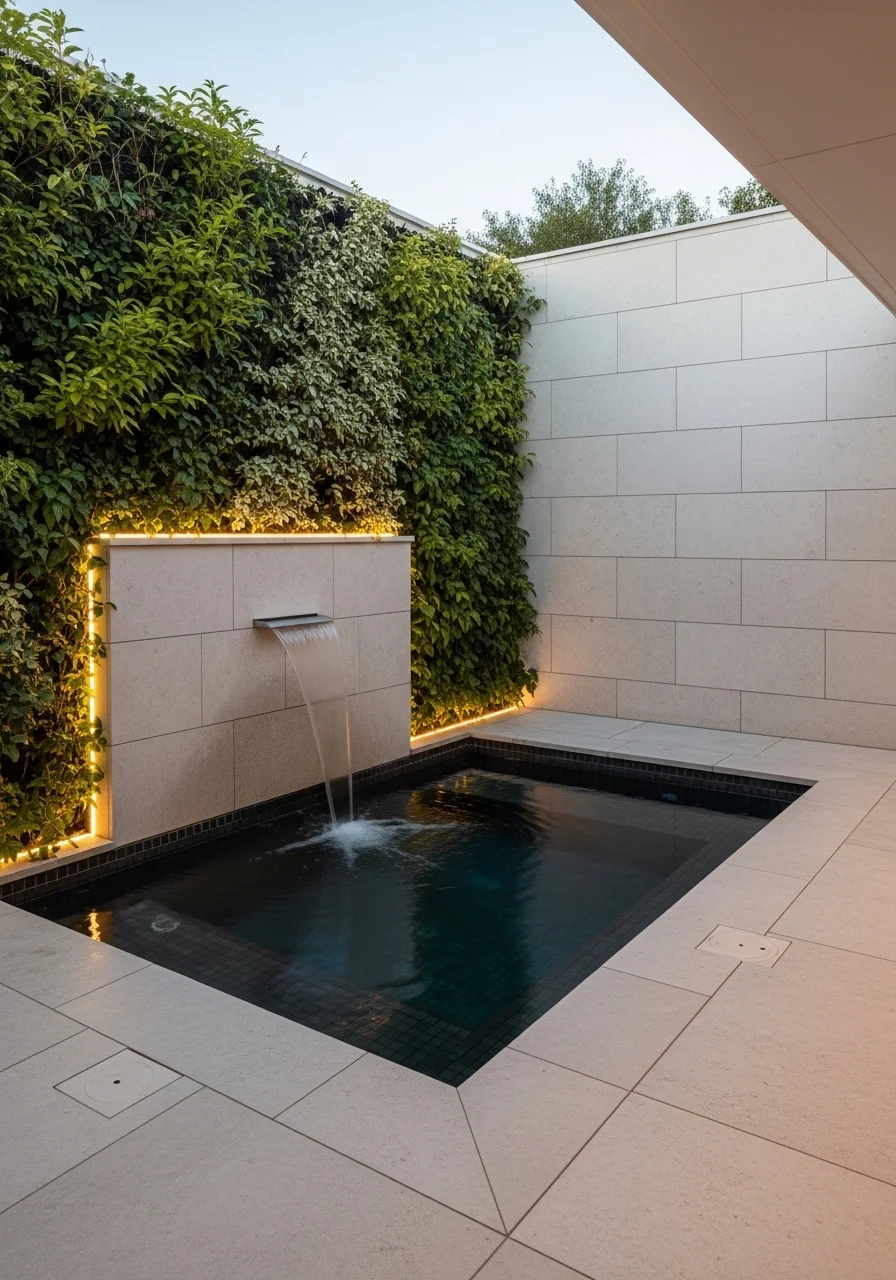
If you have an enclosed courtyard at the back or side of your home that is underutilised, you are sitting on a golden opportunity. A courtyard plunge pool is one of the most popular and visually stunning small space solutions available to homeowners today.
Courtyards are naturally enclosed, which means they already offer privacy, wind protection, and a defined boundary to work within. This makes designing and installing a plunge pool in this type of space much more straightforward than in an open backyard.
What Makes It Work
The key to a successful courtyard plunge pool is working with the existing shape and style of the space rather than fighting against it. A rectangular or square plunge pool fits most standard courtyard layouts beautifully and leaves enough space around it for seating, potted plants, and outdoor entertaining areas.
For the best results, consider these design tips:
- Use large-format stone or porcelain tiles around the pool edge to create a clean, seamless look
- Add a simple water feature, such as a wall-mounted spout, to bring movement and sound to the space
- Use vertical gardens or tall potted plants along the walls to soften the hard surfaces and add greenery without taking up floor space
- Choose light coloured pool interiors to reflect light and make the courtyard feel more open and airy
Best Material for a Courtyard Plunge Pool
Fibreglass and concrete are both excellent choices for a courtyard plunge pool. Fibreglass shells are quicker to install and easier to maintain, making them the preferred choice for most homeowners. Concrete is the better option if your courtyard has an unusual shape that requires a fully custom design.
Estimated Cost
A courtyard plunge pool typically costs between $18,000 and $35,000, depending on size, material, and the complexity of surrounding landscaping and finishes.
Idea 2: The Rooftop Plunge Pool
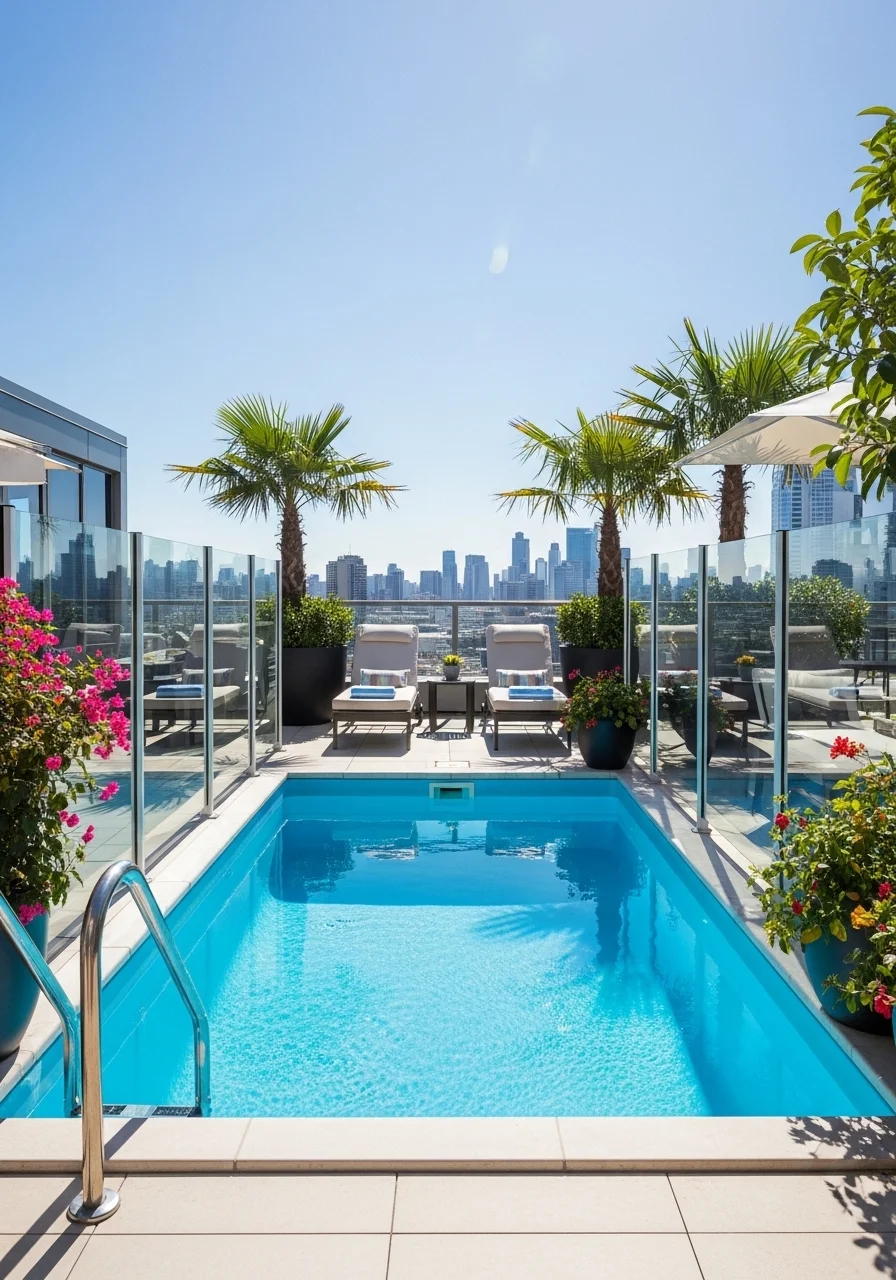
Living in an apartment or a multi-storey home does not mean you have to give up on your dream of owning a pool. A rooftop setup is one of the most exciting and innovative solutions for small spaces, especially for urban homeowners and apartment dwellers looking to make the most of every square metre.
These elevated designs are becoming increasingly popular in densely populated cities where ground-level outdoor space is limited or nonexistent. With the right approach, a rooftop terrace or balcony can be transformed into a private oasis, turning an underused area into one of the most impressive features of your home.
What Makes It Work
A rooftop plunge pool works best when it is carefully planned from a structural and engineering standpoint before any design decisions are made. Unlike ground-level installations, rooftop pools require additional consideration of the following:
- Structural load capacity of the roof or terrace must be assessed by a licensed structural engineer before installation begins
- Waterproofing of the rooftop surface is essential to prevent leaks and water damage to the floors below
- Wind exposure is typically greater at height, so consider installing glass or privacy screens around the pool area for comfort and safety
- Plumbing and drainage must be carefully planned to ensure efficient water management without overloading existing building systems
For rooftop installations, fibreglass and modular prefab plunge pools are the most practical choices because they are lighter in weight and faster to install compared to concrete options.
Best Material for a Rooftop Plunge Pool
Modular prefab and fibreglass plunge pools are the clear winners for rooftop installations. Their lighter weight puts less stress on the building structure, and their faster installation time minimises disruption to other residents or household members during the build process.
Estimated Cost
A rooftop plunge pool typically costs between $20,000 and $45,000. This cost is higher than a standard ground-level installation due to the additional structural engineering assessments, waterproofing requirements, and the complexity of transporting and installing the pool shell at height.
Idea 3: The Sunken Plunge Pool
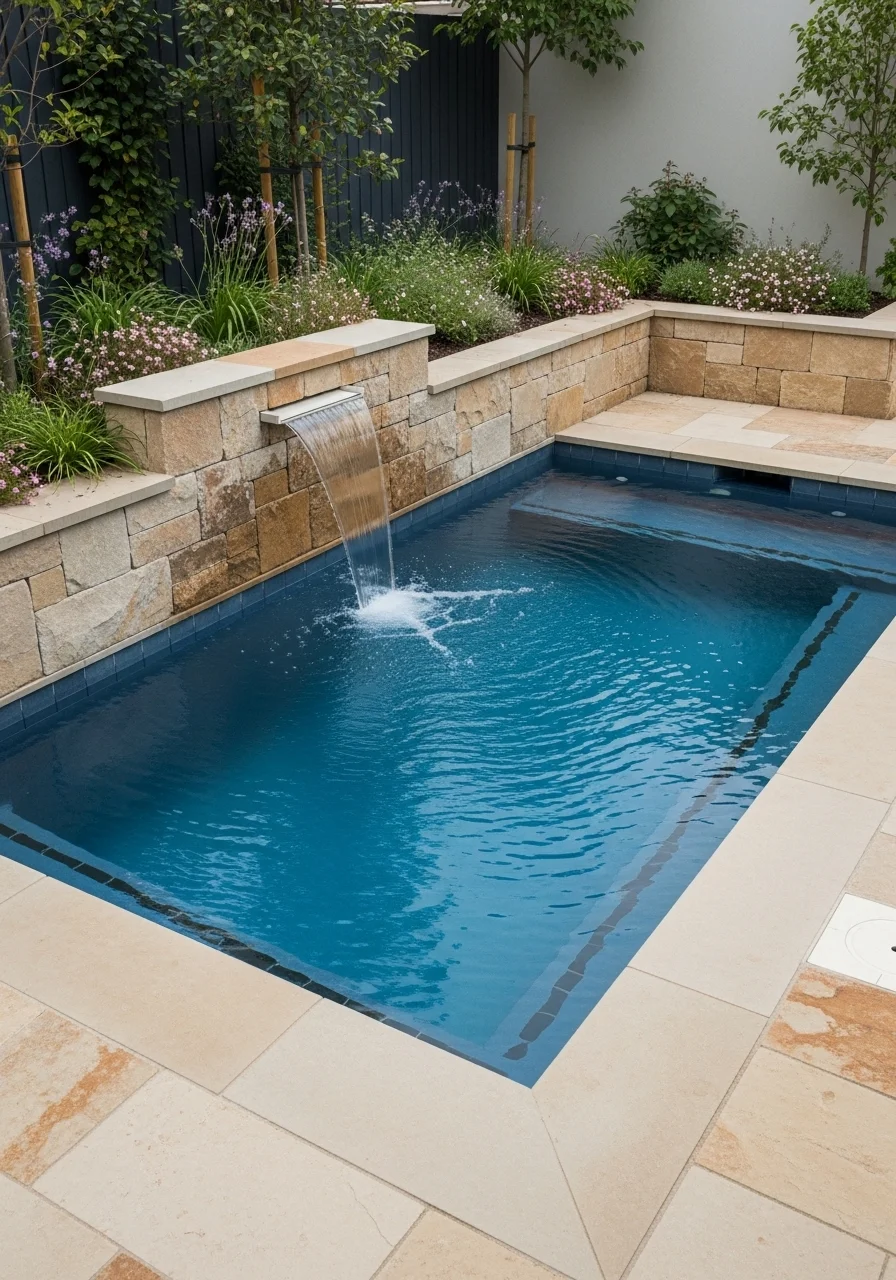
If you want a pool that looks like it was always meant to be part of your space, a sunken design is the perfect choice. Built below ground level, this style blends seamlessly into the surrounding landscape, creating a natural and polished look that feels like a high-end resort feature in your own backyard.
Sunken designs are especially well-suited to small outdoor areas where you want the feature to complement the space rather than dominate it. Because it sits below ground, it takes up less visual space and helps the surrounding area feel more open, balanced, and connected.
What Makes It Work
The success of a sunken plunge pool comes down to thoughtful integration with the surrounding landscape. Consider these design tips:
- Surround the pool with natural stone paving or timber decking that sits flush with the pool edge for a seamless finish
- Use low-growing plants and garden beds around the perimeter to soften the edges naturally
- Add a feature wall with a built-in water spout to enhance the overall design without taking up extra floor space
- Choose a darker pool interior finish to give the water a deep, natural appearance
Best Material for a Sunken Plunge Pool
Concrete and fibreglass are both strong choices. Concrete offers full customisation, while fibreglass inground shells are faster to install and more budget-friendly.
Estimated Cost
A sunken plunge pool typically costs between $22,000 and $45,000 due to excavation and landscaping requirements.
Idea 4: The Natural Plunge Pool

For homeowners who love the idea of swimming in clean, chemical-free water, a natural pool is a brilliant and eco-friendly alternative to a traditional design. Instead of relying on chlorine and harsh chemicals, this type of setup uses aquatic plants and biological filtration systems to keep the water clean and clear.
These eco-friendly pools are becoming increasingly popular among environmentally conscious homeowners who want a beautiful water feature that works in harmony with nature rather than against it.
What Makes It Work
The design of a natural plunge pool divides the pool into two zones: a swimming zone and a planted regeneration zone. The plants in the regeneration zone naturally filter the water, removing impurities without the need for chemicals. Key design tips include:
- Choose aquatic plants such as reeds, water lilies, and rushes for effective natural filtration
- Use natural stone or pebble finishes on the pool interior for an organic, earthy appearance
- Keep the swimming zone shaded where possible to reduce algae growth naturally
- Incorporate rocks and boulders around the edges for a beautiful, natural aesthetic
Best Material for a Natural Plunge Pool
Concrete with a natural stone or pebble finish is the most popular and effective material choice for a natural plunge pool.
Estimated Cost
A natural plunge pool typically costs between $20,000 and $40,000, depending on size and planting complexity.
Idea 5: The Lap-Style Narrow Plunge Pool

If your outdoor space is long and narrow, there’s no need to see it as a limitation. A lap-style narrow pool can transform that awkward strip into one of the most functional and visually striking features of your home.
Popular with fitness enthusiasts and homeowners with side passages or slim backyards, this style is designed to maximise length while keeping the width compact. It can also double as a cold plunge setup for post-workout recovery and hydrotherapy benefits.
What Makes It Work
The narrow format of this plunge pool style works best when the design keeps things clean, minimal, and streamlined. Key tips include:
- Keep the width between 1.5 and 2 metres to maintain a sleek, uncluttered appearance
- Use the same material and colour for the pool surrounds and coping to visually elongate the space
- Add a swim jet system at one end to allow resistance swimming without needing extra length
- Choose a light coloured interior finish to brighten the narrow space and reflect natural light
Best Material for a Narrow Plunge Pool
Fibreglass is the ideal choice as standard narrow shell sizes are readily available, keeping costs lower and installation faster.
Estimated Cost
A lap-style narrow plunge pool typically costs between $15,000 and $28,000, depending on length and added features like swim jets.
Idea 6: The Deck-Integrated Plunge Pool

If you want your pool to feel like a natural extension of your home rather than a separate feature placed in the backyard, a deck-integrated design is a smart choice. This approach blends the pool seamlessly into a surrounding timber or composite deck, creating a unified outdoor living space that feels intentional, polished, and highly inviting.
Deck-integrated designs are especially popular with homeowners who love to entertain, as the surrounding deck provides plenty of room for outdoor furniture, dining areas, and social gatherings right beside the water.
What Makes It Work
The key to a successful deck-integrated plunge pool is ensuring the deck and pool materials complement each other visually. Key design tips include:
- Choose hardwood or high-quality composite decking that sits flush with the pool coping for a seamless finish
- Use the same tonal colour palette across the deck, pool interior, and surrounding landscape
- Keep the deck uncluttered with minimal furniture to maintain an open, spacious feel
- Add built-in bench seating along the deck edge to maximise functionality without crowding the space
Best Material for a Deck-Integrated Plunge Pool
Fibreglass plunge pools pair beautifully with timber or composite decking due to their smooth finish and wide range of available colours and shapes.
Estimated Cost
A deck-integrated plunge pool typically costs between $20,000 and $40,000, including decking construction and pool installation.
Idea 7: The Spa-Pool Hybrid Plunge Pool
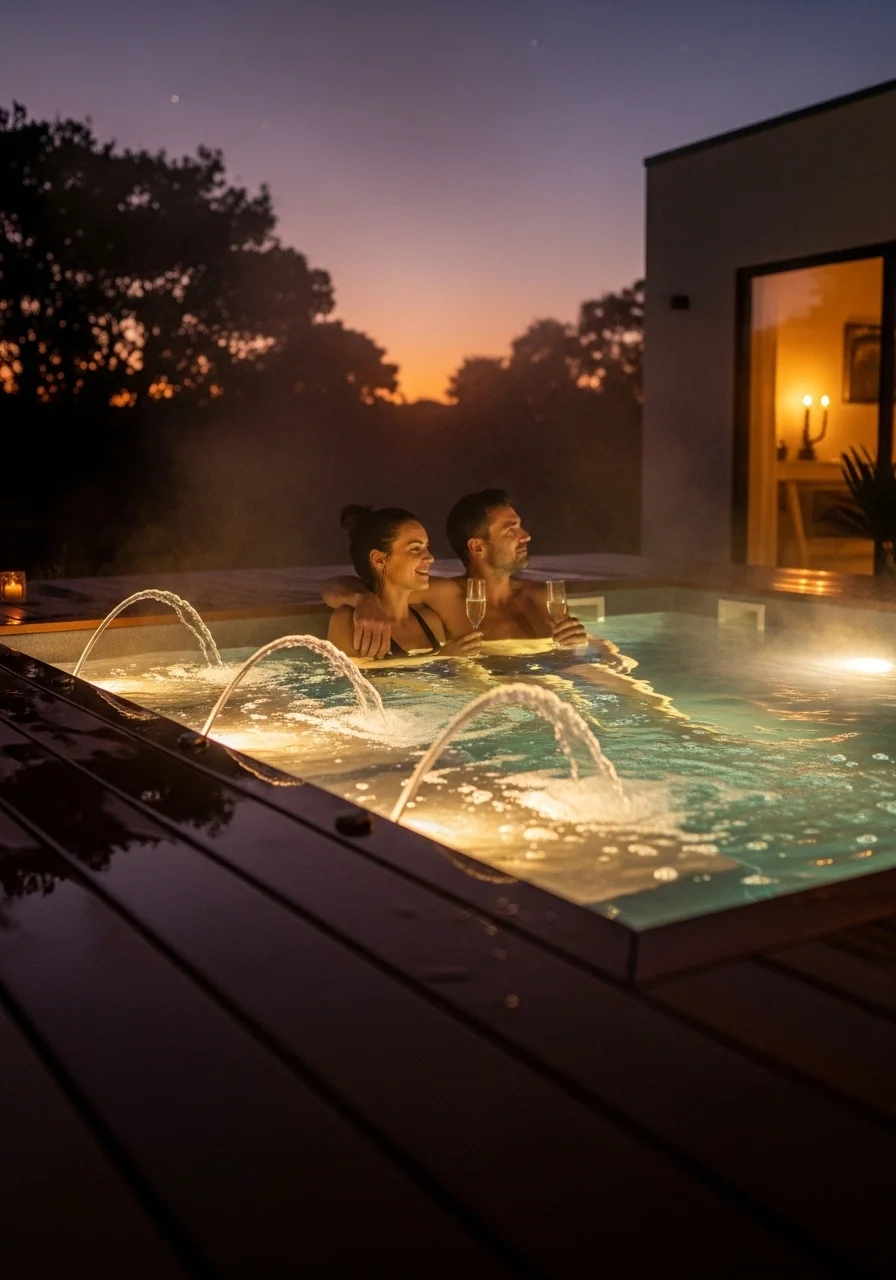
Why choose between a compact pool and a spa when you can enjoy both in one space-efficient design? A spa-pool hybrid combines the cooling depth of a small pool with the soothing warmth and massage jets of a spa, offering a complete year-round wellness experience in a much smaller footprint.
This dual-purpose option is perfect for homeowners who want to get maximum functionality from a limited outdoor area, without the expense or space requirements of installing two separate water features.
What Makes It Work
A spa-pool hybrid plunge pool works best when the heating and jet systems are carefully integrated into the pool design from the very beginning. Key design tips include:
- Position the jets strategically along the seating ledges inside the pool for targeted hydrotherapy benefits
- Install an energy-efficient heating system to keep running costs manageable year-round
- Use a high-quality insulated pool cover to retain heat overnight and reduce energy consumption
- Choose a deeper pool depth of at least 1.2 metres to maximise the spa-like experience
Best Material for a Spa-Pool Hybrid
Fibreglass is the most practical material choice, as many manufacturers offer pre-designed hybrid plunge pool shells with integrated jet and heating systems already built in.
Estimated Cost
A spa-pool hybrid plunge pool typically costs between $20,000 and $45,000, depending on the heating system, number of jets, and shell size.
Idea 8: The Portable Above-Ground Plunge Pool
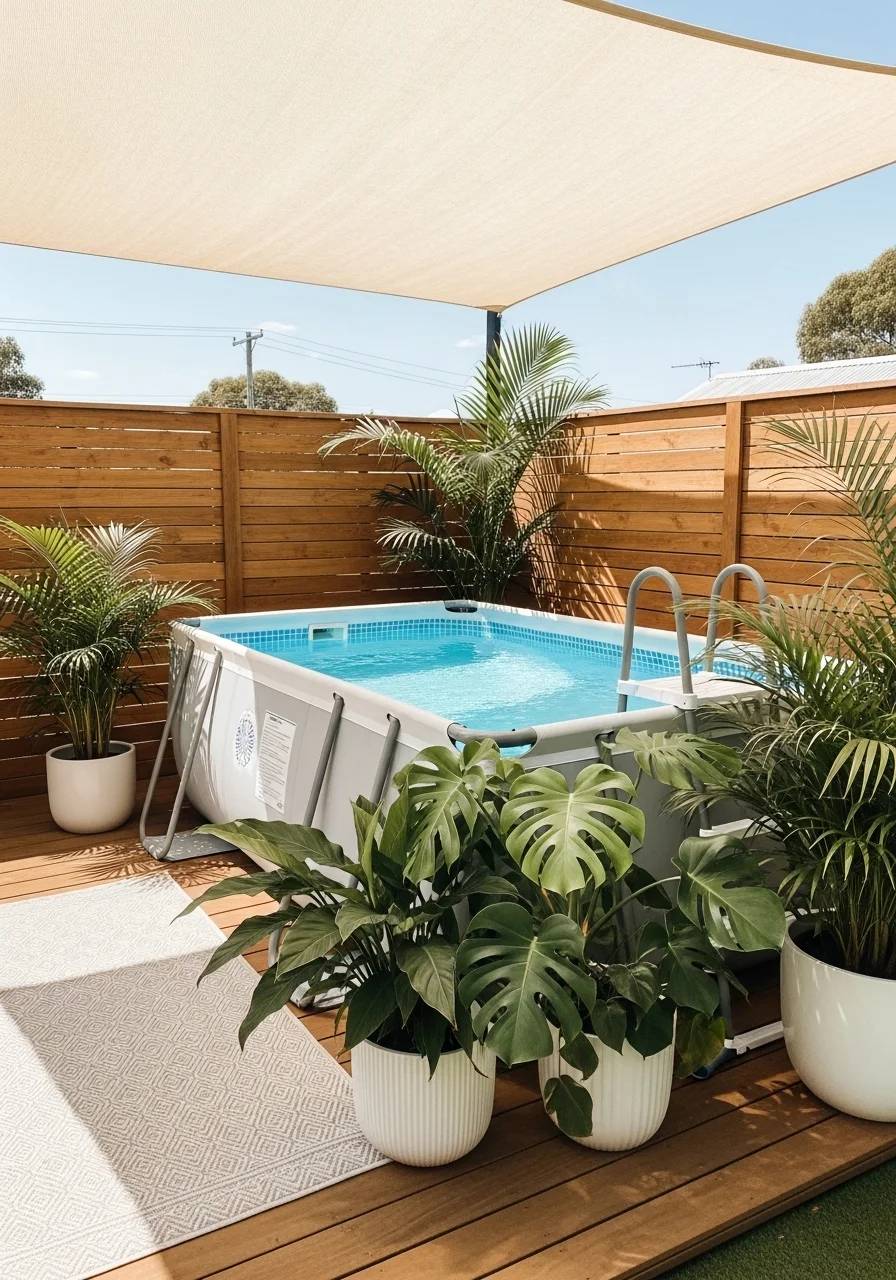
Not every homeowner is ready to commit to a permanent in-ground installation, and that is completely fine. A portable above-ground option offers all the refreshment and relaxation benefits of a traditional compact pool without the need for excavation, council permits, or a large upfront investment.
This makes it one of the most accessible and budget-friendly choices available, particularly for renters, apartment dwellers with balconies, or homeowners who simply want to try a temporary setup before committing to a permanent installation.
What Makes It Work
A portable above-ground plunge pool works best when it is positioned thoughtfully and styled to look intentional rather than temporary. Key design tips include:
- Place the pool on a level, stable surface such as an existing deck, patio, or compacted gravel area
- Surround the pool with potted plants, outdoor rugs, and timber screens to create a private and polished look
- Choose a unit with a built-in filtration system to keep maintenance simple and water quality high
- Add a portable shade sail above the pool to improve comfort during hot, sunny days
Best Material for an Above-Ground Plunge Pool
Steel-framed pools with reinforced liner walls are the most durable and visually appealing above-ground plunge pool option currently available on the market.
Estimated Cost
A portable above-ground plunge pool typically costs between $2,000 and $10,000, making it by far the most affordable plunge pool option on this list.
Plunge Pool Design Tips to Maximise a Tiny Space
Having a small outdoor space does not mean your plunge pool has to feel cramped or underwhelming. With the right design choices, even the most compact plunge pool installation can feel open, luxurious, and far larger than its actual dimensions suggest.
These proven design tips will help you get the most out of your small space and make your plunge pool the standout feature of your home.
Use Light Coloured Tiles and Finishes
Light colours reflect sunlight and create the illusion of more space. Choose white, cream, or pale blue pool interiors and surround your plunge pool with light coloured paving or decking to visually expand the area and keep the space feeling bright and open.
Choose Minimalist Landscaping
Overcrowding a small space with too many plants, pots, and decorative elements will make your plunge pool area feel cluttered and tight. Instead, choose a small number of carefully selected plants and keep the surrounding landscape clean, simple, and intentional.
Install Mood Lighting Around the Pool
Lighting is one of the most powerful and affordable design tools available. Strategic placement of ground-level lights, underwater LED strips, and wall-mounted fixtures around your plunge pool creates depth, atmosphere, and the impression of a much larger space after dark.
Use Vertical Gardens to Frame the Pool
When floor space is limited, go vertical. A lush vertical garden installed along a fence or wall beside your plunge pool adds greenery, privacy, and visual height to the space without consuming any of your precious ground area.
Add Mirrors or Reflective Surfaces Nearby
Outdoor-rated mirrors or reflective metal panels placed strategically near your plunge pool can visually double the perceived size of the space. This trick works particularly well in enclosed courtyards and narrow backyard settings where space feels most restricted.
Keep Pool Shapes Simple
In a small space, simple rectangular or square plunge pool shapes almost always outperform complex curved designs. Clean geometric shapes are easier to tile, easier to surround with decking, and create a stronger visual flow that makes the overall space feel more organised and spacious.
Plunge Pool Costs for Small Spaces
One of the first questions every homeowner asks when considering a plunge pool is simple: How much is this going to cost me? The honest answer is that plunge pool costs vary widely depending on the type, size, material, and complexity of your installation.
The good news is that compared to a full-sized swimming pool, a plunge pool is a significantly more affordable way to bring the joy of water into your outdoor space. Here is a comprehensive 2025 cost breakdown to help you plan your budget with confidence.
Cost Breakdown
| Pool Type | Average Cost |
|---|---|
| Portable Above-Ground Plunge Pool | $2,000 to $10,000 |
| Fibreglass Plunge Pool | $15,000 to $30,000 |
| Lap-Style Narrow Plunge Pool | $15,000 to $28,000 |
| Spa-Pool Hybrid Plunge Pool | $20,000 to $45,000 |
| Deck-Integrated Plunge Pool | $20,000 to $40,000 |
| Natural Plunge Pool | $20,000 to $40,000 |
| Sunken Plunge Pool | $22,000 to $45,000 |
| Concrete Plunge Pool | $25,000 to $50,000 |
Additional Costs to Factor Into Your Budget
The figures above cover the plunge pool shell and basic installation only. Most homeowners will also need to budget for the following additional expenses:
- Pool fencing and gate: $1,500 to $5,000
- Landscaping and paving: $3,000 to $15,000
- Heating system: $1,000 to $5,000
- LED lighting: $500 to $2,000
- Ongoing maintenance per year: $1,000 to $3,000
What Factors Affect Plunge Pool Cost?
Several key factors will influence the final price of your plunge pool installation:
- Size and depth of the pool
- Material chosen: fibreglass, concrete, or modular prefab
- Complexity of the surrounding landscaping and finishes
- Site accessibility and ground conditions
- Local labour rates and council permit fees
Is a Plunge Pool Worth the Investment?
Absolutely. A well-designed and professionally installed plunge pool adds genuine value to your property, improves your lifestyle, and transforms an underutilised outdoor space into a functional and beautiful feature. For homeowners with small backyards, it is one of the smartest investments available.
FAQ
What is the purpose of a plunge pool?
A compact pool is designed for cooling off, relaxation, and hydrotherapy rather than lap swimming. It offers many of the same benefits as a full-sized pool in a space-saving design that works perfectly in smaller outdoor areas.
What is the average cost of a plunge pool?
The average cost of a small pool ranges from $15,000 to $50,000, depending on the material, size, and installation complexity. Portable above-ground options can start from as little as $2,000, making them suitable for budget-conscious homeowners.
What is a plunge pool in a hotel?
In a hotel setting, this type of pool refers to a small, private water feature attached to a suite or villa, created for exclusive guest use and relaxation. It is commonly used for cooling off, hydrotherapy, and enjoying a more private luxury experience.
What is the difference between a plunge pool and a dipping pool?
Both terms describe the same concept—a small, compact pool intended for relaxation and cooling rather than swimming. “Dipping pool” is simply a regional or informal variation of the more commonly used term.
What are the disadvantages of a plunge pool?
The main drawbacks include limited space for swimming laps, a higher cost per square metre compared to larger pools, and ongoing maintenance requirements. It may also not be ideal for families looking for a pool mainly for active play and recreation.
Do plunge pools need a pump?
Yes, these small pools require a pump to circulate and filter the water, ensuring it remains clean and safe. Most systems use compact, energy-efficient equipment designed specifically for lower water volumes.
Conclusion
As you have seen throughout this guide, having a small outdoor space is no longer a barrier to enjoying comfort, relaxation, and the lifestyle benefits of a compact backyard water feature. From a stylish courtyard design to a budget-friendly portable above-ground option, there is a smart solution available for every space, every style, and every budget.
Each of these designs has been proven to work beautifully in small and compact outdoor areas, delivering real value, genuine enjoyment, and a striking visual centrepiece that enhances your home both inside and out.
The best option for your limited space is ultimately the one that matches your available area, suits your lifestyle needs, and fits comfortably within your budget. If you are still unsure which choice is right for you, it is always a good idea to consult a licensed pool builder who can assess your space and provide tailored advice before you commit to any design or installation.
Your ideal backyard retreat is closer than you think. Take the first step today and start transforming that small outdoor space into a relaxing escape you have always wanted.

Shahid Nawaz is a home and garden content writer at Garden Skillz with over 4 years of experience researching and writing about gardening, plant care, and DIY home improvement. He specializes in turning complex horticultural topics into practical, easy-to-follow guides for beginners and experienced growers alike. Shahid has written extensively on flowering plants, indoor greenery, and seasonal garden care.