Are you tired of squash vines taking over your entire garden? Limited space should never stop you from growing an abundant harvest. The brilliant solution is simple. Grow squash vertically and take back control of your garden space.
Yes, squash can grow vertically on a trellis or fence. Training squash vines upward saves space, improves air circulation, and increases fruit yield. Thousands of home gardeners have already discovered this and never looked back.
Growing squash vertically transforms how you use your garden. Instead of letting vines sprawl across the ground, you train them upward on trellises, fences, and arches. The result is more space, healthier plants, and a bigger harvest from the same small plot.
Vertical gardening techniques have helped home gardeners maximize their growing space without sacrificing yield. Whether you have a tiny backyard, a raised bed, or a balcony garden, squash vine training on a vertical structure is one of the smartest moves you can make this growing season.
In this guide, you will discover 7 brilliant ways to grow squash vertically fast, including the best structures, expert tips, and mistakes to avoid.
Why Every Gardener Should Grow Squash Vertically?
Before jumping into the 7 brilliant ways, it is important to understand why so many gardeners are making the switch. When you grow squash vertically, you are not just saving space. You are completely transforming your garden into a more productive, healthier, and easier-to-manage growing environment.
Here are the key benefits that make vertical squash gardening a brilliant choice for every home gardener.
Saves Valuable Garden Space: A space-saving vegetable garden starts with growing up, not out. Vertical squash growing frees up ground space for other crops, making it perfect for small yards and raised-bed squash setups.
Improves Air Circulation: When squash vines grow vertically, air moves freely around the leaves and stems. This reduces fungal diseases like powdery mildew and keeps your squash plant care routine much simpler.
Makes Harvesting Easier: Fruits hang openly on the trellis and are easy to spot and pick. No more digging through ground-level vines searching for hidden squash.
Reduces Pest Problems: Lifting vines off the ground means fewer slugs, beetles, and soil-borne pests attacking your plants.
Produces Healthier and Straighter Fruit: Squash that hangs freely develops a better shape and smoother skin compared to fruit resting on damp soil.
Works in Any Garden Size: From raised bed squash setups to balcony containers, vertical gardening techniques work beautifully in any space.
Way 1: Build a Strong A-Frame Trellis to Grow Squash Vertically

The A-frame trellis is one of the most popular and reliable structures for growing squash vertically. It is sturdy, easy to build, and provides excellent support for heavy vines and fruit. If you are starting with vertical squash gardening, this is the best place to begin.
An A-frame trellis is exactly what it sounds like. Two panels of wire mesh or wooden frames are leaned together at the top and secured to form an A shape. Squash vines are then trained to climb up both sides, creating a productive and space-saving vegetable garden structure that is as functional as it is impressive.
Why the A-Frame Trellis Works So Well?
The wide base of the A-frame trellis gives it exceptional stability. Unlike a single flat trellis, the A-frame stands firm even when loaded with heavy squash vines and fruit. This makes it one of the best squash support structures available to home gardeners.
How to Build an A-Frame Trellis Step by Step
If you prefer a natural look, check out these DIY wood trellis ideas for small yards before you start building.
Step 1: Choose your materials. Wood, PVC pipes, or metal conduit all work well. For a durable build, use pressure-treated wood or galvanized metal.
Step 2: Build two rectangular frames measuring at least 5 feet tall and 4 feet wide. Attach wire mesh or cattle panel to each frame for the climbing surface.
Step 3: Stand both frames upright and lean them together at the top. Secure the peak with strong wire, bolts, or heavy-duty zip ties.
Step 4: Anchor the base of each frame into the soil using garden stakes or rebar to prevent tipping.
Step 5: Plant your squash seeds or seedlings at the base of each side, spacing them at least 18 to 24 inches apart.
Training Squash Vines on the A-Frame Trellis
Once your squash plants begin to grow, gently guide the vines toward the trellis. Use soft garden tape or strips of fabric to loosely tie the vines to the wire mesh. Never tie too tightly, as this can damage the squash vine training process and restrict growth.
Supporting Heavy Fruit on the A-Frame
As the squash fruit develops and grows heavier, it will need additional support. Create simple slings using old pantyhose, mesh bags, or strips of soft fabric. Tie each sling securely to the trellis frame to cradle the fruit and protect the vine from the strain of the squash weight support.
An A-frame trellis built correctly will last for multiple growing seasons and become one of the most valuable structures in your vertical squash garden.
Way 2: Use Your Existing Garden Fence to Grow Squash Vertically
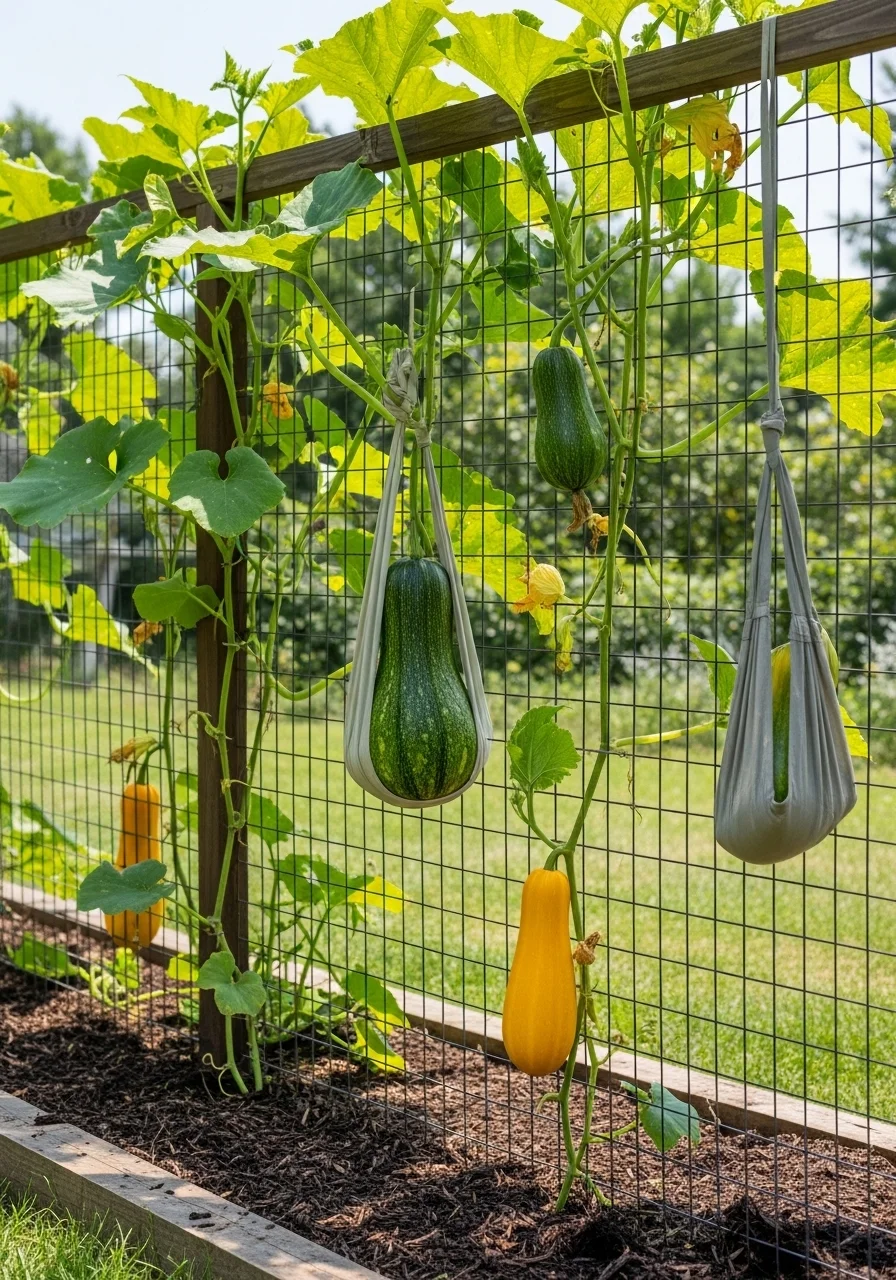
Did you know that the fence already standing in your garden can become a brilliant vertical growing structure? One of the easiest and most affordable ways to grow squash vertically is to use your existing garden fence. No extra building required. No extra cost. Just smart squash vine training and a little guidance from you.
This method is perfect for gardeners who want to maximize garden space without investing in new structures. A garden fence provides a long, sturdy, and ready-made surface for climbing squash plants to grab onto and grow upward.
Best Fence Types for Growing Squash Vertically
Not all fences work equally well for vertical squash gardening. Here are the best options to consider.
Wire mesh fences are the top choice for growing squash vertically. The open grid pattern gives squash vines plenty of anchor points to grab and climb naturally.
Chain link fences work brilliantly as well. They are strong enough to handle the weight of heavy squash vines and fruit without bending or sagging.
Wooden fences with horizontal rails can also support squash growth. Simply attach wire mesh or garden netting to the wooden frame to create a proper climbing surface for your vertical squash garden.
How to Train Squash Vines Along a Garden Fence
Step 1: Plant squash seedlings 6 to 12 inches away from the base of the fence. Planting too close can restrict root growth and airflow.
Step 2: As vines begin to grow, gently lift them toward the fence and weave the tips through the wire openings.
Step 3: Use soft garden tape, jute twine, or torn fabric strips to loosely tie the vines to the fence at regular intervals. Always tie loosely to avoid cutting into the stem during squash vine training.
Step 4: Check your vines every few days and redirect any new growth back toward the fence to keep your climbing squash plants growing upward and on track.
Step 5: Once fruit begins to develop, use fabric slings tied to the fence to support the weight and prevent vine damage.
Pro Tip for Fence Growing
If your fence runs along the north side of your garden, make sure squash plants still receive at least 6 to 8 hours of direct sunlight daily. Sunlight is critical for healthy squash plant care and strong fruit development. Position your plants on the sunny side of the fence for the best results.
Using a garden fence to grow squash vertically is one of the simplest ways to maximize garden space and turn an ordinary boundary into a productive and beautiful growing wall.
Way 3: Create a Cattle Panel Arch for Vertical Squash Growing
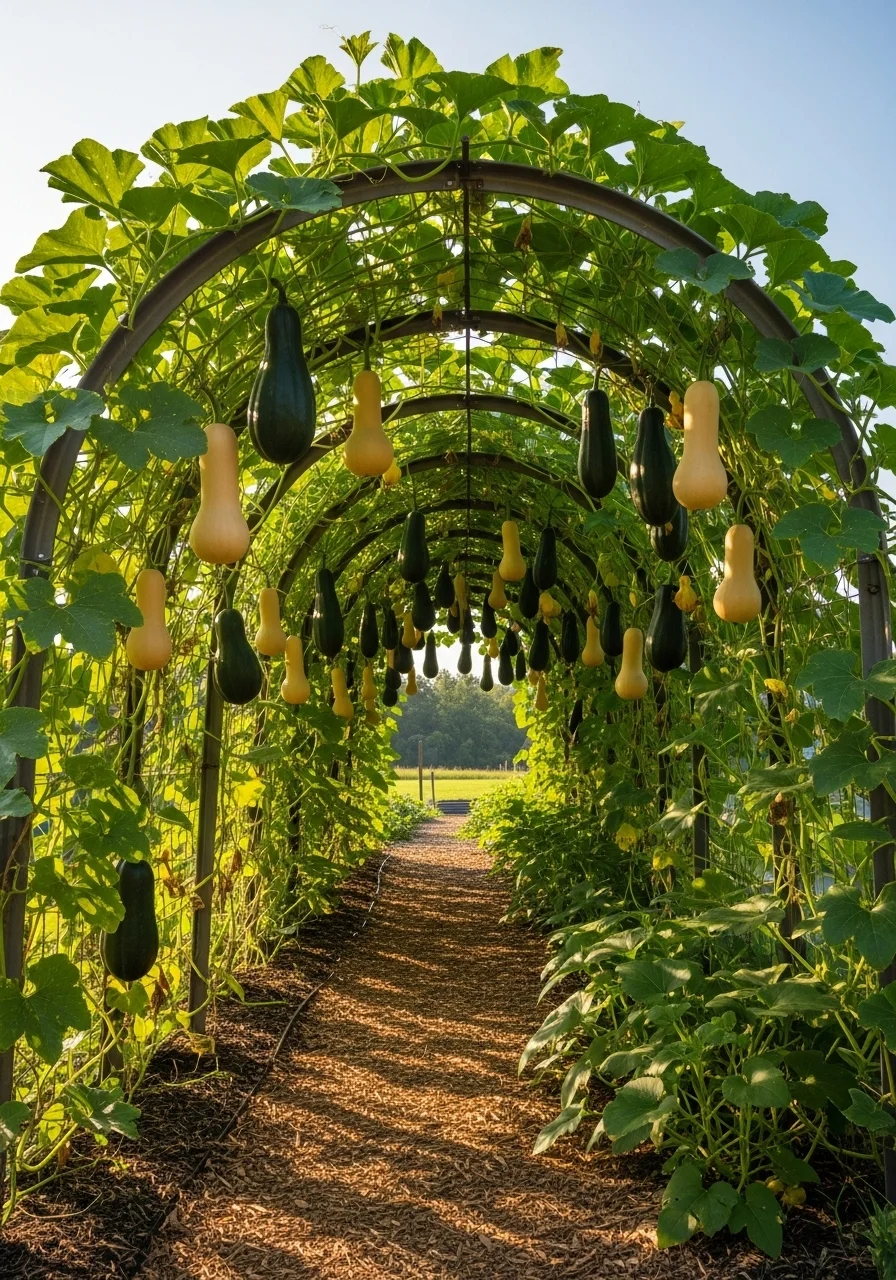
A cattle panel arch is one of the most brilliant and durable structures you can use to grow squash vertically. It is strong, long-lasting, and creates a stunning garden tunnel that doubles as a productive growing space. Once installed, a cattle panel arch will serve your vertical squash garden for many years.
What Is a Cattle Panel Arch?
A cattle panel is a rigid wire grid panel originally designed for livestock fencing. When bent into an arch shape and anchored into the ground, it becomes an incredibly strong and spacious structure for climbing squash plants to grow over.
How to Install a Cattle Panel Arch
Step 1: Purchase a standard 16-foot cattle panel from your local farm supply store.
Step 2: Push both ends of the panel into the soil on opposite sides of your garden bed, bending it naturally into an arch shape.
Step 3: Secure each end firmly into the ground using metal stakes or rebar to prevent shifting.
Step 4: Plant squash seedlings at the base of each side, spacing them 18 to 24 inches apart.
Step 5: Guide young vines onto the panel using soft garden tape and allow them to climb naturally.
Why Gardeners Love the Cattle Panel Arch
The wide arch allows squash fruit to hang freely underneath, making harvesting effortless. You can also use the shaded space beneath the arch for companion planting of shade-loving vegetables, making it a true space-saving vegetable garden solution.
Way 4: Grow Small Squash Varieties Vertically With Tomato Cages
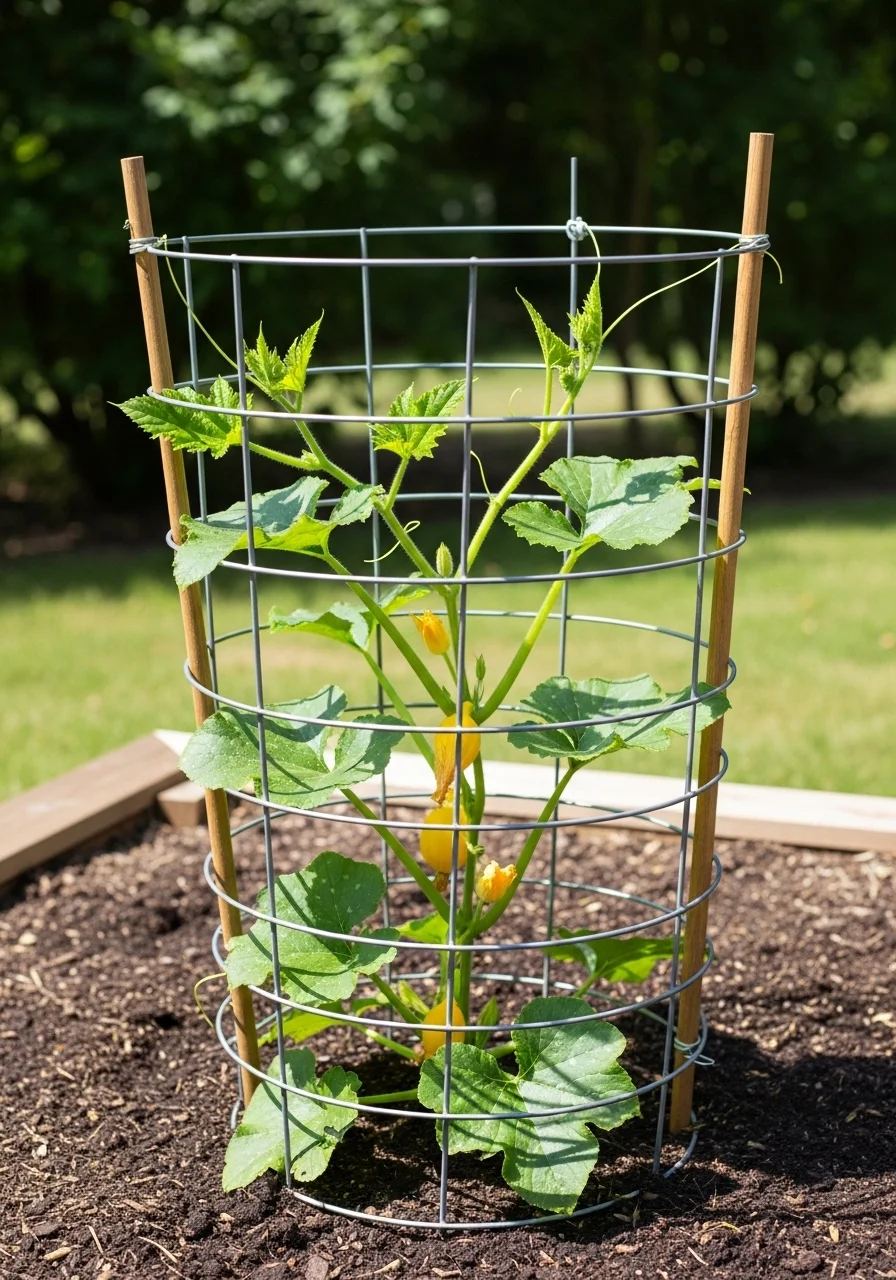
Not every gardener has space for a large trellis or cattle panel arch. If you are working with a small garden, a container, or a raised bed, tomato cages are a brilliant and budget-friendly way to grow squash vertically. They are easy to find, simple to set up, and perfect for compact squash varieties.
Best Squash Varieties for Tomato Cages
Choosing the right squash variety is the key to success with this method. Compact and bush-type varieties work best because their vines are shorter and easier to manage within the cage structure.
Patio Star is a compact variety bred specifically for small spaces and container growing. Bush Baby produces generous yields in a very small footprint. Astia is another excellent choice that thrives in containers and raised-bed squash setups.
How to Set Up Tomato Cages for Squash
Step 1: Place a large heavy-duty tomato cage over your squash seedling immediately after planting.
Step 2: As the plant grows, gently weave the vines through the cage openings to encourage upward climbing squash plant growth.
Step 3: Reinforce the cage with wooden or metal stakes pushed firmly into the soil for extra stability as the plant gets heavier.
Step 4: Check the plant every few days and tuck any outward-growing vines back into the cage to maintain a clean vertical squash garden structure.
Pro Tip: Always choose the largest and sturdiest tomato cages available. Lightweight cages will tip over easily under the weight of a mature squash plant, disrupting your squash plant care routine and damaging your crop.
Way 5: Build a Budget-Friendly PVC Pipe Trellis to Grow Squash Vertically

If you are looking for an affordable and lightweight structure to grow squash vertically, a DIY PVC pipe trellis is one of the smartest choices you can make. PVC pipes are inexpensive, easy to work with, and available at any hardware store. Best of all, you can customize the size and height to perfectly fit your vertical squash garden.
Why PVC Pipe Works So Well
PVC pipes are lightweight yet strong enough to support heavy squash vines and fruit. They do not rust, rot, or deteriorate in wet soil conditions like wood sometimes does. This makes them a long-lasting and low-maintenance squash support structure for any garden size.
Materials You Will Need
One-inch diameter PVC pipes are ideal for building a squash trellis. You will also need PVC elbow joints and T joints for connecting sections, wire mesh or garden netting for the climbing surface, PVC cutters or a hand saw, and zip ties or garden wire for securing the netting.
How to Build a PVC Pipe Trellis Step by Step
Step 1: Cut PVC pipes to your desired height. A minimum height of 5 to 6 feet works best for most squash varieties.
Step 2: Connect the pipes using elbow joints at the top corners and T joints along the sides to create a sturdy rectangular frame.
Step 3: Attach wire mesh or garden netting tightly across the frame using zip ties to create a solid climbing surface for your climbing squash plants.
Step 4: Push the bottom pipes firmly into the soil or secure them to raised bed walls for stability.
Step 5: Plant squash seedlings at the base and begin squash vine training by gently guiding young vines onto the netting as they grow.
Pro Tip: As your squash plants grow taller, you can easily extend your PVC trellis by adding extra pipe sections to the top. This flexibility makes PVC one of the most practical space-saving vegetable garden structures available to home gardeners.
Way 6: Grow Squash Vertically on a Wooden Pergola or Garden Arbor

A wooden pergola or garden arbor is not just a beautiful garden feature. It is also one of the most brilliant and functional structures you can use to grow squash vertically. If you already have a pergola or arbor in your garden, you are sitting on an untapped vertical growing opportunity that can produce an impressive squash harvest.
Why Pergolas and Arbors Work Brilliantly for Squash
Pergolas and arbors offer exceptional height and horizontal growing space that most other squash support structures simply cannot match. Squash vines love to climb upward and then spread across the top, creating a lush green canopy loaded with hanging fruit. This makes harvesting incredibly easy and turns your garden into a stunning, productive space.
Best Squash Varieties for Pergola Growing
Not all squash varieties are suited for pergola growing. Butternut squash and acorn squash are two of the best choices because they produce medium-sized fruit that hangs beautifully without putting excessive squash weight support strain on the structure.
How to Train Squash Vines Over a Pergola
Step 1: Plant squash seedlings at the base of each pergola post, spacing them at least 24 inches apart.
Step 2: Use soft garden tape or jute twine to guide young vines upward along the pergola posts as part of your squash vine training routine.
Step 3: Once vines reach the top, allow them to spread naturally across the horizontal beams.
Step 4: As fruit develops and grows heavier, create fabric slings tied securely to the pergola beams to provide squash weight support and protect the vines from snapping.
Pro Tip: Always inspect your pergola structure before planting. A mature squash plant loaded with fruit can become surprisingly heavy. Reinforce any weak joints or beams beforehand to ensure your vertical squash garden remains safe and productive all season long.
Way 7: Use Simple String or Rope Trellis Systems to Grow Squash Vertically
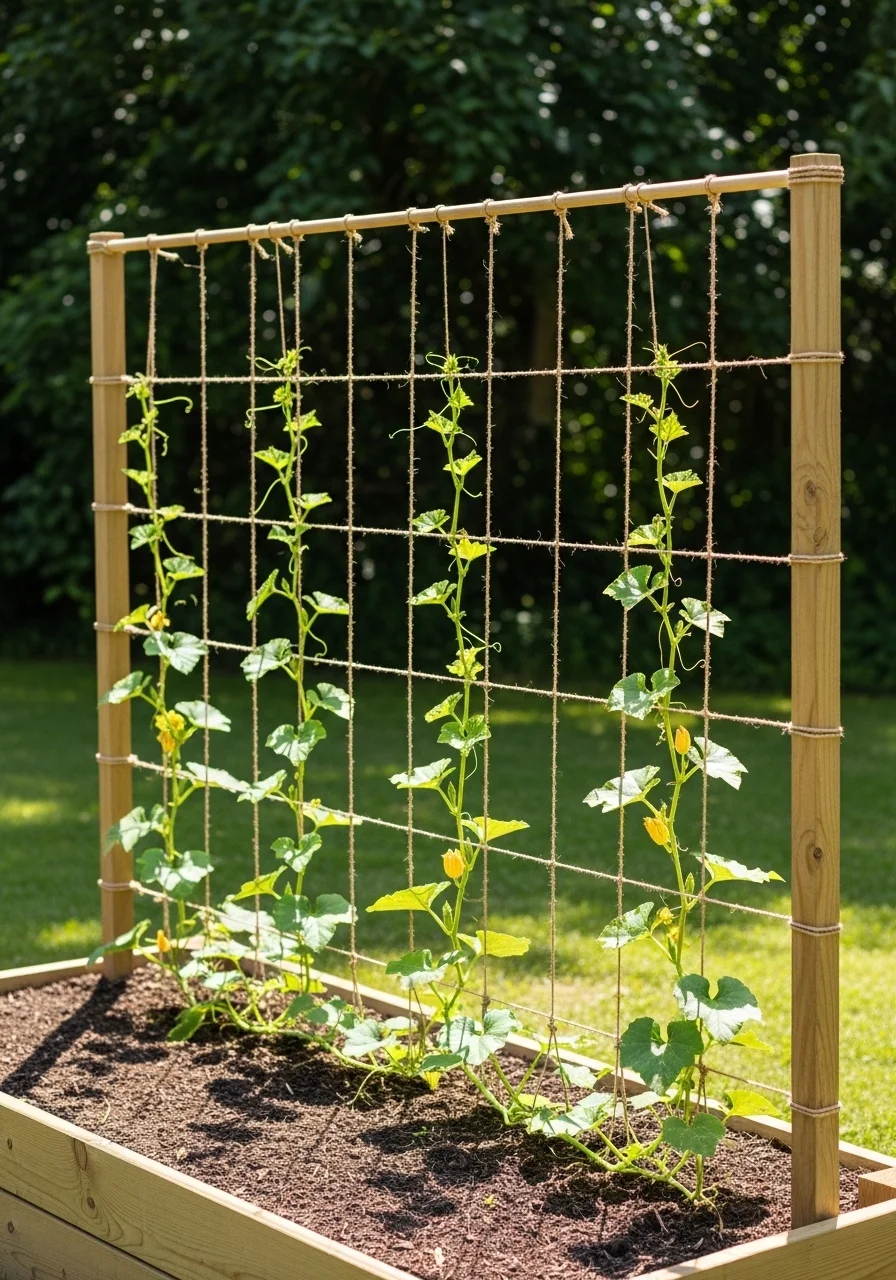
If you are looking for the most affordable and flexible way to grow squash vertically, a string or rope trellis system is your answer. This method requires minimal investment, can be set up in under an hour, and works beautifully in any garden size. It is one of the most underrated vertical gardening techniques available to home gardeners today.
Best String and Rope Types for Squash Trellising
Choosing the right material is important for a strong and lasting trellis system. Jute twine is a popular choice because it is natural, biodegradable, and gentle on squash vines. Nylon rope is stronger and more weather-resistant, making it ideal for heavier squash varieties. Garden twine works well for lighter compact varieties and raised bed squash setups.
How to Set Up a String Trellis System
Step 1: Install two sturdy wooden or metal posts firmly into the ground at each end of your planting row. Posts should be at least 6 feet tall.
Step 2: Tie a strong horizontal length of rope or twine between the two posts at the very top to create your anchor line.
Step 3: Cut individual vertical strings and tie them from the top anchor line down to small stakes in the soil beside each squash plant.
Step 4: Begin squash vine training by gently wrapping young vines around the vertical strings as they grow upward.
Step 5: Add additional horizontal strings across the posts at 12-inch intervals as the vines grow taller to create a full grid climbing surface for your climbing squash plants.
Pro Tip: Replace your string trellis system at the start of each new growing season. Old strings can harbor disease and pest eggs from the previous season, which can seriously disrupt your squash plant care routine and reduce your overall harvest quality.
Choose the Right Squash Varieties to Grow Vertically
Choosing the right squash variety is one of the most important decisions you will make when you grow squash vertically. Not all squash varieties are suited for vertical growing. Some produce vines that are too heavy and unmanageable, while others are perfectly designed for climbing squash plant growth on trellises, fences, and arches.
Here are the best squash varieties to consider for your vertical squash garden.
Butternut Squash: Butternut squash is one of the most popular choices for vertical growing. Its vines are vigorous and strong, and its medium-sized fruit hangs beautifully on trellises without putting excessive strain on the structure. It is a top pick for pergola and A-frame trellis growing.
Acorn Squash: Acorn squash produces compact and manageable vines that respond brilliantly to squash vine training. Its small and rounded fruit is light enough to hang freely without needing heavy slings.
Yellow Crookneck Squash: Yellow crookneck is a productive and fast-growing variety that thrives on wire mesh fences and cattle panel arches. Its slim fruit shape makes it one of the easiest varieties to support vertically.
Delicata Squash: Delicata squash is a brilliant choice for raised-bed squash setups. Its vines are relatively compact, and its small oblong fruit hangs neatly on string trellis systems and PVC pipe frames.
Patio Star Squash: Patio Star is specifically bred for small garden squash growing in containers and raised beds. Its ultra-compact vines make it the perfect choice for tomato cage growing and small-space vertical gardening techniques.
| Variety | Vine Size | Best Structure | Fruit Weight |
|---|---|---|---|
| Butternut | Large | A-Frame, Pergola | Medium |
| Acorn | Medium | Fence, Cattle Panel | Light |
| Yellow Crookneck | Medium | Wire Fence, Arch | Light |
| Delicata | Compact | String Trellis, PVC | Very Light |
| Patio Star | Ultra Compact | Tomato Cage, Container | Very Light |
How to Support Heavy Squash Fruit When You Grow Squash Vertically?
One of the biggest challenges when you grow squash vertically is supporting the weight of heavy fruit as it develops on the trellis. Without proper support, heavy squash fruit can pull vines away from the structure, snap stems, and ruin an otherwise brilliant harvest. The good news is that supporting heavy squash fruit is simple, affordable, and takes only a few minutes to set up.
Why Fruit Support Is Essential
As the squash fruit grows larger and heavier, the vine connecting it to the main plant comes under increasing squash’s weight. Left unsupported, this strain can cause the vine to snap completely, killing the fruit before it reaches full maturity. Proper support protects both the fruit and the overall health of your climbing squash plants.
The Sling Method
The sling method is the most popular and effective way to support heavy squash fruit on any vertical squash garden structure. A sling cradles the fruit from underneath and transfers its weight directly to the trellis frame rather than the vine.
How to Make and Attach a Squash Sling
Step 1: Cut a length of old pantyhose, soft mesh fabric, or breathable cloth large enough to cradle the fruit comfortably.
Step 2: Place the fabric underneath the squash fruit and gather both ends together above the fruit.
Step 3: Tie both ends securely to the trellis frame, fence, or arch directly above the fruit using strong garden twine.
Step 4: Make sure the sling holds the fruit firmly but does not squeeze or constrict it as part of your squash plant care routine.
Step 5: Check each sling every few days and adjust as the fruit grows larger and heavier.
Pro Tip: Always attach slings early when the fruit is still small and manageable. Waiting until the fruit becomes very heavy makes the process much harder and increases the risk of accidental vine damage during your squash vine training routine.
Deadly Mistakes to Avoid When Growing Squash Vertically
Even the most enthusiastic gardeners can make costly errors when they first learn to grow squash vertically. Avoiding these common mistakes will save you time, money, and frustration while helping you produce a bigger and healthier harvest every single season.
Mistake 1: Using Weak or Unstable Structures
One of the most common mistakes is choosing a trellis or support structure that is not strong enough to handle the weight of mature squash vines and fruit. Always invest in sturdy squash support structures that can handle the full weight of your plants throughout the entire growing season.
Mistake 2: Not Supporting Heavy Fruit With Slings
Skipping fruit slings is a costly error that many beginners make. Without proper squash weight support, heavy fruit will pull vines away from the structure and snap stems before the harvest is ready.
Mistake 3: Planting Too Close Together
Overcrowding is a serious mistake in any vertical squash garden. Squash plants need at least 18 to 24 inches of spacing to allow proper airflow, reduce disease risk, and give each plant enough room to climb and spread comfortably.
Mistake 4: Neglecting Watering at the Base
Vertical gardening techniques can sometimes make it easy to forget about consistent watering. Squash plants need deep and regular watering at the base of the plant. Watering the leaves instead of the roots encourages fungal disease and weakens your squash plant care routine significantly.
Mistake 5: Choosing the Wrong Squash Varieties
Not every squash variety is suited for vertical growing. Choosing large sprawling varieties without proper squash vine training planning will quickly overwhelm your trellis structure and make management extremely difficult. Always select varieties that match your chosen growing structure and available garden space as outlined in the squash variety selection guide above.
FAQ
What Squash Can Be Grown Vertically?
Butternut, acorn, delicata, yellow crookneck, and patio star squash are all excellent choices for vertical growing. Compact and bush-type varieties work best because their vines are shorter, lighter, and much easier to manage on trellises and support structures.
Should You Grow Squash Vertically?
Yes, you should absolutely grow squash vertically if you want to save garden space, reduce pest problems, and produce a bigger and healthier harvest. Vertical growing improves air circulation, makes harvesting easier, and keeps your squash plants healthier throughout the entire growing season.
What Should You Not Plant Squash Next To?
Avoid planting squash next to potatoes, fennel, and brassicas like cabbage and broccoli as these crops compete heavily for nutrients and can stunt squash growth. Squash grows best alongside companion plants like nasturtiums, corn, beans, and marigolds that naturally repel pests and improve soil health.
Can You Plant Squash in September?
Yes, you can plant fast maturing squash varieties in September in warm climate regions where temperatures remain consistently above 60 degrees Fahrenheit. In cooler climates, September planting is generally too late for a successful squash harvest before the first frost arrives.
Is October Too Late to Plant Squash?
In most regions, October is too late to plant squash outdoors because squash requires a minimum of 50 to 60 frost free days to reach full maturity. However, gardeners in warm southern climates and USDA hardiness zones 9 and above can successfully plant fast maturing squash varieties in early October.
What Is the Secret to Growing Squash?
The secret to growing squash successfully is combining consistent deep watering at the base, rich compost amended soil, regular pest monitoring, and proper vine training on a strong support structure. When you grow squash vertically with these practices in place, you will produce an abundant and healthy harvest every single season.
Conclusion
Now you have everything you need to grow squash vertically like a seasoned gardening expert. From a sturdy A-frame trellis to a simple string rope system, each of these 7 brilliant ways gives you a proven and practical path to transforming your garden into a highly productive vertical growing space.
Growing squash vertically is not just a smart gardening technique. It is a complete game-changer for anyone who wants to maximize garden space, reduce pest problems, improve air circulation, and enjoy a bigger and healthier squash harvest season after season.
The best part is that you do not need a large garden or a big budget to get started. Whether you choose a budget-friendly PVC pipe trellis, an existing garden fence, or a beautiful wooden pergola, there is a perfect vertical growing solution for every gardener and every garden size.
Start with the method that best matches your available space and budget. Set up your structure, choose the right squash variety, practice consistent squash vine training, and support your developing fruit with simple fabric slings. Follow the squash plant care tips shared throughout this guide, and you will be rewarded with an outstanding harvest.
Pick your favorite method from these 7 brilliant ways to grow squash vertically and start building your vertical squash garden today. Your best squash harvest is just one growing season away.

Shahid Nawaz is a home and garden content writer at Garden Skillz with over 4 years of experience researching and writing about gardening, plant care, and DIY home improvement. He specializes in turning complex horticultural topics into practical, easy-to-follow guides for beginners and experienced growers alike. Shahid has written extensively on flowering plants, indoor greenery, and seasonal garden care.