Want your garden to look richer, moodier, and a little more dramatic? Burgundy flowers can do exactly that without making the space feel gloomy.
I’ve always had a soft spot for deep red and burgundy blooms. They bring depth to flower beds, look incredible against green foliage, and add a sophisticated touch that bright flowers sometimes struggle to create. Plus, they pair beautifully with pink, cream, lavender, orange, and even chartreuse plants.
So, which burgundy flowers should you grow? You have plenty of choices, from classic dahlias and roses to unusual foliage plants that bring burgundy tones into the garden.
Whether you want a romantic cottage garden, a dramatic border, a modern container display, or a moody backyard retreat, these 15 gorgeous burgundy flower ideas can give you plenty of inspiration.
1. Burgundy Dahlias for a Dramatic Flower Bed

If you want a flower that immediately grabs attention, start with burgundy dahlias. Their layered petals create a lush, almost theatrical look, and their deep color can anchor an entire flower bed.
Dahlias come in many shapes and sizes, so you can choose varieties with dinner-plate blooms or smaller pom-pom flowers. Burgundy varieties often look especially striking when you plant them among lighter flowers.
Try pairing burgundy dahlias with:
- Cream roses
- White cosmos
- Soft pink zinnias
- Silver foliage
- Ornamental grasses
I particularly like the contrast between a dark dahlia and pale flowers. The lighter blooms make the burgundy color look even deeper.
Growing tips
Give dahlias full sun and well-draining soil. Keep the soil consistently moist during active growth, but avoid soggy conditions.
Tall varieties may need staking, especially when heavy flowers catch summer rain or wind. Trust me, nobody wants to watch a gorgeous dahlia flop dramatically onto the ground after spending months growing it.
2. Burgundy Roses for Classic Romance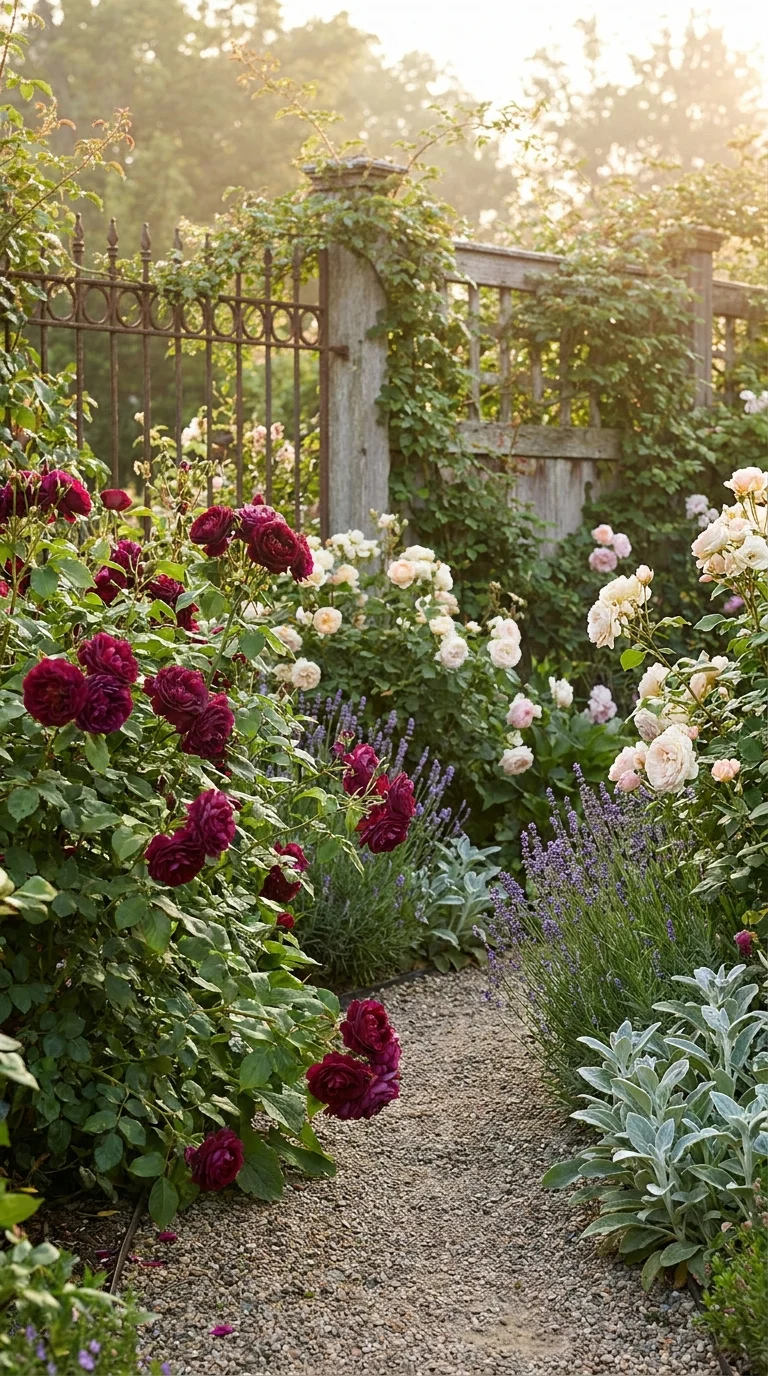
Few flowers create romance quite like roses, and burgundy roses take that classic look in a darker direction.
These deep red flowers can work beautifully around patios, entrances, fences, and garden seating areas. They also make excellent cut flowers, so you can bring some of that garden color indoors.
For a romantic garden design, combine burgundy roses with blush pink or creamy white flowers. Add silvery foliage around the base to create even more contrast.
Create a sophisticated rose border
Plant burgundy roses toward the middle or back of a flower bed if you grow larger varieties. Place shorter companion plants around them to create layers.
Good companions include:
- Lavender
- Catmint
- White alyssum
- Salvia
- Baby’s breath
Want a more dramatic effect? Add dark foliage plants nearby. The combination of burgundy flowers and deep green leaves can make the whole border feel luxurious.
3. Burgundy Petunias for Colorful Containers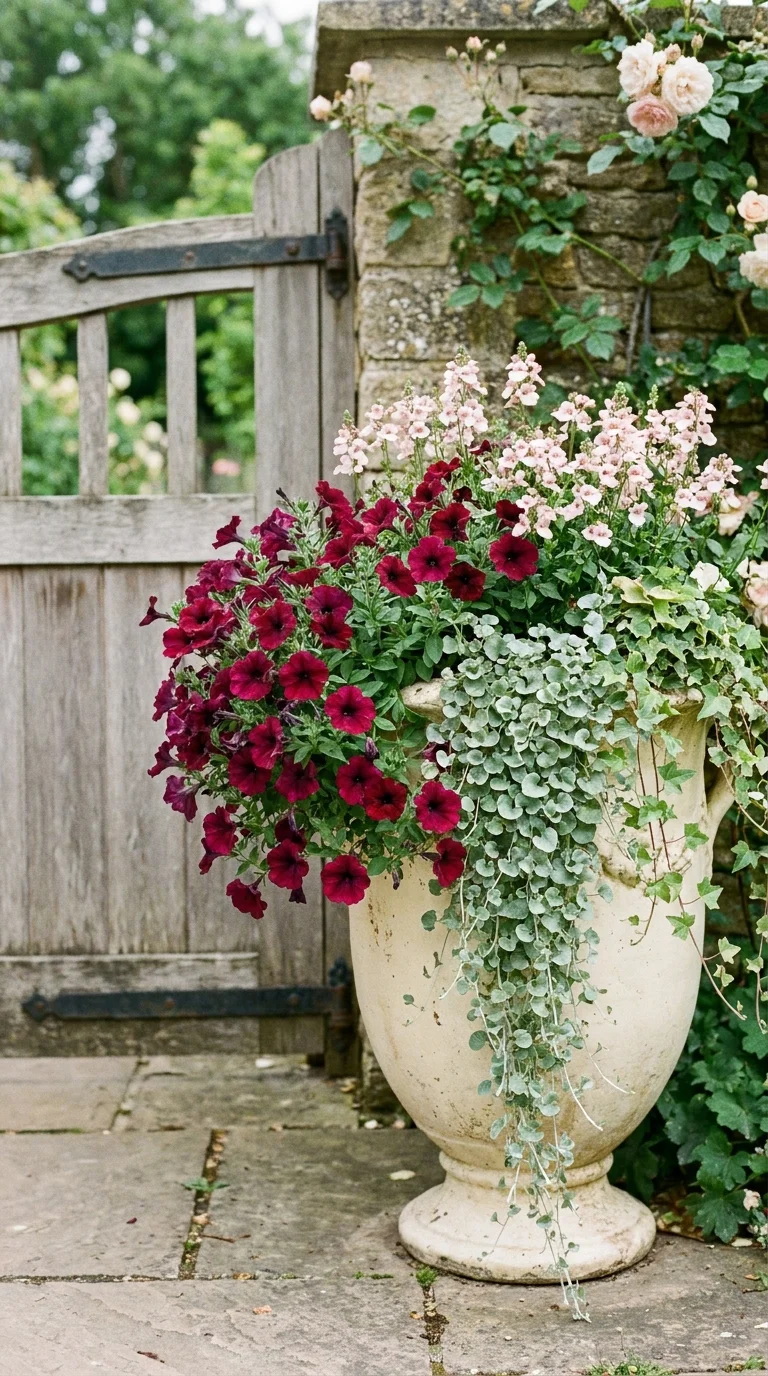
You don’t need a huge garden to enjoy burgundy flowers.
Burgundy petunias work wonderfully in containers, hanging baskets, window boxes, and small garden beds. Their trumpet-shaped blooms create plenty of color, while trailing varieties can spill over the sides of pots.
Choose a simple neutral container to let the flowers take center stage. Cream, terracotta, charcoal, and natural stone colors all work well.
Try this container combination
For an easy three-part display, combine:
Burgundy petunias + silver foliage + pale pink flowers
The burgundy provides depth, while the lighter colors keep the container from looking too heavy.
Petunias generally enjoy plenty of sunlight and regular watering. Remove faded flowers when needed to encourage a tidy appearance and continued blooming.
4. Burgundy Zinnias for a Summer Garden
Love flowers that bring lots of color with relatively little fuss? Add burgundy zinnias to your summer garden.
Zinnias come in many colors and flower forms, including rich red and burgundy shades. Their cheerful blooms attract pollinators and work beautifully in cutting gardens.
Plant them in groups rather than scattering individual plants throughout the garden. Grouping creates stronger visual impact and makes the burgundy color easier to appreciate.
Make a colorful zinnia display
Mix burgundy zinnias with:
- Orange zinnias
- Peach cosmos
- Yellow marigolds
- White flowers
- Green ornamental grasses
This combination creates a lively summer border.
If you prefer a moody garden, however, stick with burgundy, plum, cream, and dusty pink. That palette creates a much softer atmosphere.
5. Burgundy Tulips for Spring Elegance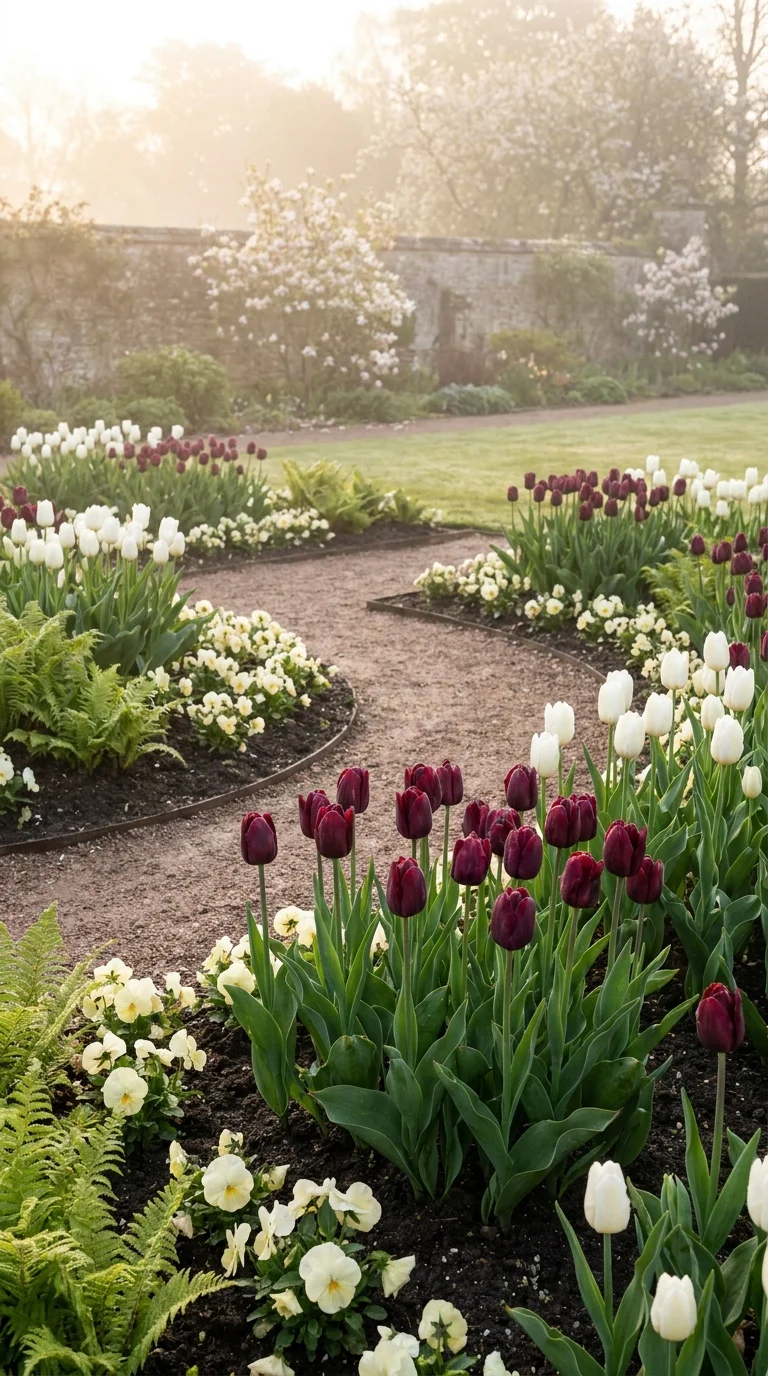
Think tulips only belong in bright yellow, pink, and red? Not at all.
Deep burgundy tulips can create one of the most elegant spring displays in a garden. Their simple flower shape lets the color do all the work.
Plant burgundy tulip bulbs in clusters for a stronger visual effect. You can place them along paths, around trees, or in formal flower beds.
Pair burgundy tulips with lighter flowers
White tulips make an obvious companion, but you can also try pale pink, cream, or soft lavender spring flowers.
For a sophisticated spring border, combine:
- Burgundy tulips
- White tulips
- Cream pansies
- Silver foliage
Plant bulbs in autumn according to your local growing conditions so they can experience the cool period they need before spring growth.
6. Burgundy Cosmos for a Cottage Garden
Cosmos usually bring airy pink and white flowers to mind, but some varieties offer deeper red and burgundy tones.
Burgundy cosmos can add a relaxed, slightly wild appearance to cottage-style gardens. Their delicate stems and open blooms contrast beautifully with heavier flowers such as dahlias and roses.
Plant cosmos where they can receive plenty of sunlight. Give them enough room to sway and branch naturally.
Why cosmos work so well
Their loose growth habit adds movement to a garden. You can use them between structured plants to soften the overall design.
Pair burgundy cosmos with:
- White daisies
- Lavender
- Ornamental grasses
- Pale pink flowers
The result feels natural without looking messy.
And honestly, a garden can benefit from a little mess. Perfect symmetry gets boring sometimes.
7. Burgundy Celosia for Texture and Height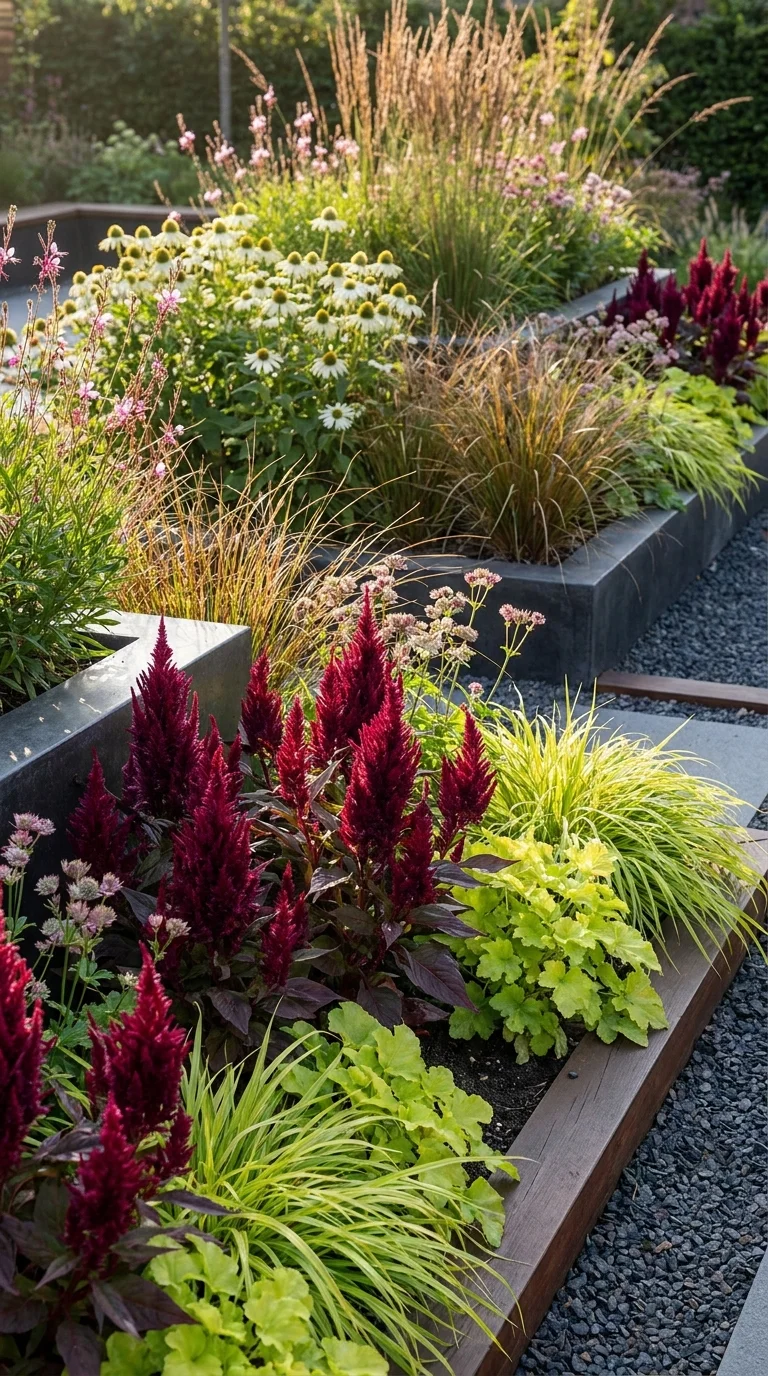
Want something different from traditional rounded flowers? Try burgundy celosia.
Celosia can produce unusual flower heads with bold shapes and strong colors. Depending on the variety, you can find blooms that resemble flames, feathers, or textured plumes.
That unusual texture makes celosia particularly useful in modern garden designs.
Use celosia as a focal point
Plant burgundy celosia among green foliage or lighter flowers. Its architectural form can add height and structure to a mixed border.
It also works well in containers.
Try combining burgundy celosia with:
- Lime-green foliage
- Cream flowers
- Bronze grasses
- Pink blooms
The contrast can create a modern, editorial-style garden display.
8. Burgundy Geraniums for Easy Garden Color
Burgundy geraniums can bring rich color to patios, balconies, containers, and flower beds.
Geraniums offer a practical choice when you want dependable seasonal color. They can also work particularly well in pots because you can move containers around to change your garden layout.
Choose burgundy or deep red varieties and combine them with trailing plants for a fuller display.
Container idea
Try:
Burgundy geranium + white alyssum + trailing greenery
The white flowers soften the darker geraniums while the greenery creates a natural transition between the colors.
Give geraniums plenty of light and avoid constantly wet soil. Water according to the plant’s needs rather than following a rigid schedule.
9. Burgundy Carnations for a Full, Romantic Look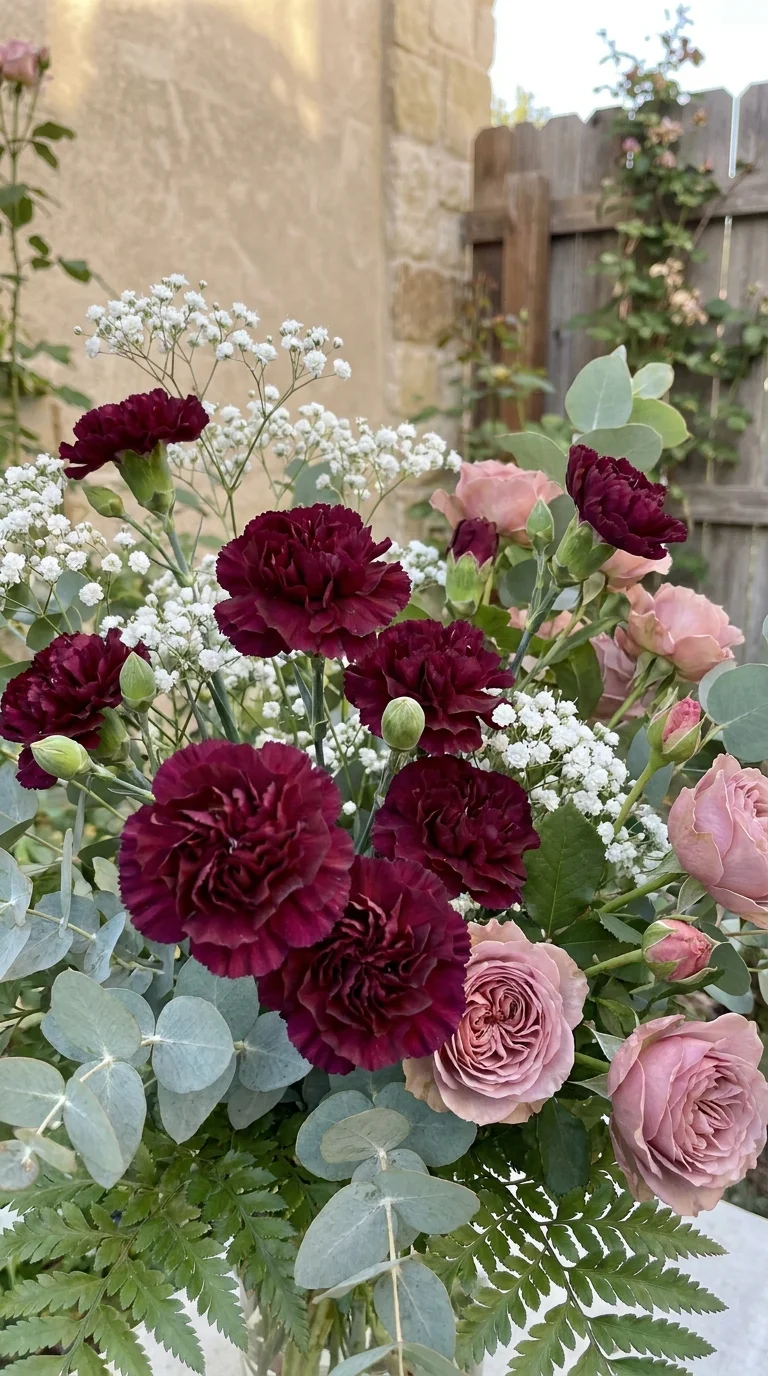
Carnations sometimes get overlooked, but their dense petals make them excellent garden and cutting flowers.
Burgundy carnations create a rich, romantic appearance and can last well as cut flowers. Their ruffled petals also provide texture that pairs nicely with simpler flowers.
Plant them in a dedicated cutting garden or use them along the front of a flower border.
Combine carnations with delicate flowers
Burgundy carnations look beautiful with baby’s breath, white flowers, dusty pink blooms, and soft greenery.
You can also use them in bouquets after harvesting flowers from your garden.
For the longest vase life, cut stems when the flowers start opening and place them in clean water.
10. Burgundy Daylilies for a Low-Fuss Border
If you want burgundy flowers with a practical garden personality, consider deep red or burgundy daylilies.
Daylilies can handle a range of garden conditions and provide strong summer color. Their long, grass-like foliage also gives flower beds texture even when the plants aren’t blooming.
Use burgundy daylilies along pathways, fences, and mixed perennial borders.
Create layers with daylilies
Place taller plants behind the daylilies and shorter plants in front.
For example:
- Back: Ornamental grasses
- Middle: Burgundy daylilies
- Front: White alyssum or creeping plants
This layered approach gives your garden more depth.
Daylilies also work well when you repeat them throughout a garden. Repetition creates visual continuity and prevents individual flower beds from looking disconnected.
11. Burgundy Hollyhocks for Cottage Garden Height
Need height? Burgundy hollyhocks can bring strong vertical interest to a cottage garden.
Their tall flower spikes create a beautiful backdrop for shorter plants. Place them near walls, fences, sheds, or the back of large borders.
Hollyhocks can create a charming old-fashioned garden feel, especially when you combine them with roses, daisies, and cottage-style perennials.
Use vertical flowers strategically
Tall flowers can make a small garden feel more layered because they draw the eye upward.
Plant burgundy hollyhocks behind:
- Lavender
- Catmint
- Roses
- Daisies
- Low-growing salvias
Just remember that taller plants may need support in exposed locations.
12. Burgundy Marigolds for a Bold Contrast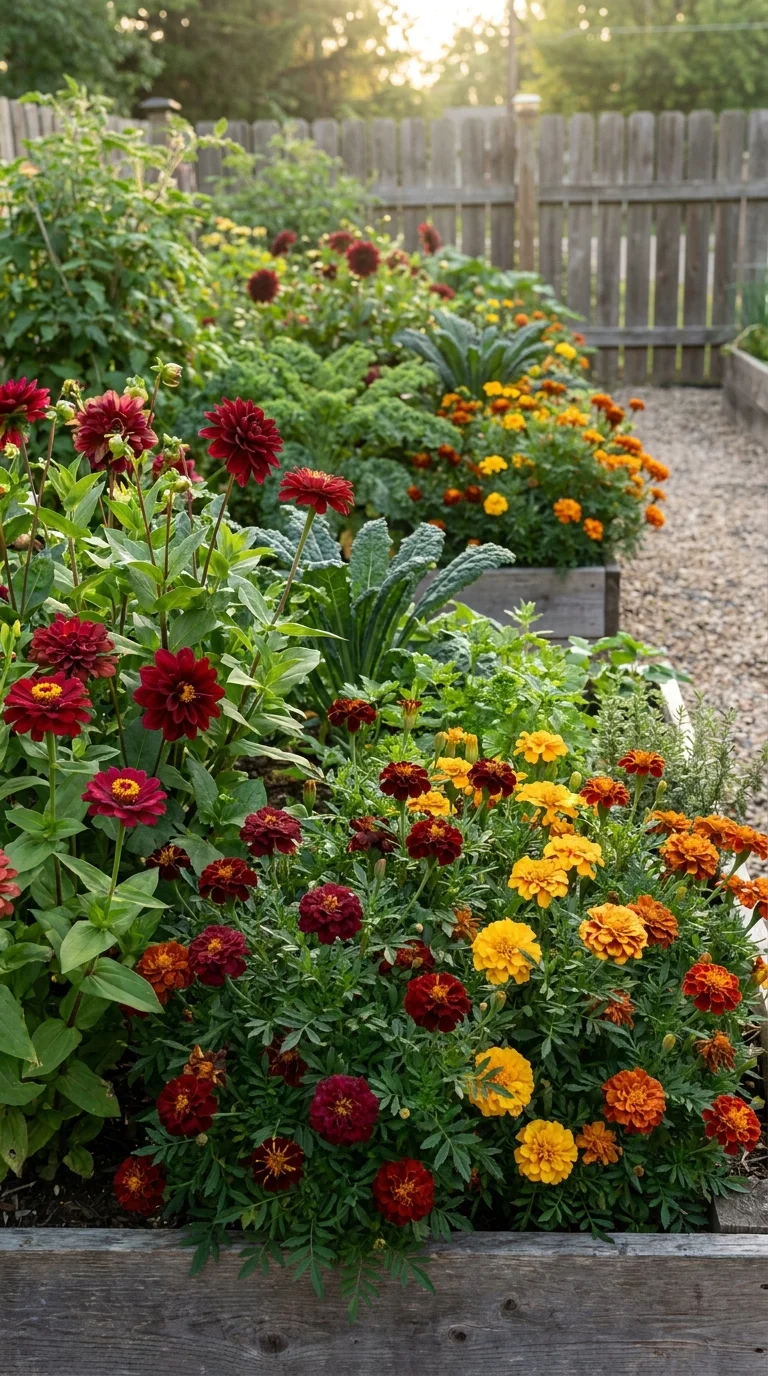
Marigolds usually appear in bright yellow and orange, but deeper red-brown and burgundy tones can create a fascinating alternative.
Burgundy marigolds work particularly well in vegetable gardens and colorful borders because their warm tones complement green foliage.
Plant them alongside herbs, vegetables, or ornamental flowers for a mixed garden that feels productive and beautiful.
Try a warm color palette
Combine burgundy marigolds with:
- Golden marigolds
- Orange zinnias
- Deep red flowers
- Bronze foliage
This palette works especially well toward the end of summer and into fall.
If you enjoy seasonal garden color, this combination can transition naturally into autumn decorating.
13. Burgundy Pansies for Cool-Season Displays
When temperatures drop, you don’t have to abandon your love of burgundy.
Burgundy pansies can provide rich color during cooler seasons, depending on your climate. Their compact growth makes them ideal for containers, borders, window boxes, and small garden spaces.
Mix burgundy pansies with cream, yellow, or lavender varieties for contrast.
Use pansies around entryways
A few containers filled with burgundy pansies can make an entrance feel instantly more inviting.
Choose decorative pots that complement the flower color. Neutral ceramic, aged terracotta, or stone-style containers can all work beautifully.
Pansies also make excellent companions for spring bulbs because their low growth can fill the space while taller flowers emerge.
14. Burgundy Begonias for Shady Spaces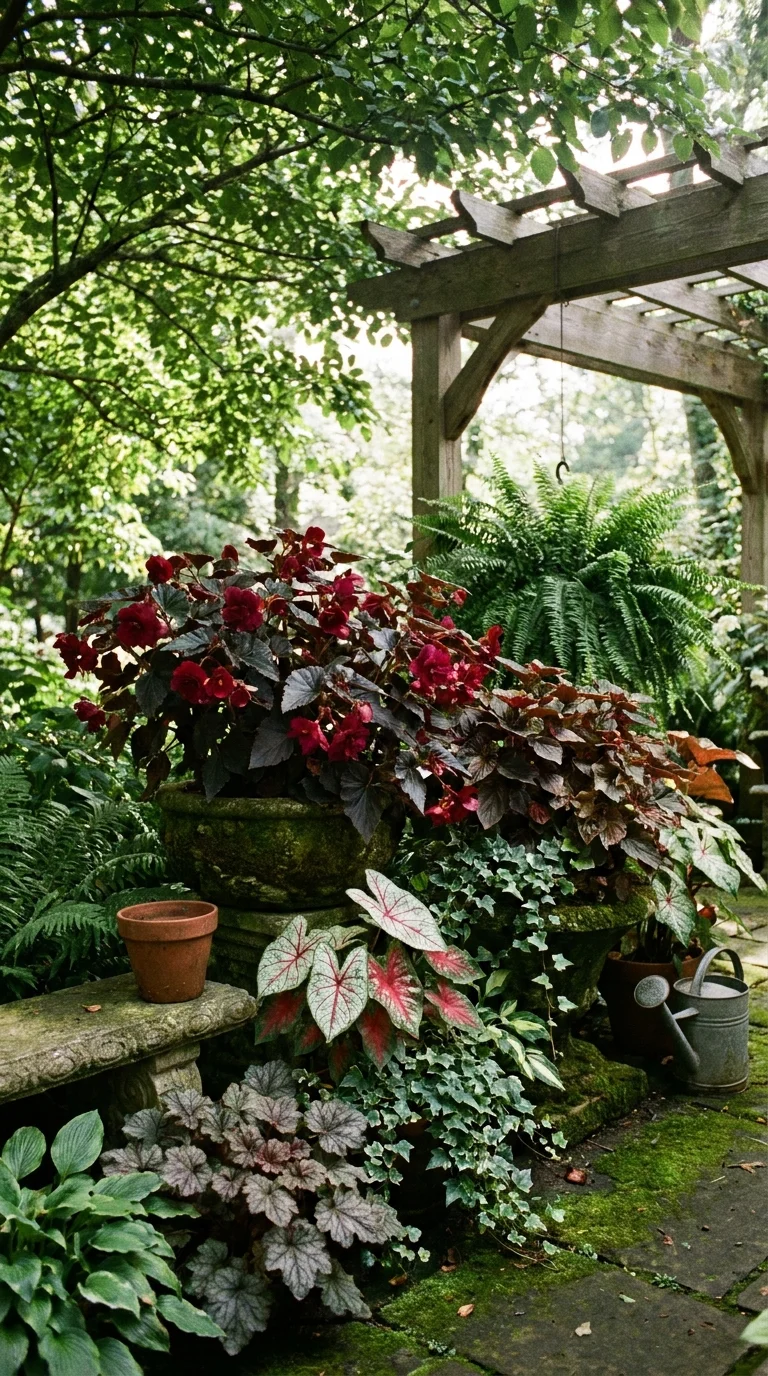
Think you can’t grow burgundy flowers because your garden lacks full sun? Think again.
Burgundy begonias can provide color in partially shaded areas, depending on the variety and your local climate. Their flowers and foliage can both contribute to the overall display.
They work especially well in containers placed on covered patios, porches, balconies, and shaded garden corners.
Build a shade-friendly display
Pair burgundy begonias with plants that offer contrasting foliage.
Try:
- Ferns
- Caladiums
- Heuchera
- Ivy
- Other shade-tolerant greenery
The combination of dark flowers and textured foliage can create a cozy garden nook.
FYI, always check the specific begonia variety before planting because light and temperature preferences can vary considerably.
15. Burgundy Flowers With Dark Foliage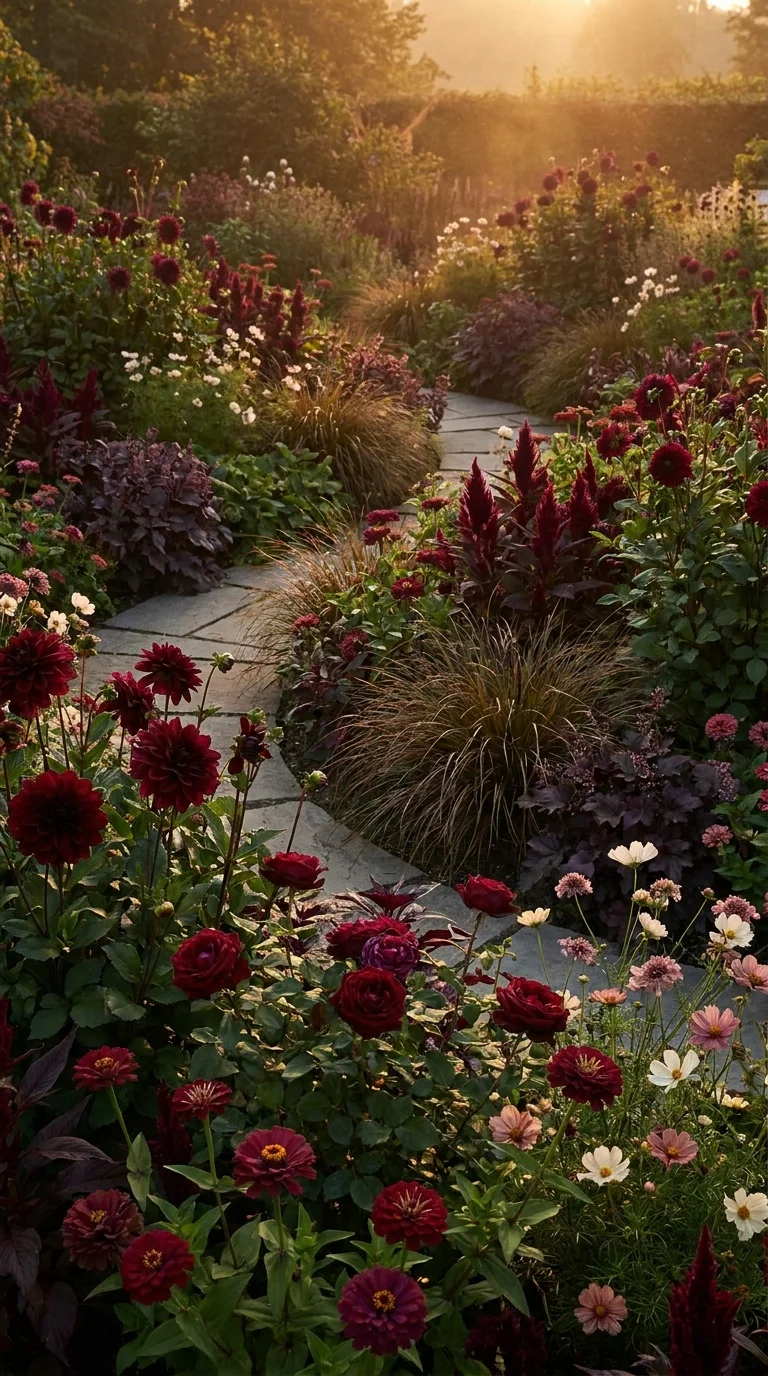
Here’s an idea that doesn’t rely on one particular flower: create an entire burgundy garden color scheme.
Instead of planting burgundy flowers randomly, combine them with plants that offer dark foliage. This approach creates a layered, moody look that feels intentional.
You can use burgundy dahlias, roses, petunias, celosia, or other suitable flowers alongside plants with deep purple, bronze, or burgundy leaves.
Build a moody garden palette
Try this combination:
Burgundy + plum + dusty pink + cream + deep green
The cream and pink prevent the darker shades from overwhelming the space. Green foliage then connects everything.
For a stronger contrast, introduce a small amount of chartreuse foliage. That bright green can make burgundy tones look even richer.
How to Design a Garden Around Burgundy Flowers
Choosing beautiful flowers represents only half the fun. You also need to decide where and how to use them.
Burgundy works best when you treat it as a strong accent color rather than scattering it everywhere.
If every plant has a dark red bloom, the garden can lose contrast. Instead, repeat burgundy throughout the space while giving it room to interact with lighter colors.
Use the 3-color approach
A simple garden palette can include:
- Burgundy as the main accent
- Green as the natural base
- Cream, pink, lavender, or yellow as a contrasting color
This formula keeps the garden visually interesting without creating color chaos.
Ever wondered why some gardens look effortlessly coordinated? Repeated colors often provide the answer.
Best Companion Colors for Burgundy Flowers
Burgundy flowers can work with surprisingly large color palettes.
Burgundy and white
White creates maximum contrast and gives burgundy flowers a crisp, elegant appearance.
Burgundy and blush pink
This combination creates a soft romantic mood. Use it around seating areas, patios, or cottage-style gardens.
Burgundy and lavender
Purple and burgundy create a rich, sophisticated palette. Add silver foliage to break up the darker tones.
Burgundy and yellow
Yellow creates a strong contrast that feels energetic and cheerful.
Burgundy and orange
Warm colors create an autumn-inspired garden palette. This pairing works particularly well with dahlias, marigolds, and zinnias.
How to Make Burgundy Flowers Stand Out
Want those deep blooms to become the stars of your garden?
Start with the background.
A burgundy flower can disappear against very dark foliage. Place it against lighter green leaves, pale flowers, stone, fencing, or neutral containers instead.
Try these simple design tricks
Repeat the color: Plant burgundy flowers in at least two or three areas so the color feels connected.
Use contrast: Place pale flowers near burgundy blooms to make their color pop.
Mix textures: Combine rounded flowers with spikes, grasses, and delicate foliage.
Create layers: Use tall, medium, and low-growing plants together.
Think about viewing angles: Position statement flowers where you can see them from patios, windows, or pathways.
These small decisions can make a huge difference.
Burgundy Flowers for Containers
Container gardening gives you another way to experiment with this color.
You can create a dramatic pot without redesigning your entire garden.
For a simple thriller-filler-spiller approach, choose:
- Thriller: Burgundy celosia or another upright plant
- Filler: Burgundy petunias or geraniums
- Spiller: Trailing greenery
You can also create a monochromatic pot using several burgundy-toned plants with different textures.
Use containers with drainage holes and choose potting soil suited to the plants you grow.
Burgundy Flowers for Cutting Gardens
If you love bringing flowers indoors, dedicate part of your garden to cutting flowers.
Dahlias, zinnias, roses, carnations, and other burgundy-toned blooms can provide material for arrangements throughout the growing season.
Plant several varieties with different bloom times so you can harvest flowers over a longer period.
Easy bouquet combination
Try:
Burgundy dahlias + cream flowers + eucalyptus-style greenery
Or create a more colorful arrangement with:
Burgundy zinnias + peach flowers + white blooms + green foliage
Cut flowers early in the morning when temperatures remain cooler. Use clean tools and place the stems in water quickly.
How to Care for Burgundy Flowers
No single care routine works for every burgundy flower. Different species have different needs.
Before planting, check each plant’s requirements for:
- Sunlight
- Soil type
- Water
- Temperature
- Spacing
- Fertilizer
- Pruning
- Winter protection
Still, a few general habits can help most ornamental flowers.
Give plants appropriate sunlight. Too little light can reduce flowering.
Avoid overwatering. Many flowering plants prefer well-draining soil.
Remove spent blooms. Deadheading can encourage continued flowering in many species.
Feed plants when appropriate. Follow the fertilizer recommendations for each plant rather than adding fertilizer randomly.
Watch for pests. Check leaves and stems regularly so you can respond early.
And remember, more fertilizer doesn’t automatically mean more flowers. Plants don’t operate on the “more is better” philosophy.
Final Thoughts
Burgundy flowers can completely change the mood of a garden. Their rich color adds depth, romance, drama, and sophistication, whether you plant a single container or create an entire themed border.
From burgundy dahlias and roses to petunias, tulips, zinnias, celosia, carnations, and begonias, you have plenty of options for different garden styles and growing conditions.
The real trick involves pairing those deep blooms with the right companions. Cream and white create contrast, pink adds softness, lavender creates a moody palette, and yellow brings cheerful energy.
If you’re unsure where to start, choose one burgundy flower you genuinely love and build around it. Add a contrasting flower, some attractive foliage, and a little repetition throughout the garden.
Before long, you’ll have a space that feels intentional rather than randomly colorful.
So, which burgundy flower deserves a spot in your garden first? Pick one, give it a good home, and let that gorgeous deep color do the talking.

Shahid Nawaz is a home and garden content writer at Garden Skillz with over 4 years of experience researching and writing about gardening, plant care, and DIY home improvement. He specializes in turning complex horticultural topics into practical, easy-to-follow guides for beginners and experienced growers alike. Shahid has written extensively on flowering plants, indoor greenery, and seasonal garden care.