Gothic plants are not for the faint-hearted, and that is exactly what makes them irresistible.
If you have ever walked past a garden dripping with black blooms, deep purple foliage, and twisted architectural forms, you already know the feeling. Something stops you. Something pulls you in. That is the raw power of gothic plants.
Dark, dramatic, and unapologetically bold, gothic plants are taking modern gardens by storm. Homeowners across the world are ditching predictable petunias and choosing sinister beauty instead — and their neighbors cannot stop staring.
In this guide, you will discover 7 sinister gothic plants that bring serious shock value to any outdoor space. Whether you want a full haunted garden transformation or just one jaw-dropping statement plant, this list has exactly what you need.
Ready to shock your neighbors? Let’s dig in.
What Are Gothic Plants and Why Are They So Dramatic?
Gothic plants are dark-foliaged, black-flowered, or dramatically textured plants used to create moody, sinister, and hauntingly beautiful garden spaces.
But there is more to them than just dark colors.
Gothic plants carry a rich history rooted in Victorian mourning gardens, where deep crimson roses, weeping trees, and shadow-loving plants were grown as symbols of grief, mystery, and the unknown. Witchcraft folklore also played a huge role, with many sinister plants appearing in ancient herbal remedies and dark rituals for centuries.
Today, gothic plants represent something far more exciting. They represent bold self-expression, dramatic curb appeal, and a fearless approach to garden design that turns ordinary yards into unforgettable outdoor experiences.
A gothic plant typically features one or more of these characteristics:
- Deep purple, near-black, or dark burgundy foliage
- Black, blood-red, or unusually dark blooms
- Sharp architectural silhouettes or twisted forms
- Strong associations with folklore, mystery, or dark history
If a plant makes people stop and stare, it probably belongs in the gothic family.
1. Black Bat Flower (Tacca chantrieri)

If you want one plant that stops every single person who walks past your garden, the Black Bat Flower is it.
Native to the tropical forests of Southeast Asia, this extraordinary plant produces flowers that look like they were designed by nature in its darkest mood. The blooms are deep black with wide, wing-shaped bracts that spread outward like a bat in full flight. Long, thread-like whiskers hang beneath each flower, sometimes stretching up to 28 inches, adding an extra layer of drama that feels almost supernatural.
The Black Bat Flower thrives in warm, humid conditions and prefers filtered shade rather than direct sunlight. It grows best in USDA zones 9 to 11, making it a perfect choice for tropical and subtropical gardens. In cooler climates, it performs beautifully as a container plant kept indoors or in a greenhouse during the winter months.
This plant demands rich, well-draining soil with consistent moisture. It does not tolerate drought, so regular watering is essential. A humid environment mimicking its natural tropical habitat will keep it healthy and blooming at its dramatic best.
Quick Facts:
- Botanical Name: Tacca chantrieri
- Height: 24 to 36 inches
- Light: Partial to full shade
- Zones: 9 to 11
- Shock Factor: Extremely High
One look at this plant and your neighbors will be knocking on your door asking questions.
2. Black Rose (Rosa ‘Tuscany Superb’)

The Black Rose is possibly the most romanticized and misunderstood plant in the entire gothic garden world.
Let us clear one thing up first. A truly black rose does not exist in nature. However, Rosa ‘Tuscany Superb’ comes closer than any other variety on the planet. Its blooms are such a deep, velvety crimson that they appear almost black in certain lighting conditions, especially during the cooler months of the growing season. The effect is breathtaking, mysterious, and absolutely unforgettable.
This old garden rose variety has been cultivated since the 16th century and carries a rich history steeped in dark romance and Victorian symbolism. Black roses have long represented mystery, farewell, and the beauty found in darkness, making them a perfect centerpiece for any gothic garden design.
Rosa ‘Tuscany Superb’ thrives in full sun and prefers rich, well-draining soil with a slightly acidic pH. It grows best in USDA zones 5 to 9, making it one of the more versatile gothic plants on this list. Regular deadheading encourages repeat blooming throughout the season.
Plant it near a weathered iron trellis or stone wall for maximum gothic drama and curb appeal.
Quick Facts:
- Botanical Name: Rosa ‘Tuscany Superb’
- Height: 4 to 5 feet
- Light: Full sun
- Zones: 5 to 9
- Shock Factor: Very High
3. Corpse Flower (Amorphophallus titanum)

No plant on this entire list generates more shock, more conversation, and more wide-eyed disbelief than the Corpse Flower.
Native to the tropical rainforests of Sumatra, Indonesia, the Corpse Flower holds the title of the world’s largest unbranched inflorescence. It can grow up to 10 feet tall during its rare bloom cycle, producing a massive deep burgundy-purple spathe that unfolds dramatically over the course of a single night. The visual impact alone is enough to leave anyone speechless.
But the real shock comes from the smell.
When the Corpse Flower blooms, it releases a powerful odor that closely resembles rotting flesh. This unique biological trick attracts carrion beetles and flesh flies that act as its natural pollinators. Neighbors will not just stop and stare at this plant. They will smell it from the street.
The Corpse Flower is undeniably challenging to grow. It requires a large container, tropical humidity, rich well-draining soil, and years of patient care before it produces its legendary bloom. Most home gardeners grow it as a rare collector’s specimen in a greenhouse or heated sunroom.
The wait, however, is absolutely worth it.
Quick Facts:
- Botanical Name: Amorphophallus titanum
- Height: Up to 10 feet in bloom
- Light: Bright indirect light
- Zones: 11 to 12
- Shock Factor: Legendary
4. Black Hollyhock (Alcea rosea ‘Nigra’)

Not every gothic plant needs to be rare, exotic, or difficult to grow. The Black Hollyhock proves that sinister beauty can be surprisingly simple to achieve.
Alcea rosea ‘Nigra’ is one of the most beloved plants in the gothic garden world, and for very good reason. It produces tall, elegant spires covered in deep maroon-black blooms that carry a rich, velvety texture unlike anything else in a traditional garden. When planted in groups along a fence line or cottage wall, the effect is dramatically gothic and visually stunning from a considerable distance.
What makes the Black Hollyhock truly special is its beginner-friendly nature. It is a hardy biennial that self-seeds reliably, meaning once you plant it, it tends to return year after year with very little effort on your part. It thrives in full sun and tolerates a wide range of soil conditions, making it one of the most accessible gothic plants for new dark garden enthusiasts.
For maximum visual impact, pair Black Hollyhock with pale silver foliage plants or white flowering varieties. The contrast between dark blooms and light companions creates a striking gothic cottage garden aesthetic that will genuinely shock anyone passing by.
Quick Facts:
- Botanical Name: Alcea rosea ‘Nigra’
- Height: 5 to 8 feet
- Light: Full sun
- Zones: 3 to 9
- Shock Factor: High
5. Devil’s Trumpet (Datura stramonium)

Few plants in the gothic garden world carry as much dark history, mysterious folklore, and raw dramatic power as the Devil’s Trumpet.
This striking plant produces large, trumpet-shaped blooms in shades of white and pale purple that open dramatically during the evening hours, releasing a hauntingly sweet fragrance into the night air. But what truly sets the Devil’s Trumpet apart from every other plant on this list is its seed pods. Covered in sharp, menacing spikes, these pods look like something pulled straight from a dark fantasy novel, adding a sinister textural element that no other garden plant can replicate.
Throughout history, Datura stramonium appeared repeatedly in witchcraft folklore, ancient herbal traditions, and dark botanical literature. It was used in mysterious rituals and poison gardens across medieval Europe, earning a fearsome reputation that it carries proudly to this day.
However, a critical safety warning must be stated clearly here. Every single part of the Devil’s Trumpet is highly toxic to humans, children, and pets. Always wear protective gloves when handling this plant and never grow it in gardens accessible to young children or animals.
With proper precautions in place, it delivers unmatched gothic drama.
Quick Facts:
- Botanical Name: Datura stramonium
- Height: 2 to 5 feet
- Light: Full sun to partial shade
- Zones: 6 to 11
- Shock Factor: Extremely High
6. Black Mondo Grass (Ophiopogon planiscapus ‘Nigrescens’)
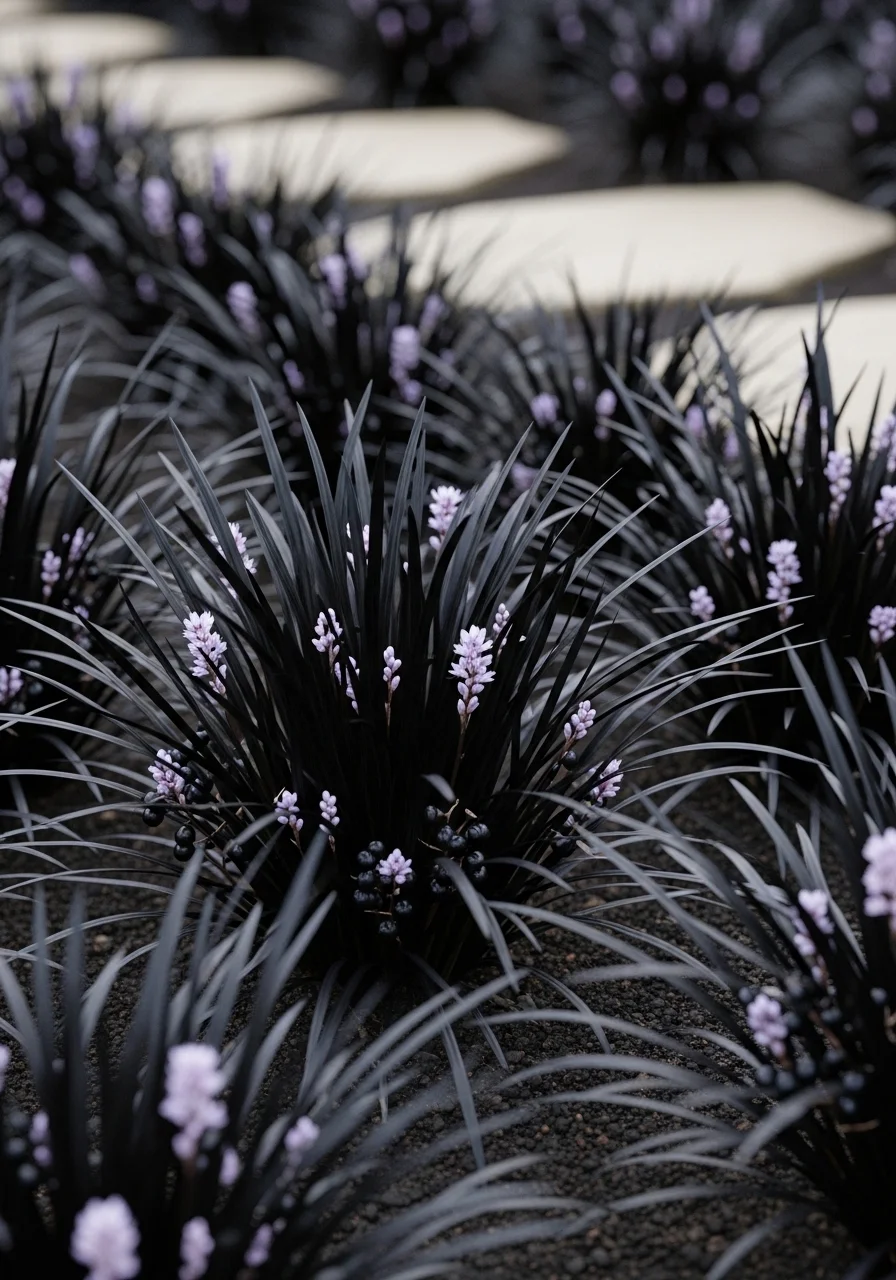
Not every gothic plant needs towering height or dramatic blooms to make a lasting impression. Black Mondo Grass proves that sometimes the darkest statement comes closest to the ground.
Ophiopogon planiscapus ‘Nigrescens’ is one of the most unique and visually striking ground cover plants available to gothic garden enthusiasts. Its slender, arching blades are a genuine jet black color, not dark green, not deep purple, but truly black. This extraordinary coloring makes it stand out in any garden setting and creates an instant mood of mystery and dark sophistication that few other plants can match.
Black Mondo Grass is remarkably low-maintenance and incredibly versatile. It thrives in both full sun and partial shade, though its black coloring tends to deepen and intensify in brighter light conditions. It grows best in USDA zones 6 to 11 and performs consistently well across a wide range of soil types, provided drainage is adequate.
For maximum gothic impact, pair Black Mondo Grass with pale silver foliage plants, white flowering ground covers, or light colored stepping stones. The contrast is nothing short of breathtaking and creates a year-round dark garden aesthetic that never loses its dramatic edge even in the winter months.
Quick Facts:
- Botanical Name: Ophiopogon planiscapus ‘Nigrescens’
- Height: 6 to 9 inches
- Light: Full sun to partial shade
- Zones: 6 to 11
- Shock Factor: High
7. Elephant Ears Black Magic (Colocasia esculenta ‘Black Magic’)

If you want one single plant that stops traffic, silences conversations, and makes every neighbor do a double take, Colocasia esculenta ‘Black Magic’ is your answer.
This extraordinary tropical plant produces massive, heart-shaped leaves in a stunning deep purple-black color that is unlike anything else in the plant kingdom. Each leaf can grow up to 2 feet wide, creating a bold, oversized statement that dominates any garden space it occupies. The sheer scale of this plant, combined with its dramatic dark coloring, makes it the ultimate gothic garden showstopper.
Elephant Ears Black Magic thrives in full sun to partial shade and loves consistently moist soil. It performs best in USDA zones 8 to 11 but grows beautifully as an annual in cooler climates, making it accessible to gothic garden enthusiasts across a wide range of regions. In colder zones, simply dig up the tubers before the first frost and store them indoors until spring returns.
This plant grows rapidly during the warm season, reaching impressive heights of 4 to 6 feet in a single growing season. Plant it as a dramatic backdrop behind lower-growing gothic plants like Black Mondo Grass for a layered, theatrical effect that looks professionally designed.
Quick Facts:
- Botanical Name: Colocasia esculenta ‘Black Magic.’
- Height: 4 to 6 feet
- Light: Full sun to partial shade
- Zones: 8 to 11
- Shock Factor: Extremely High
How to Create a Sinister Gothic Garden With Dark Plants?
Knowing which gothic plants to grow is only half the battle. Knowing how to arrange them together is what separates a truly jaw-dropping gothic garden from a collection of dark plants randomly thrown into the ground.
Here is everything you need to create a cohesive, sinister, and visually stunning gothic garden design.
Start With a Dark Color Palette
The foundation of every successful gothic garden is a carefully chosen color palette. Stick to deep blacks, rich purples, dark burgundies, and dramatic silvers. Use pale white flowering plants sparingly as contrast elements to make your dark specimens pop even harder against the background.
Layer Your Plants Strategically
Height layering is essential in Gothic garden design. Place tall dramatic specimens like Elephant Ears, Black Magic, and Black Hollyhock at the back of your beds. Use mid-height plants like Devil’s Trumpet and Black Rose in the middle. Finish the front edges with low-growing Black Mondo Grass for a seamless, theatrical effect.
Choose the Right Hardscape Elements
The plants alone will not complete the gothic atmosphere. Pair your dark garden specimens with weathered stone pathways, wrought iron fencing, black decorative mulch, and aged terracotta or concrete containers. These elements reinforce the sinister mood and tie the entire garden design together beautifully.
Add Nighttime Drama With Lighting
Gothic gardens truly come alive after dark. Install low-voltage ground lighting or vintage-style lanterns to cast dramatic shadows across your dark foliage plants. The interplay of light and shadow on plants like Black Bat Flower and Colocasia Black Magic creates an atmospheric nighttime display that is genuinely unforgettable.
Consider Year-Round Structure
Choose a mix of evergreen gothic plants like Black Mondo Grass alongside seasonal showstoppers to ensure your gothic garden maintains its dark drama across every single season of the year.
FAQs About Gothic Plants
What plants are considered gothic?
Gothic plants are dark foliage, dramatically textured, or black-flowered specimens like Black Mondo Grass, Black Hollyhock, Colocasia Black Magic, and Black Bat Flower that create a moody, sinister atmosphere in garden spaces.
What flowers are goth?
The most popular goth flowers include Black Rose, Black Hollyhock, Black Bat Flower, and Devil’s Trumpet, all recognized for their deep, dark blooms, dramatic forms, and strong associations with mystery and dark botanical aesthetics.
What are some witchy plants?
Classic witchy plants include Devil’s Trumpet, Belladonna, Mugwort, Wolfsbane, and Black Hollyhock, all of which carry deep roots in ancient herbal folklore, witchcraft traditions, and medieval poison garden history.
What are some spooky plants?
The spookiest plants include the Corpse Flower, Black Bat Flower, Devil’s Trumpet, and Voodoo Lily, all known for their unsettling appearances, bizarre biological behaviors, or deeply sinister reputations in dark botanical history.
What is a devil’s plant?
Devil’s Trumpet, known botanically as Datura stramonium, is commonly called the devil’s plant due to its highly toxic nature, spiky, menacing seed pods, and centuries-long association with witchcraft folklore and dark herbal traditions across medieval Europe.
What is the most terrifying plant?
The Corpse Flower is widely considered the most terrifying plant in the world, producing a massive burgundy bloom that releases a powerful rotting flesh odor, attracting carrion insects and shocking every person within smelling distance.
Conclusion
Gothic plants are not just a gardening trend. They are a bold lifestyle statement that tells the world you are done playing it safe with ordinary flowers and predictable green landscapes.
From the supernatural silhouette of the Black Bat Flower to the legendary shock value of the Corpse Flower, every single plant on this list brings something dark, dramatic, and genuinely unforgettable to your outdoor space.
The best part? You do not need to grow all seven at once. Start with one or two easy picks like Black Mondo Grass or Black Hollyhock and build your sinister garden from there. Let your dark vision grow one plant at a time.
Your neighbors will notice. They always do.
Now it is your turn. Which of these 7 sinister gothic plants are you adding to your garden first? Drop your answer in the comments below.
Want more dark garden inspiration? Explore our complete gothic garden design guide and discover even more ways to bring dramatic beauty to your outdoor space.

Shahid Nawaz is a home and garden content writer at Garden Skillz with over 4 years of experience researching and writing about gardening, plant care, and DIY home improvement. He specializes in turning complex horticultural topics into practical, easy-to-follow guides for beginners and experienced growers alike. Shahid has written extensively on flowering plants, indoor greenery, and seasonal garden care.