Close your eyes and imagine this: you spent weeks picking the perfect dining table, the most beautiful chairs, and the most elegant wall art money can buy. But the moment your guests walk in, something feels completely wrong. The room looks dull, flat, and lifeless. The problem is not your furniture. The problem is your dining room lighting.
Most homeowners spend thousands on décor yet completely overlook the one element that ties everything together. The wrong fixture makes even the most expensive dining room feel cold and uninviting. But here is the good news: the best dining room lighting combines a central chandelier with layered ambient and accent lighting to instantly create a warm, balanced, and elegant atmosphere that transforms any ordinary meal into a memorable experience.
Whether you are hosting a holiday feast, enjoying a quiet family dinner, or setting a romantic mood, your dining room lighting sets the tone before the first dish even arrives.
Here are 10 stunning dining room lighting ideas for every style, budget, and ceiling height.
Why Dining Room Lighting Matters?
Most people think lighting is just about visibility. But the truth is, dining room lighting is one of the most powerful tools in interior design, and science backs this up.
Research in environmental psychology shows that warm, dimmable lighting slows people down, encourages longer conversations, and even makes food look more appetizing. Restaurants around the world use this principle every single day to create an experience that keeps customers coming back. You can bring that same magic into your own home.
Beyond mood, the right dining room lighting also adds real monetary value to your property. According to interior design experts, updated light fixtures are among the most cost-effective upgrades a homeowner can make before selling a home. A well-lit dining room photographs beautifully, feels larger, and leaves a lasting impression on potential buyers.
There is also the matter of energy efficiency. Modern dining room lighting solutions, especially LED fixtures, consume up to 80 percent less energy than traditional incandescent bulbs while delivering superior color rendering, longer lifespan, and better light quality overall.
From your family’s daily comfort to your home’s long-term value, lighting is never just a finishing touch. It is the foundation of how your dining room looks, feels, and functions every single day.
Things To Consider Before Choosing Dining Room Lighting
Before you fall in love with a fixture online and hit the buy button, there are a few important things every homeowner should know. Choosing the wrong dining room lighting is a costly mistake that is very easy to avoid with just a little planning up front.
Room Size and Ceiling Height
The size of your dining room directly determines the size of your fixture. A small pendant light in a large room looks lost, while an oversized chandelier in a tiny space feels suffocating. As a general rule, add your room’s length and width in feet and convert that number to inches. That is your ideal fixture diameter. For ceiling height, pendant lights and chandeliers should always hang 30 to 36 inches above your dining table surface for the perfect balance of light and visual comfort.
Dining Table Shape
Round tables pair beautifully with a single centered chandelier or pendant. Rectangular tables look best with a row of two or three evenly spaced pendants or a linear chandelier that follows the length of the table.
Existing Decor Style
Your dining room lighting fixture should feel like a natural extension of your overall interior style, whether that is modern, farmhouse, traditional, or industrial.
Budget and Energy Efficiency
Always factor in long-term energy costs alongside the upfront price. LED-compatible fixtures save significantly more money over time and deliver better light quality for your dining room lighting setup.
The 10 Stunning Dining Room Lighting Ideas
Now comes the most exciting part. Whether you are renovating your entire home or simply refreshing one room, these 10 stunning dining room lighting ideas will give you all the inspiration you need to make the right choice for your space, your style, and your budget.
Idea 1: Classic Chandelier Dining Room Lighting
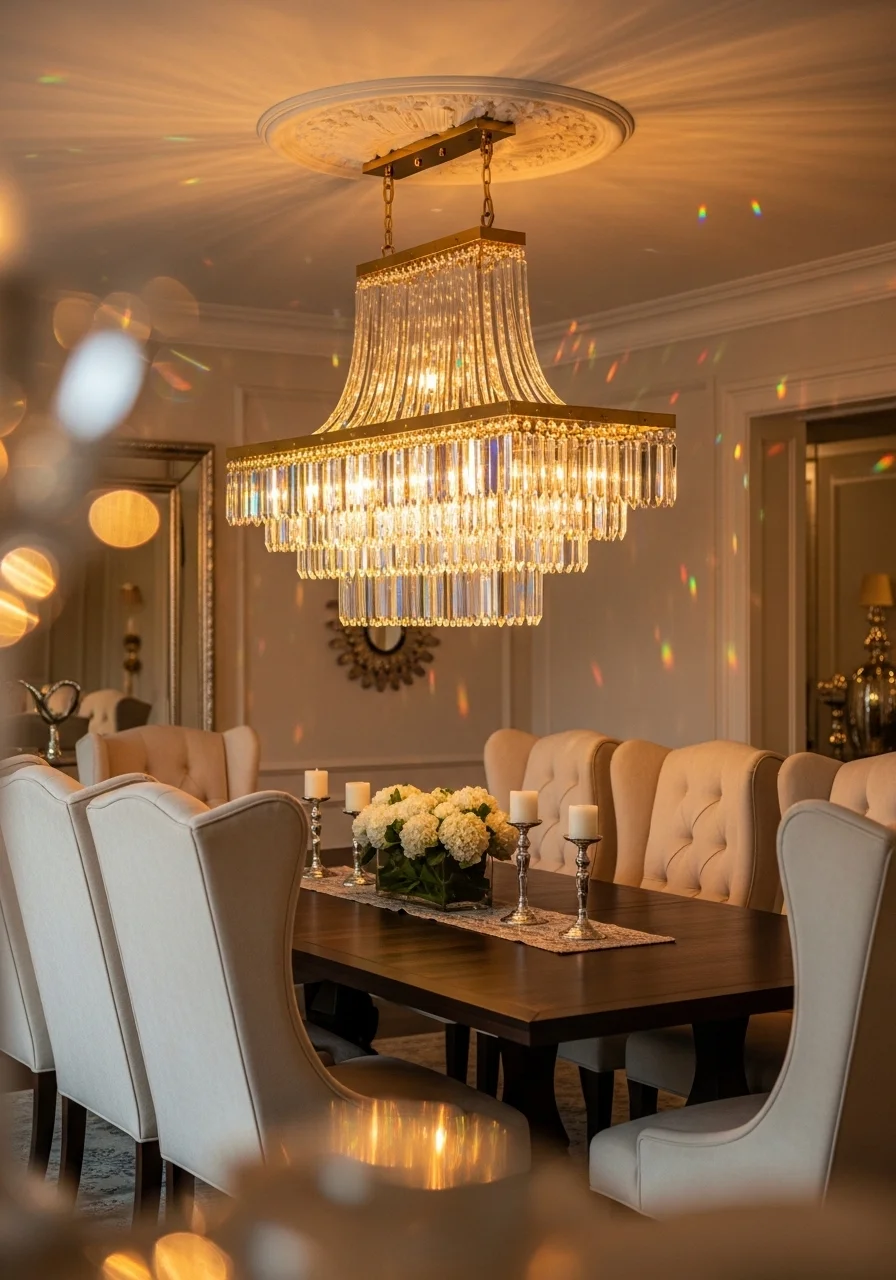
If there is one fixture that has stood the test of time in every era of interior design, it is the chandelier. Classic chandelier dining room lighting brings an instant sense of grandeur, elegance, and sophistication to any space, regardless of whether your home is a modern apartment or a traditional family house.
The key to getting a chandelier right is sizing. A chandelier that is too small disappears into the room, while one that is too large overwhelms the entire space. Follow the simple rule of adding your room dimensions in feet and converting to inches for the ideal chandelier diameter. For a dining table that seats six to eight people, a chandelier between 24 and 36 inches wide works beautifully.
Style options are virtually endless. Crystal chandeliers deliver timeless glamour. Wrought iron chandeliers bring rustic charm. Geometric metal chandeliers feel fresh and contemporary. Whatever your decor style, there is a chandelier that fits perfectly into your dining room lighting plan.
Best For: Traditional, glamorous, and transitional dining rooms.
Idea 2: Pendant Lights for a Modern Dining Room

Pendant lights have become one of the most popular dining room lighting choices for modern and contemporary homes, and it is easy to see why. They are sleek, stylish, highly versatile, and available in hundreds of designs that suit every taste and budget.
The beauty of pendant lights lies in their flexibility. You can hang a single large statement pendant over a round table for a clean, minimalist look. You can also cluster three smaller pendants at varying heights over a rectangular table to create a dynamic, visually interesting focal point that draws the eye upward and adds dimension to the room.
Hanging height matters more than most people realize. Pendant lights should sit 30 to 36 inches above the dining table surface. Too high and the light feels disconnected. Too low and it blocks sightlines across the table during conversation.
Popular materials include mouth-blown glass, brushed brass, matte black metal, and woven rattan, each bringing its own personality to your overall dining room lighting design.
Best For: Modern, Scandinavian, bohemian, and minimalist dining rooms.
Idea 3: Recessed Lighting as Ambient Base Layer

Recessed lighting is the unsung hero of great dining room lighting design. While it rarely gets the spotlight on its own, it plays an absolutely critical role in creating a well-balanced, professionally lit dining room that feels comfortable from every angle.
The concept is simple. Recessed lights are installed flush into the ceiling and cast a soft, even wash of ambient light across the entire room. This eliminates harsh shadows and dark corners that make a dining space feel smaller and less inviting than it actually is.
The most effective approach is to use recessed lighting as a base layer underneath your main fixture. Install four to six recessed lights evenly spaced around the perimeter of the room and connect them to a dimmer switch. When you want bright light for a family dinner, turn them up. When you want a cozy, intimate atmosphere for a dinner party, dim them down and let your chandelier or pendant take center stage.
LED recessed lights are the best choice for modern dining room lighting because they are energy efficient, long-lasting, and available in a range of color temperatures from warm white to cool daylight.
Best For: All dining room styles, especially open-concept spaces.
Idea 4: Statement Wall Sconces for Accent Lighting
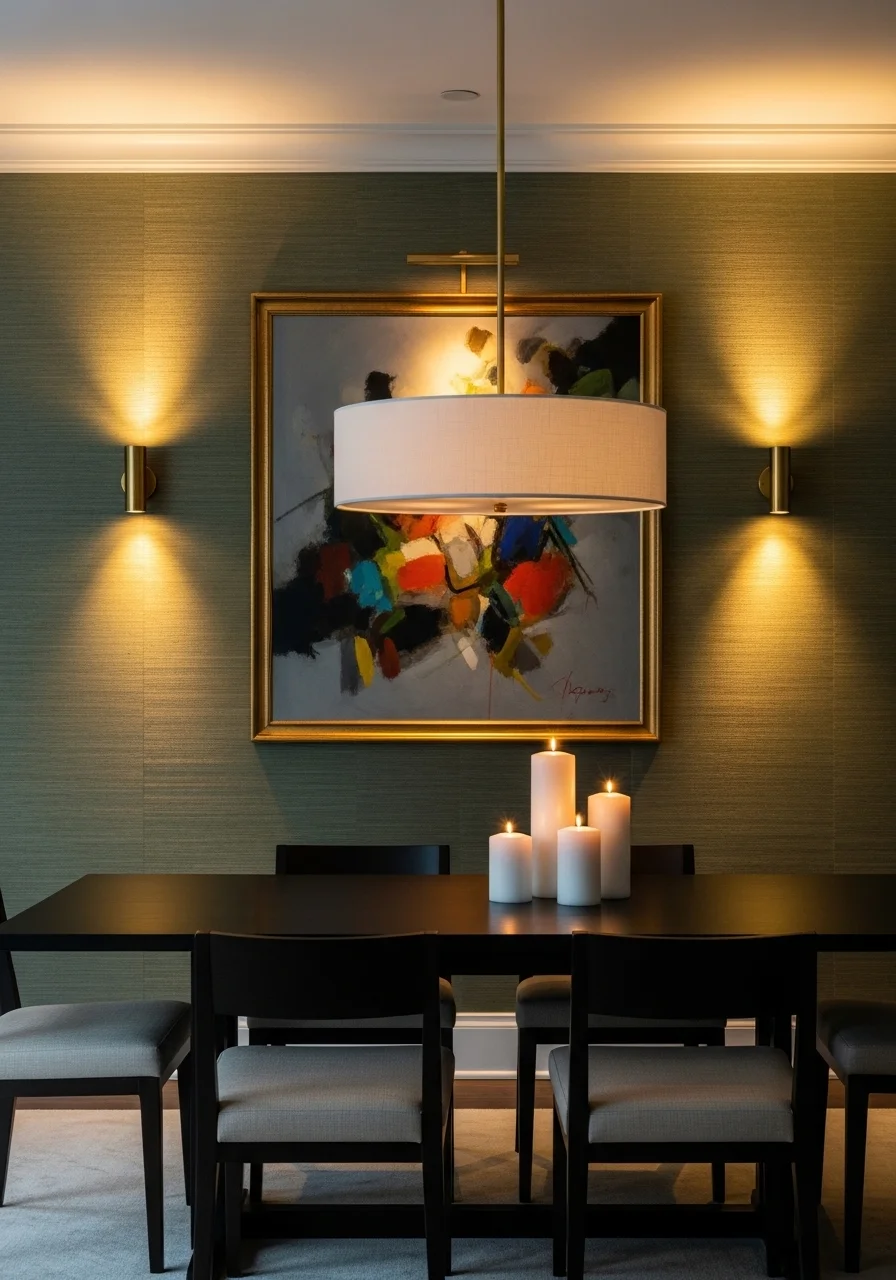
Wall sconces are one of the most underutilized yet most impactful tools in any dining room lighting design. When placed correctly, they add depth, warmth, and a layer of visual drama that no ceiling fixture alone can achieve.
Think of wall sconces as the supporting actors in your lighting story. They do not need to be the brightest source of light in the room. Their job is to create soft pools of warm light along the walls that make the space feel larger, cozier, and more layered.
For best results, install wall sconces at eye level, approximately 60 to 65 inches from the floor to the center of the fixture. Space them evenly on opposite walls or flank a piece of artwork or a mirror to create a beautifully curated vignette.
Sconces pair exceptionally well with a central chandelier or pendant, completing a layered dining room lighting scheme that interior designers consistently recommend for high-end residential projects.
Best For: Formal dining rooms, open-plan spaces, and rooms with artwork or feature walls.
Idea 5: Farmhouse Style Dining Room Lighting

Farmhouse-style dining room lighting has exploded in popularity over the last decade and shows absolutely no signs of slowing down. There is something deeply comforting and inviting about the warm, lived-in aesthetic that farmhouse fixtures bring to a dining space.
The defining characteristics of farmhouse lighting include natural materials like wood, rope, and aged metals, open cage designs that showcase the bulb, and a warm amber glow that makes every meal feel like a cozy gathering around the hearth.
Edison bulbs and vintage filament bulbs are the perfect companions for farmhouse fixtures. Their warm 2200K to 2700K color temperature casts a rich, golden light that flatters both the food on the table and the faces of the people sitting around it.
Pair your farmhouse dining room lighting with a shiplap accent wall, a reclaimed wood dining table, and linen curtains for a look that feels effortlessly stylish and deeply personal.
Best For: Farmhouse, rustic, cottage, and country style dining rooms.
Idea 6: Mid Century Modern Dining Room Lighting

If you love bold design, clean lines, and a touch of retro flair, mid-century modern dining room lighting is the perfect direction for your space. This style draws inspiration from the design movements of the 1950s and 1960s and translates them into fixtures that feel both nostalgic and surprisingly fresh in today’s interiors.
Sputnik chandeliers are perhaps the most iconic mid-century modern lighting fixture. Their starburst silhouette with exposed bulbs radiating outward in every direction makes an immediate and unforgettable statement in any dining room.
Geometric pendants in brass, gold, or walnut wood are equally popular and slightly more understated for those who want the mid-century feel without quite as much drama. These fixtures pair beautifully with molded plastic chairs, tapered wooden furniture legs, and a warm, earthy color palette.
Mixing metals is completely acceptable and even encouraged in mid-century modern dining room lighting design. Combine brass fixtures with chrome accents and matte black hardware for a layered, curated look that feels intentional rather than accidental.
Best For: Mid-century modern, eclectic, and retro-inspired dining rooms.
Idea 7: Layered Dining Room Lighting Design
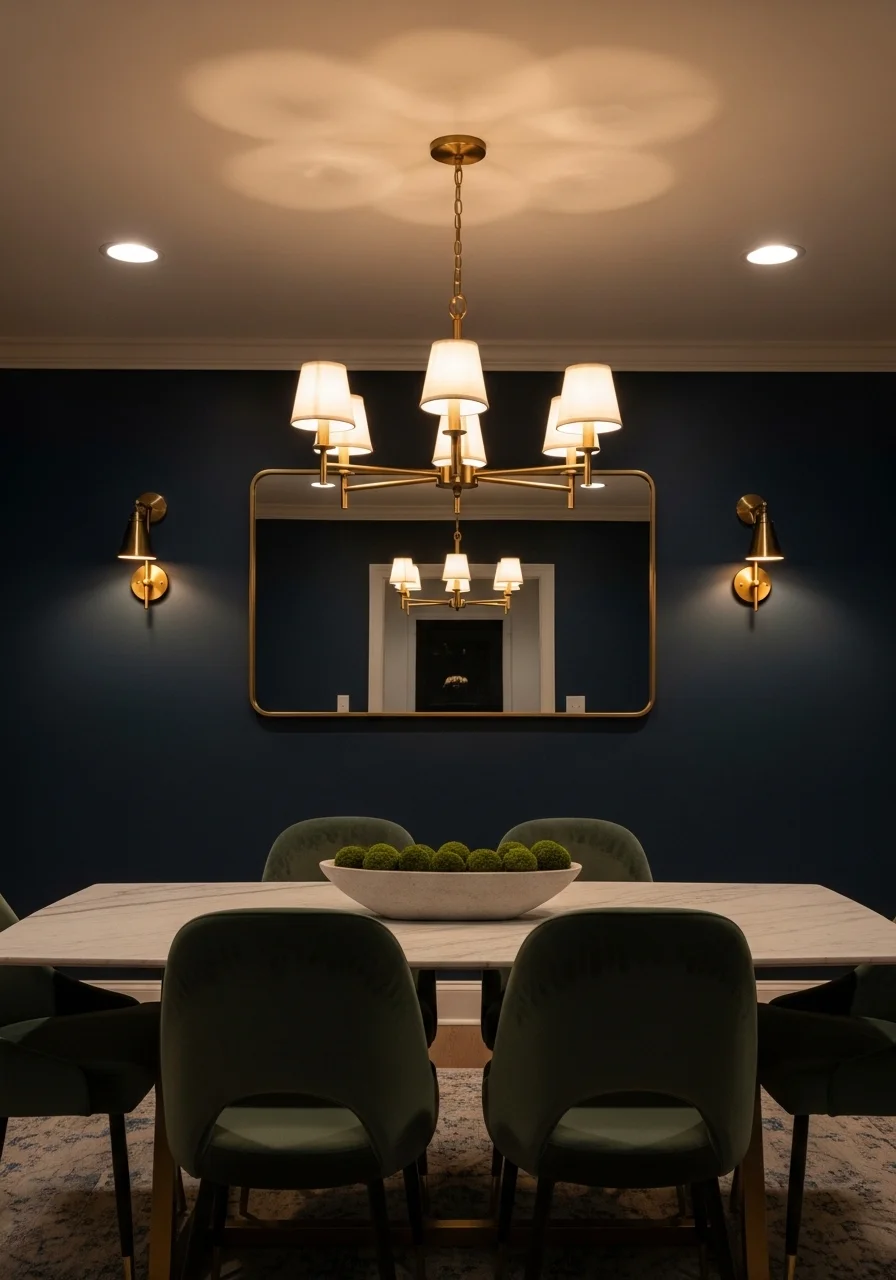
Of all the dining room lighting ideas on this list, layering is the single most transformative approach, regardless of your budget, style, or room size. Professional interior designers use this technique in virtually every project because it creates a space that is not just well-lit but genuinely beautiful at every time of day.
The layered lighting concept is built on three distinct levels. The first is ambient lighting, which is your primary source of general illumination provided by a chandelier, pendant, or recessed lights. The second is task lighting, which focuses light directly on the dining table surface for practical visibility during meals. The third is accent lighting, which includes wall sconces, picture lights, or LED strips that highlight architectural features and add visual depth to the room.
When all three layers work together and are connected to individual dimmer switches, you gain complete control over the mood and atmosphere of your dining room lighting at any given moment. Bright and energetic for a Sunday family brunch. Soft and romantic for a candlelit dinner. Everything in between for every occasion life brings to your table.
Best For: Every dining room style and size.
Idea 8: Candle Style Dining Room Lighting for Romance

There is a reason candlelight has been synonymous with romance and intimacy for centuries. The soft, flickering warmth of candle-style dining room lighting creates an atmosphere that no other type of fixture can truly replicate, and modern design has found beautiful ways to capture that magic in permanent, safe, and elegant fixtures.
Candelabra chandeliers are the most popular expression of this idea. They feature multiple arms extending outward, each topped with a flame-shaped bulb that mimics the look of real candles while delivering consistent, controllable light. Available in crystal, wrought iron, antique brass, and matte black finishes, there is a candelabra chandelier for every dining room style.
For the warmest possible atmosphere, choose bulbs with a color temperature of 2700K or below. This produces a rich, amber-toned light that flatters skin tones, makes food look irresistible, and transforms an ordinary weeknight dinner into something that feels genuinely special.
Complement your candle-style dining room lighting with real candlesticks on the table, a linen tablecloth, and dimmed recessed lights for an atmosphere that your guests will talk about long after the evening ends.
Best For: Formal, traditional, romantic, and transitional dining rooms.
Idea 9: LED Strip Lighting for a Contemporary Look

LED strip lighting has moved far beyond its early reputation as a purely functional or commercial solution. Today, it is one of the most creative and versatile tools available in contemporary dining room lighting design, capable of adding a dramatic, high-end look to any space at a fraction of the cost of traditional fixtures.
The most popular application is cove lighting, in which LED strips are installed in a recessed channel along the ceiling perimeter. This creates a soft, floating halo of light that adds architectural interest and makes the ceiling appear higher than it actually is, a particularly valuable trick for dining rooms with standard or low ceilings.
LED strips can also be installed beneath floating shelves, inside glass front cabinets, or along the underside of a buffet table to create layered accent lighting that adds depth and dimension to every corner of the room.
Smart LED options take this dining room lighting idea even further. With app-controlled systems like Philips Hue or Govee, you can change the color temperature, brightness, and even the color of your LED strips instantly to match any occasion, season, or mood.
Best For: Contemporary, minimalist, and smart home dining rooms.
Idea 10: Natural Light and Artificial Dining Room Lighting Combo

The most beautiful dining room lighting of all costs absolutely nothing. Natural light streaming through well-positioned windows or a skylight creates a brightness, clarity, and connection to the outdoors that no artificial fixture can fully replicate. The smartest approach to dining room design is to maximize natural light during the day and transition seamlessly into artificial lighting as the evening arrives.
During daylight hours, keep window treatments light and airy. Sheer linen curtains filter harsh midday sun while still allowing a soft, diffused glow to fill the room. If your dining room has south or west-facing windows, consider frosted glass or light-filtering shades to prevent glare directly on the table during meals.
As natural light fades in the evening, your layered artificial dining room lighting takes over smoothly. Warm white bulbs in the 2700K to 3000K range are the best choice for this transition because they closely mimic the golden quality of late afternoon sunlight and maintain the warm, inviting atmosphere your dining room established throughout the day.
This combination of natural and artificial light is the hallmark of truly thoughtful dining room lighting design and the approach most recommended by professional interior designers worldwide.
Best For: All dining room styles, especially those with large windows or open floor plans.
Dining Room Lighting By Style
Choosing the right dining room lighting becomes so much easier when you start with your interior style as the foundation. Every design aesthetic has its own lighting language, and matching your fixture to your decor creates a sense of harmony and intention that elevates the entire room instantly.
Modern Dining Room Lighting
Modern style favors clean lines, geometric shapes, and a restrained color palette. The best fixtures for modern spaces include slim linear pendants, minimalist dome shades, and recessed lighting paired with a single bold statement piece. Matte black, brushed nickel, and polished chrome are the go-to finishes for modern dining room lighting design.
Traditional Dining Room Lighting
Traditional interiors call for symmetry, ornate detailing, and rich materials. Crystal chandeliers, candelabra-style fixtures, and antique brass finishes all feel perfectly at home in a traditional dining room. Layered lighting with wall sconces and dimmable overhead fixtures completes the look beautifully.
Transitional Dining Room Lighting
Transitional style sits comfortably between classic and contemporary. Drum shade pendants, understated chandeliers in mixed metals, and soft ambient lighting work exceptionally well in transitional dining spaces that want elegance without formality.
Industrial Dining Room Lighting
Industrial dining room lighting embraces raw, unfinished aesthetics. Exposed Edison bulbs, cage pendants, pipe-style wall sconces, and weathered iron chandeliers are signature elements of this bold and characterful style.
Bohemian Dining Room Lighting
Bohemian spaces thrive on texture, warmth, and creative layering. Rattan pendants, macrame wrapped fixtures, Moroccan lanterns, and mismatched vintage bulbs bring a free-spirited, globally inspired energy to bohemian dining room lighting that feels deeply personal and endlessly inviting.
Each of these styles represents its own complete world of design possibilities, and every one of them deserves a deeper exploration of its own.
Dining Room Lighting Tips From Interior Designers
When it comes to dining room lighting, the difference between a good result and a truly stunning one often comes down to a handful of expert principles that professional interior designers apply to every project they take on. Here are the most valuable tips straight from the design world that you can apply to your own home today.
Get the Scale Right First
According to leading interior designers, the single most common dining room lighting mistake homeowners make is choosing a fixture that is too small for the space. A fixture that feels bold and oversized in the store will often look perfectly proportioned once it is installed in your dining room. When in doubt, always size up.
Always Install Dimmer Switches
Every professional designer agrees on this without exception. No matter how beautiful your fixture is, without a dimmer switch, you are locked into one fixed level of light for every occasion. Dimmers give you complete control over the atmosphere and are one of the most affordable upgrades you can make to any dining room lighting setup.
Layer Your Light Sources
Relying on a single overhead fixture is the fastest way to create a flat, uninspiring dining room. Designers consistently recommend combining at least two to three light sources at different heights and intensities to create a space that feels rich, warm, and professionally designed.
Match Metal Finishes Intentionally
Your dining room lighting fixture should echo at least one other metal finish already present in the room, whether that is your cabinet hardware, chair legs, or picture frames, to create a cohesive and polished overall look.
Dining Room Lighting On A Budget
Stunning dining room lighting does not have to come with a stunning price tag. With the right approach and a little creative thinking, you can completely transform the look and feel of your dining space without breaking the bank.
The smartest budget move any homeowner can make is to invest in one quality statement fixture and keep everything else simple. A beautiful pendant or chandelier from affordable retailers like IKEA, Wayfair, or Amazon can look just as impressive as a designer piece when it is properly sized, correctly hung, and paired with the right bulbs.
Switching your existing bulbs to warm white LED bulbs is the single cheapest upgrade you can make to your dining room lighting, and the impact is immediate. Warm white bulbs in the 2700K to 3000K range instantly make any fixture look more intentional, and any room feel more inviting.
Adding a dimmer switch to your existing dining room lighting setup costs as little as $15 to $20 and delivers a transformation that feels far more expensive than it actually is.
| Budget Level | Fixture Type | Estimated Price Range |
|---|---|---|
| Low | Flush Mount or Semi-Flush | 30 to 100 dollars |
| Mid | Pendant or Simple Chandelier | 100 to 400 dollars |
| High | Designer Statement Chandelier | 400 to 2000 dollars plus |
Whatever your budget, there is a dining room lighting solution that works beautifully for your space, your style, and your wallet.
FAQ
Q1: What kind of lighting is best for a dining room?
The best dining room lighting combines a central statement fixture, such as a chandelier or pendant light, with layered ambient and accent lighting connected to dimmer switches. Warm white bulbs between 2700K and 3000K deliver the most flattering and inviting atmosphere for any dining space, regardless of size or style.
Q2: What is the trend for dining room lighting in 2025?
The biggest trends in dining room lighting right now include sculptural statement pendants in organic shapes, warm brass and aged bronze finishes, rattan and natural material fixtures, smart LED lighting systems with app control, and layered lighting designs that combine multiple sources at different heights for a rich, designer quality result.
Q3: What is the rule for dining room lights?
The golden rule of dining room lighting is that your fixture should hang 30 to 36 inches above the dining table surface. For fixture sizing, add your room length and width in feet and convert that number to inches to find your ideal chandelier or pendant diameter. Always connect fixtures to a dimmer switch for full atmospheric control.
Q4: What are the common mistakes in dining room lighting?
The most common dining room lighting mistakes include choosing a fixture that is too small for the room, hanging lights too high above the table, relying on a single overhead light source with no layering, using cool white bulbs that create a harsh clinical atmosphere, and forgetting to install dimmer switches that allow mood control for different occasions.
Q5: What are outdated lighting trends to avoid?
Several dining room lighting trends have run their course and now make a space feel dated rather than designed. Avoid matching fixture sets where every light in the room is identical, overly ornate brass fixtures with excessive detailing, fluorescent tube lighting, very low-hanging drum shades that block sightlines, and cool blue-toned LED bulbs that strip all warmth and personality from the dining space.
Q6: What is the 3 lighting rule?
The 3 lighting rule is one of the most important principles in professional dining room lighting design. It states that every well-designed room should include three distinct layers of light working together harmoniously. The first layer is ambient lighting, which provides overall general illumination for the entire room. The second layer is task lighting, which focuses direct light onto the dining table surface for practical visibility during meals. The third layer is accent lighting, which uses wall sconces, LED strips, or picture lights to highlight architectural features, artwork, and decorative elements that add depth, dimension, and personality to the space.
Conclusion
Great dining room lighting is not a luxury reserved for interior designers and expensive renovations. It is a simple, achievable upgrade that any homeowner can make with the right knowledge, the right fixture, and a clear vision for the atmosphere they want to create.
You have now explored 10 stunning dining room lighting ideas covering every style, budget, and room size. You have learned the expert rules, the biggest mistakes to avoid, and the professional principles that separate a good dining room from a truly unforgettable one.
Now it is your turn to take action.
Start with one change. Swap your bulbs to warm white. Add a dimmer switch. Upgrade your central fixture. Every great dining room lighting transformation begins with a single confident decision.
Which of these 10 ideas inspired you the most? Drop your answer in the comments below and let us know which dining room lighting style feels like home to you.
And if you found this guide helpful, save it for your next home renovation project and share it with someone ready to transform their dining space today.

Shahid Nawaz is a home and garden content writer at Garden Skillz with over 4 years of experience researching and writing about gardening, plant care, and DIY home improvement. He specializes in turning complex horticultural topics into practical, easy-to-follow guides for beginners and experienced growers alike. Shahid has written extensively on flowering plants, indoor greenery, and seasonal garden care.