Last summer, I made a mistake that I still laugh about now. I decided to redo a small patch in my front yard that was always turning into a muddy mess after watering the lawn. I thought, “How hard can it be? Just plant something low and green.”
Well… I planted the wrong thing in the wrong place, didn’t think about foot traffic, and within a few weeks, I had half-bare patches, some crispy leaves, and a walkway that looked worse than before.
That little disaster is actually what pushed me into experimenting with walkable ground covers properly. And once I started paying attention to what actually survives footsteps, kids running through, and dry summer heat, everything changed.
If you’re dealing with similar spots in your yard—those awkward bare areas between stepping stones, or places where grass just refuses to grow—these are the walkable ground cover ideas that actually worked for me (and a few that definitely didn’t at first). Once you choose your ground cover, pairing it with the right lawn edging bricks keeps everything looking clean and defined.
1. Creeping Thyme – The One That Smells Like a Garden Dream

The first time I walked on creeping thyme, I remember stopping just to smell it. That alone made me rethink what “ground cover” even meant.
I planted it between stepping stones in a side yard that gets full sun almost all day. At first, I was worried I’d damage it by stepping on it too much. Surprisingly, it actually thrives with light foot traffic.
What I learned:
- It hates soggy soil more than anything
- Needs full sun to really spread nicely
- Once established, it bounces back quickly even after being stepped on
I made the mistake of overwatering it early on, thinking it needed “extra care.” That just made it weak and patchy. Once I cut back and let the soil dry a bit, it filled in beautifully.
Best use: Between stones, pathways, or edges where you walk lightly every day.
2. Clover Lawn – The “I Don’t Want to Mow Anymore” Solution

I switched part of my backyard grass to clover after getting tired of mowing every weekend. Honestly, I didn’t expect much.
But clover surprised me.
It spreads fast, stays green even when regular grass starts to struggle, and doesn’t need constant feeding. Plus, bees absolutely love it, which turned my garden into a little buzzing ecosystem.
Mistake I made:
I mixed it with regular grass without planning properly. Clover took over unevenly, and it looked messy for a while.
What worked better:
Starting in a defined section first, letting it fully establish, then expanding.
Best use: Low-maintenance lawns where kids and pets run around.
3. Irish Moss – Soft Like a Green Carpet (But Picky)

Irish moss looks like something from a fairy garden. It forms this dense, soft carpet that feels almost like walking on a spongy rug.
I used it in a shaded corner near my patio where grass refused to grow. It looked amazing after a few months—but I learned it’s a bit dramatic.
What it hates:
- Direct harsh sun
- Dry soil
- Heavy traffic all the time
It’s perfect for decorative walkways where you step occasionally, not daily.
I once placed it in a semi-sunny strip, thinking it would “adapt.” It didn’t. It turned yellow in patches within weeks.
Best use: Shade gardens, between pavers, or low-traffic decorative areas.
4. Creeping Jenny – Fast and Bright, Almost Too Fast
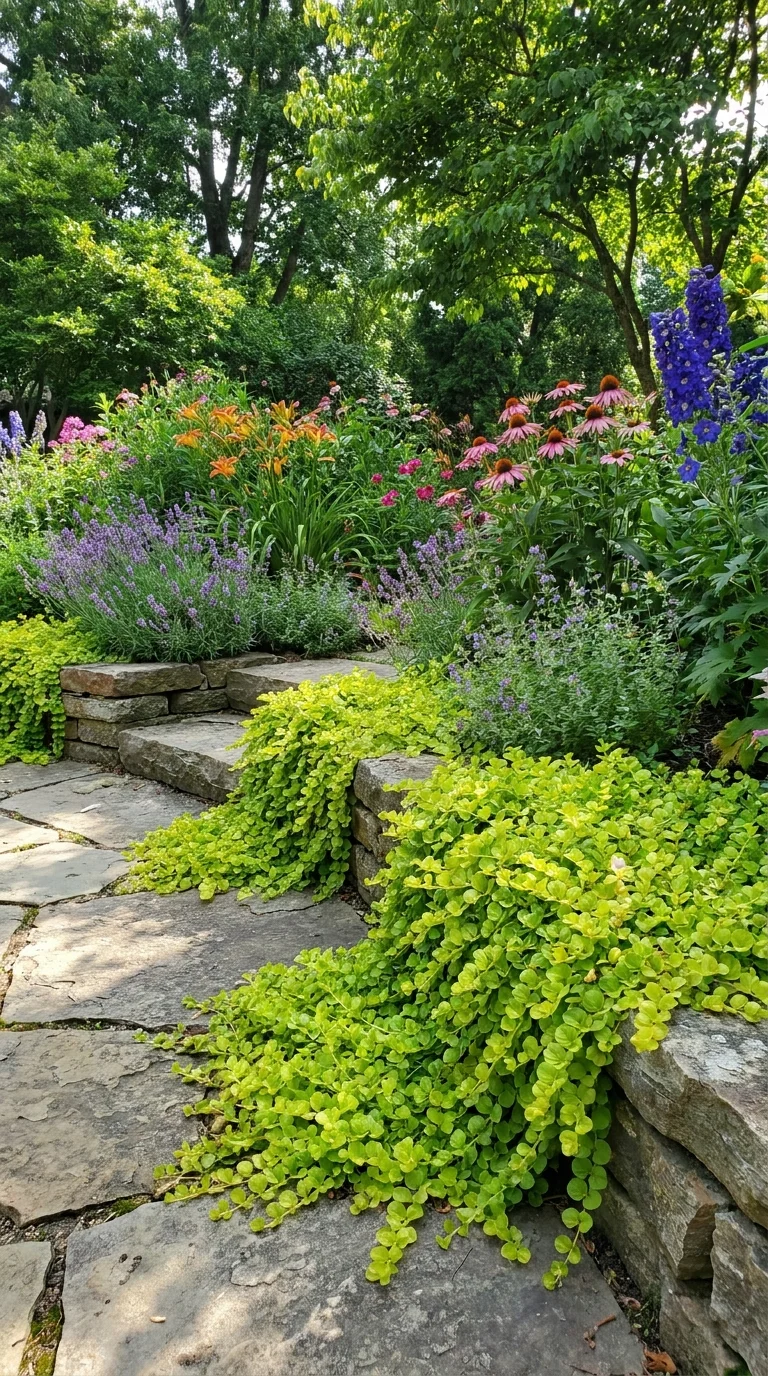
Creeping Jenny is one of those plants that grows as it competes. It spreads fast and gives a bright green-yellow pop that stands out instantly.
I originally planted it near a garden border, and within a couple of months, it started creeping into places I didn’t expect—including my gravel path.
Lesson learned:
It needs boundaries. Always.
I now use edging stones or buried garden borders to control it.
Best use: Slopes, borders, and areas where you want fast coverage.
5. Dwarf Mondo Grass – The “Clean Look” Choice

This one is for people who want something neat, dark green, and structured-looking.
I used dwarf mondo grass along a stepping stone walkway, and it completely changed the look of the yard. It gives that clean, modern garden vibe.
It grows slowly, though, so patience is key.
What I noticed:
- Almost no maintenance once established
- Very tolerant of light foot traffic
- Looks great all year round
My mistake:
I initially planted it too far apart. It took years to fill in. When I redid another section, I spaced it closer, and it worked much better.
6. Blue Star Creeper – Tiny Flowers, Big Impact
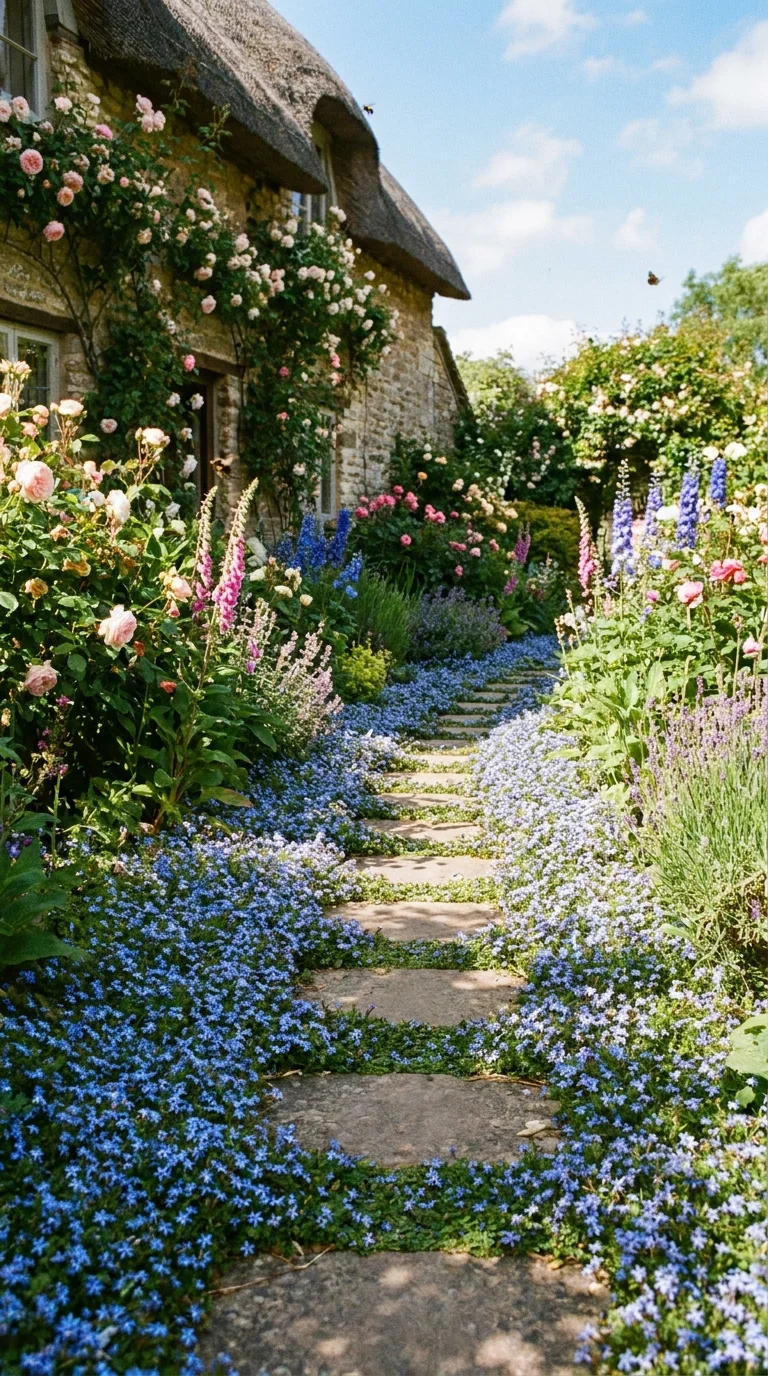
This one surprised me. I didn’t expect much from such a small plant, but when it bloomed, it completely changed the look of my walkway.
Tiny blue flowers appear in spring and summer, and it spreads into a soft mat that handles light walking pretty well.
Important tip:
It doesn’t like being dried out completely. I learned that after forgetting to water during a hot week, some patches struggled to recover.
Best use: Between stepping stones or as a soft lawn alternative in mixed light areas.
7. Mazus Reptans – The Underrated Ground Cover
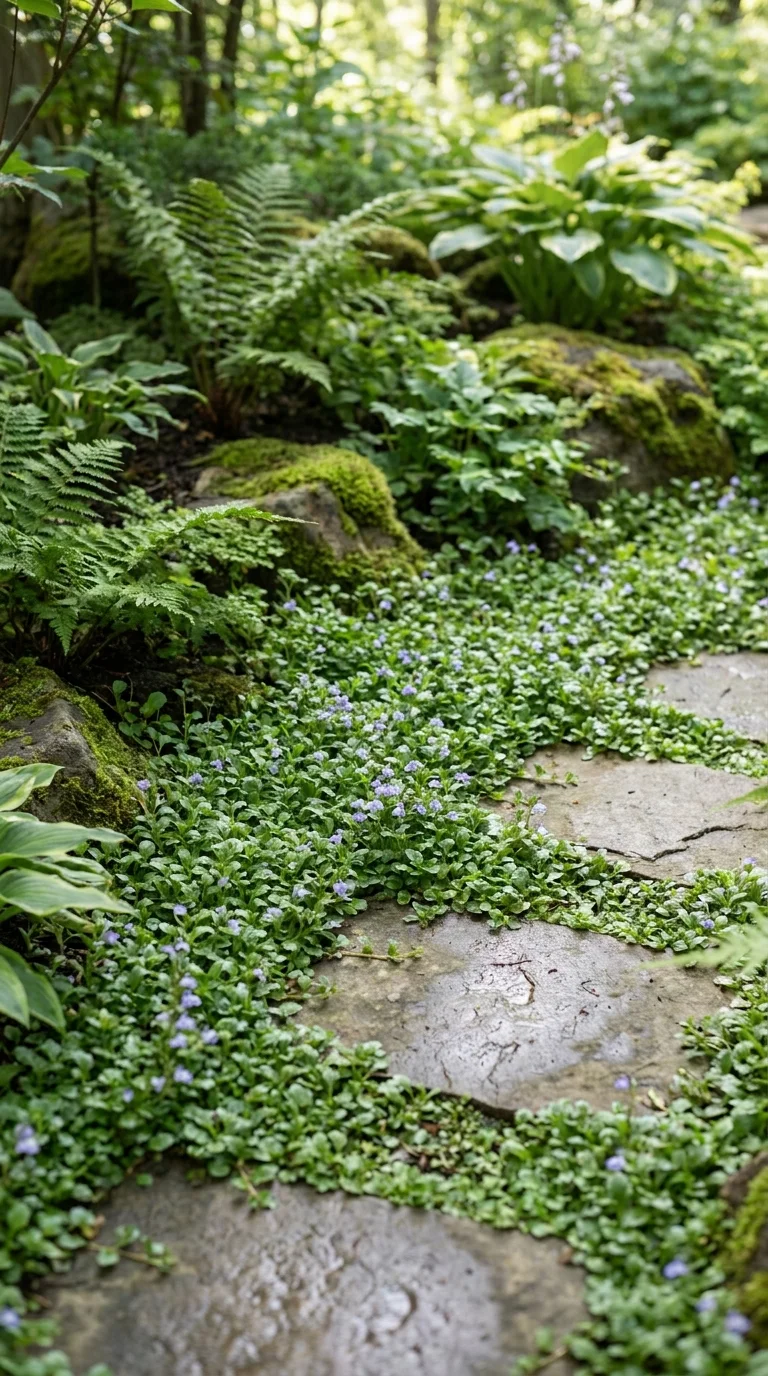
I almost ignored this one at the nursery because it didn’t look special at first. But it turned out to be one of the best performers in a shaded corner near my shed.
It spreads fast, fills gaps nicely, and produces small purple-blue flowers.
What worked well:
- Moist soil area near downspouts
- Partial shade zones where grass fails
It does need a bit of water consistency, though. If you let it dry out too much, it becomes patchy.
8. Roman Chamomile – Walkable and Herbal
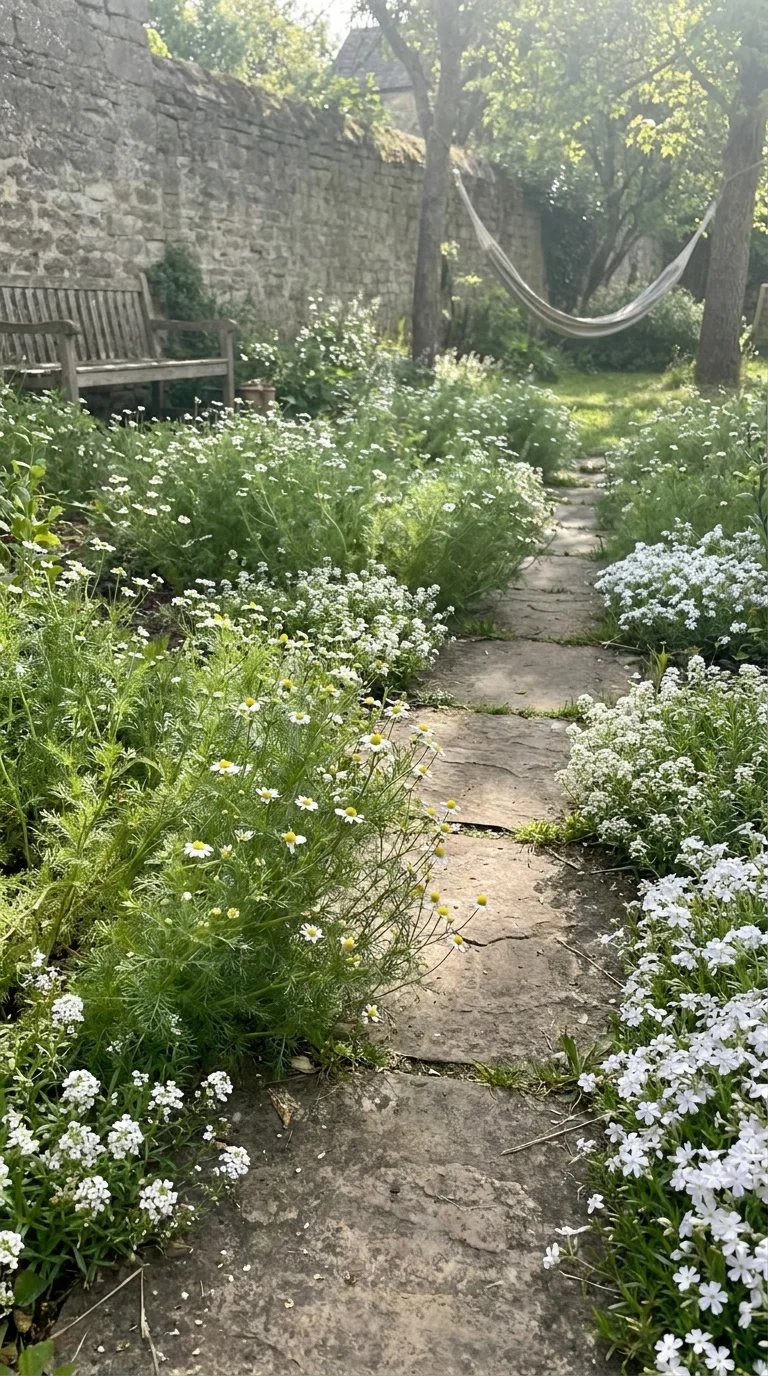
This one feels like walking through a herbal garden spa.
Roman chamomile gives off a light apple-like scent when stepped on. I planted it around a seating area where we often sit in the evenings.
It doesn’t handle heavy traffic as well as Clover, but for light walking zones, it’s beautiful.
Mistake I made:
Plant it in a high-traffic path near the gate. It got crushed too often and never fully recovered.
Best use: Relaxing garden zones, pathways you walk occasionally.
9. Sedum (Stonecrop) – The Tough Survivor

If there’s one plant I trust in neglected corners of the yard, it’s sedum.
I planted it in a dry, rocky area where nothing else survived. No fancy soil prep, just basic planting and occasional watering at first.
It practically took care of itself after that.
What I love about it:
- Handles heat and drought like a champ
- Needs almost no maintenance
- Works great in rocky walkways
It’s not soft underfoot like moss or thyme, but it’s incredibly reliable.
What I Got Wrong Before Getting It Right
Looking back, my biggest mistake was assuming all ground covers behave the same. They don’t. Some love stepping on, some tolerate it, and some just want to be admired from a distance.
A few lessons that saved me later:
- Always check sunlight needs before planting
- Don’t mix too many species in one walking path
- Give plants time—most need a full season to establish
- Edging is not optional for fast spreaders like creeping Jenny
I also started using a simple garden planning app on my phone (just to map sunlight and spacing), which honestly made a big difference in avoiding guesswork.
Simple Steps If You’re Starting Your Own Walkable Ground Cover
If I had to restart from scratch, I’d do it like this:
- Walk your yard and mark high-traffic vs light-traffic areas
- Match plant type to traffic level (don’t guess)
- Prepare soil properly (loosen and remove weeds first)
- Plant in small sections instead of covering everything at once
- Water consistently for the first few weeks
- Add edging before plants start spreading
Nothing fancy—but it prevents most of the mistakes I made early on.
Once your ground cover is established, adding a few stunning garden pots at key spots creates beautiful focal points throughout the yard.
Final Thoughts From My Yard Right Now
Right now, when I walk through my garden barefoot in the early morning, I can actually feel the difference these small changes have made. Some patches are soft and fragrant, others are dense and structured, and a few areas are still evolving.
That’s something I didn’t expect when I started—your yard doesn’t transform overnight. It slowly becomes something you interact with, not just look at.
And honestly, that’s the part I enjoy most now.

Shahid Nawaz is a home and garden content writer at Garden Skillz with over 4 years of experience researching and writing about gardening, plant care, and DIY home improvement. He specializes in turning complex horticultural topics into practical, easy-to-follow guides for beginners and experienced growers alike. Shahid has written extensively on flowering plants, indoor greenery, and seasonal garden care.