Let me tell you something embarrassing.
When we first put in our pool back in 2018, I thought we were done. Pool in the ground, check. Patio furniture, check. String lights, check. Done and dusted, right?
Wrong.
By the second summer, I was making three trips a day back into the house — for towels, for sunscreen, for snacks, for the bathroom, for a change of clothes. My floors were permanently damp. My mudroom smelled like chlorine. My kids were dragging wet footprints across the kitchen tiles nonstop, and I was slowly losing my mind.
That’s when my husband said it: “We need a pool house.”
I thought it was a luxury we couldn’t afford. Turns out, there are pool house ideas for pretty much every budget and backyard size — from a simple shed conversion to a fully tricked-out guesthouse. We ended up building a modest 12×16 structure that changed our entire outdoor experience.
If you’re tired of the endless back-and-forth, the wet floors, and the backyard that never quite feels complete — this one’s for you. Here are 10 brilliant pool house ideas that actually work in real life, not just on Pinterest boards.
1. The Classic Changing Room Setup — Simple, but Game-Changing

This was the first thing I put in our pool house, and honestly, it alone was worth every penny of the build.
A basic changing room is just a small partitioned area with a bench, some hooks on the wall, a shelf for towels, and a small mirror. That’s it. No plumbing needed, no electrical required if you don’t want it.
But here’s what nobody tells you: having even 30 square feet of dedicated changing space completely transforms how you use your pool. Guests aren’t awkwardly changing in your bathroom anymore. Kids aren’t leaving wetsuits draped over your dining chairs. You stop playing towel warden every five minutes.
For our build, we used simple cedar tongue-and-groove boards on the interior walls (cedar naturally resists moisture and smells amazing). A few stainless steel hooks from IKEA, a teak bench we found on Facebook Marketplace, and a small wall-mounted mirror. Total spend for the interior of that room? Maybe $180.
Pro tip: Install a small ventilation louver in the changing room wall. Without airflow, damp swimsuits and towels will start to smell musty within a day. A $15 passive vent from the hardware store solves this completely.
Mistake I made: I put the hooks too low. Kids can reach them fine, but adults end up with their towels dragging on the floor. Mount hooks at two heights — one set at 60 inches for adults, one at 40 inches for kids. Learned that after one summer.
2. The Outdoor Shower Station — You’ll Wonder How You Lived Without One
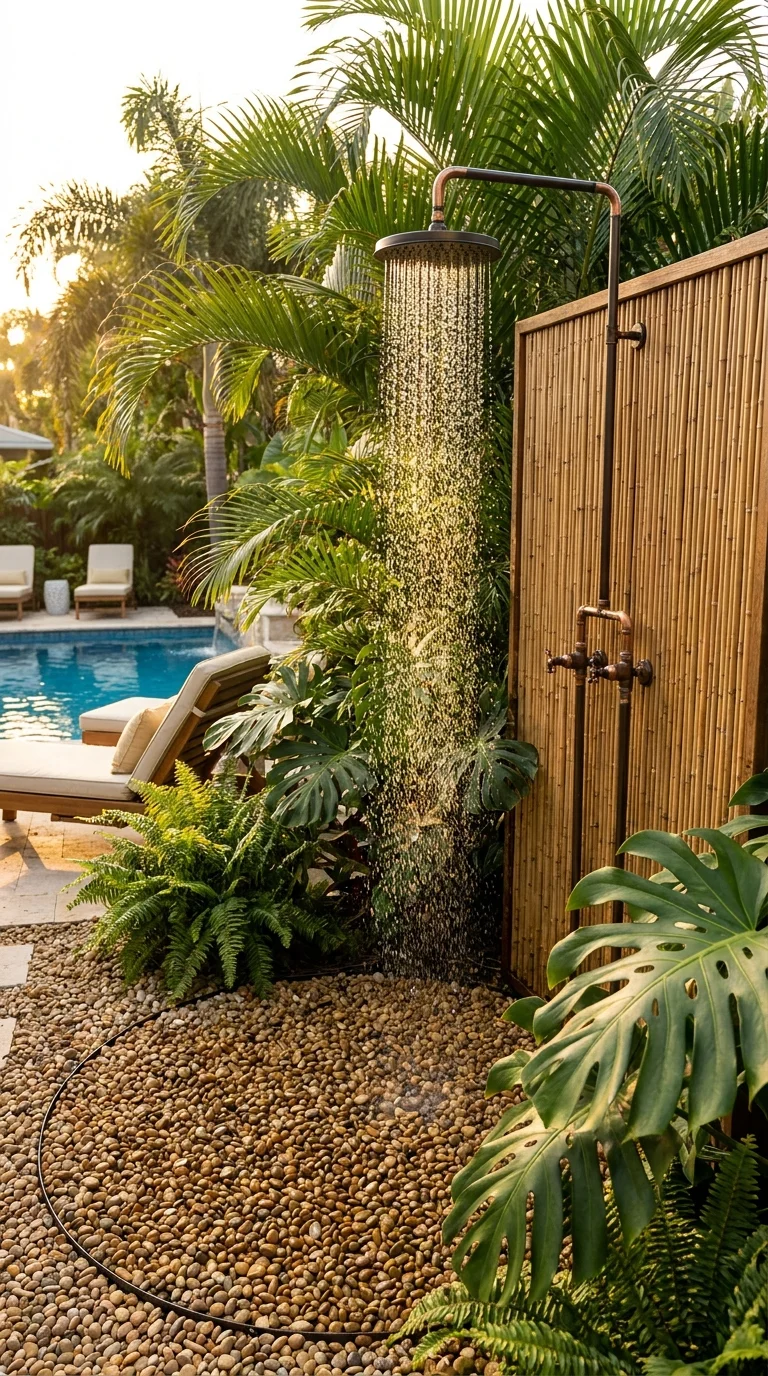
Before our pool house had a proper outdoor shower, people would rinse off at the garden hose. Which, yes, works technically, but it also means everyone’s standing in the muddy flowerbed and getting cold water shot at their shins.
An outdoor shower station changes everything. And you don’t need to go crazy with it.
The simplest version is a standalone shower head mounted to a post or wall, connected to your outdoor water supply. Cold water only — no plumbing tie-in required beyond a standard garden hose connection. A few pavers on the ground for drainage, maybe a small privacy screen made from bamboo fencing, and you’re done.
If you want to step it up, you can run a hot and cold line out from your house (hire a plumber for that part — I tried to DIY it once, it did not go well). Warm showers after an evening swim in October? Absolute luxury.
For privacy screens, I love the look of natural bamboo panels — they hold up surprisingly well outdoors, they’re cheap (usually $20-30 for a 6-foot panel at garden centers), and they give a resort-style vibe. You can also use composite decking boards stood vertically, or even a trellis with climbing plants if you’re patient enough to wait for it to fill in.
Materials I’d recommend: For the shower floor, pea gravel inside a simple timber frame drains perfectly and looks clean. Avoid plain concrete — it gets slippery, and algae loves it.
Unexpected benefit: Guests actually rinse off before getting in the pool when you make it easy and inviting. Our pool water has stayed cleaner since we added this. Sunscreen and hair products are brutal on pool chemistry, and a good pre-swim rinse makes a real difference.
3. The Mini Bar and Outdoor Kitchen Corner — Because Adulting Deserves a Reward
Okay, this one is my personal favorite, and also the one my husband was most skeptical about when I proposed it.
“We don’t need a bar in the pool house,” he said.
Reader, we needed a bar in the pool house.
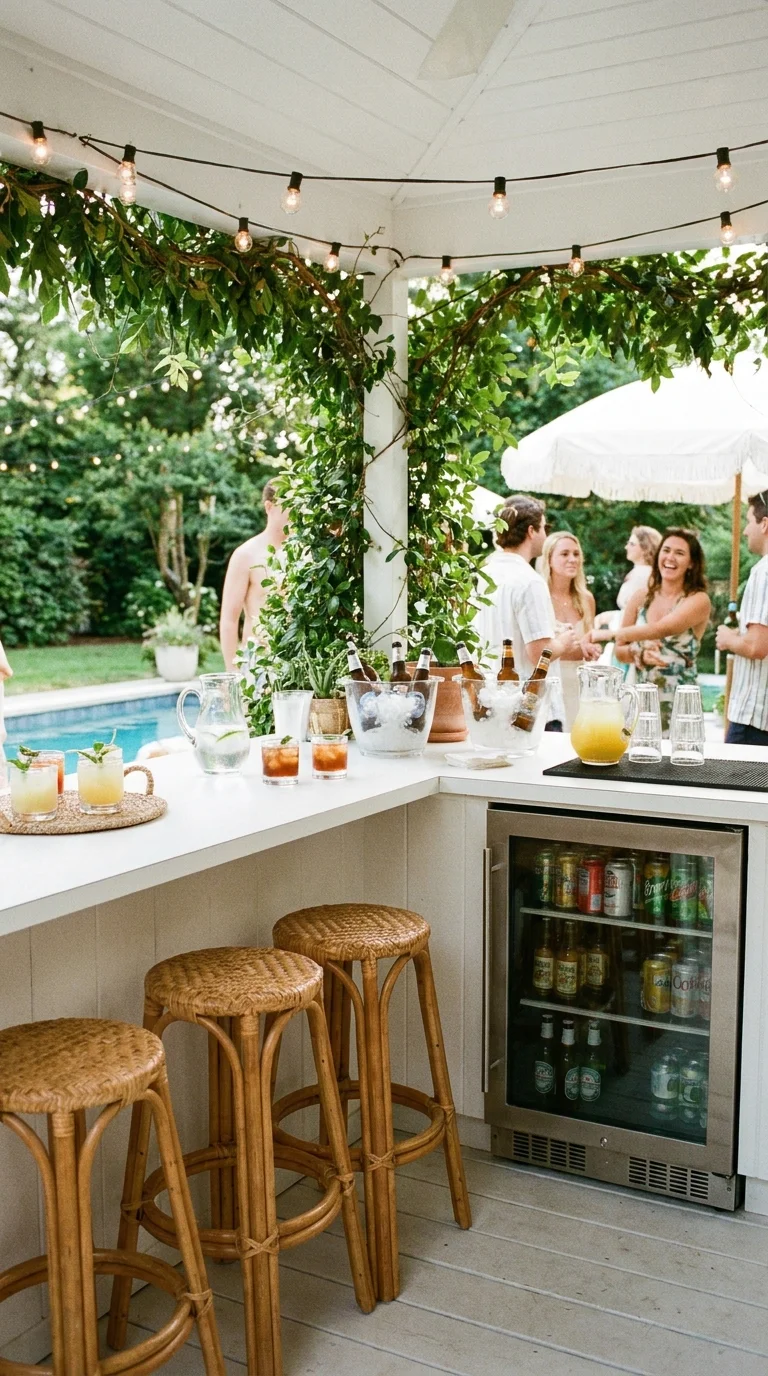
Even a simple version — a countertop, a small bar fridge, and a few bar stools — completely changes the energy of your backyard. You stop running in and out of the kitchen for drinks. You actually sit outside for longer. Parties feel more like parties.
Our setup is not elaborate. We have a 10-foot laminate countertop along one wall of the pool house, a 4.4 cubic foot bar fridge (ours is a Frigidaire that cost about $180 at Home Depot), a drawer with a bottle opener, a small Bluetooth speaker mounted to the wall, and three stools along the counter. That’s the whole thing.
For the outdoor kitchen crowd who want to go further, you can add a small prep sink (you’ll need plumbing for that), a two-burner outdoor cooktop, and a small built-in grill. There are modular outdoor kitchen kits from brands like Coyote, Bull Outdoor, and Lynx that drop into a concrete block or stucco frame — they’re designed for this kind of built-in setup.
But honestly? Start with the bar fridge and a countertop. See how much you use it before you invest in a full outdoor kitchen build. Most people find the simple version covers 90% of what they actually want.
What I keep in our pool house bar fridge: Cold beers, sparkling water, juice boxes for the kids, sunscreen (yes, it works better cold), and a bottle of aloe vera for the inevitable sunburns.
One mistake: We didn’t put the fridge on a GFCI circuit initially. For anything near water, you absolutely need GFCI (ground fault circuit interrupter) protection — it’s also a code requirement in most areas. If you’re adding electrical to a pool house, please hire a licensed electrician. Pool areas and electricity together require someone who knows what they’re doing.
4. The Guest Suite Conversion — Your Backyard Becomes an Airbnb
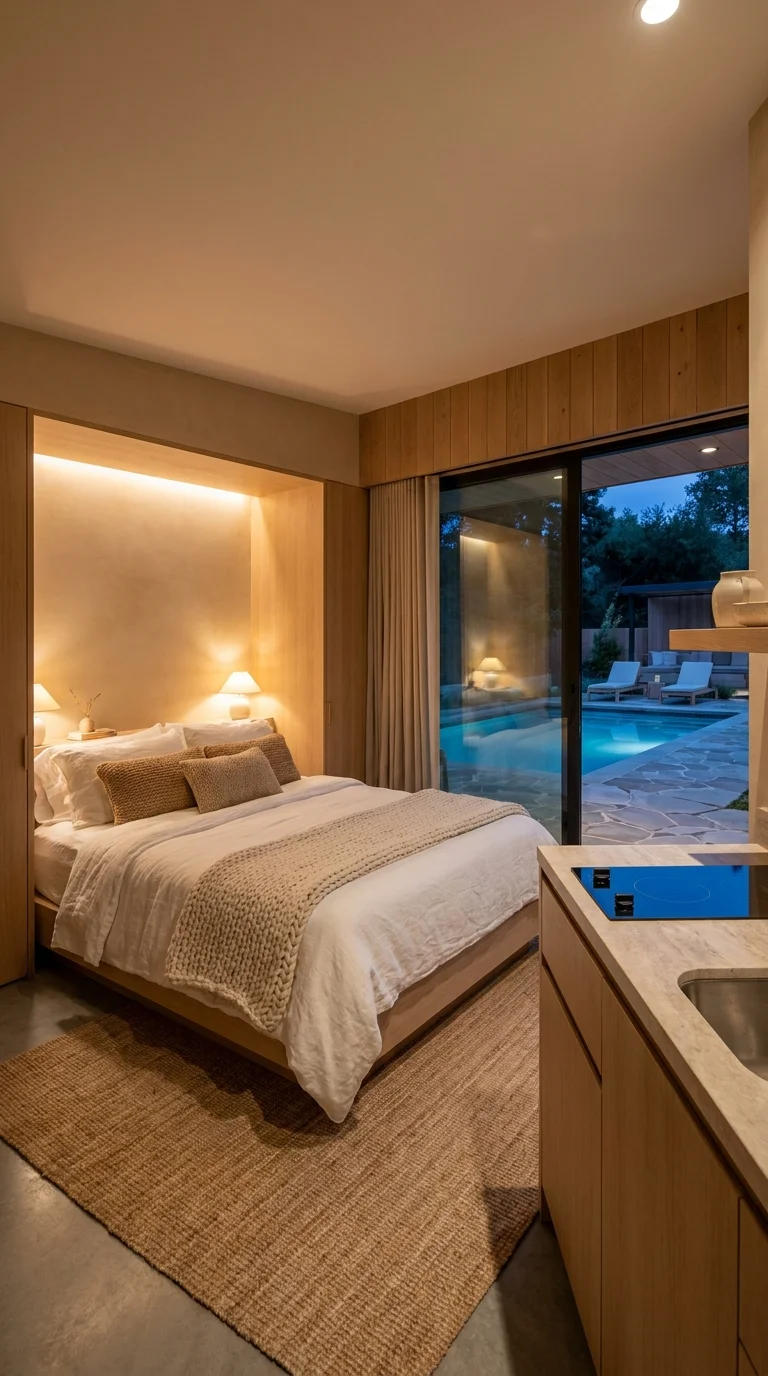
This one requires more investment, but the returns — financial and lifestyle-wise — can be significant.
If you have the space and the budget, turning your pool house into a proper guest suite is one of the smartest backyard investments you can make. We’re talking a comfortable bed, a small bathroom, maybe a mini kitchenette. Guests have their own space, you have your privacy, and if you ever want to list it on Airbnb or VRBO, you suddenly have an income-generating asset sitting in your backyard.
A realistic minimum size for a functional guest suite is around 200-250 square feet. That gives you room for a queen bed, a small bathroom with a shower, and a tiny kitchenette with a mini fridge and microwave.
Key things to get right for a guest suite:
Insulation. Pool houses often aren’t insulated properly for year-round use. Spray foam in the walls and a mini-split HVAC system (Mitsubishi and Daikin both make excellent ones) will keep guests comfortable in summer and winter.
Lighting. Nothing makes a small space feel less like a pool shed faster than good lighting. Add warm-toned recessed lights, a bedside lamp, and a large mirror to open up the space visually.
Privacy. Think carefully about sightlines from the main house and from the pool area. A properly positioned door, frosted window film on lower panes, and solid window treatments make a huge difference.
Sound. If the main house or the pool is loud in the evenings, some basic acoustic insulation in the shared wall will keep your guests from hearing every splash and conversation.
For anyone thinking about the Airbnb angle — check your local regulations first. Some municipalities and HOAs have strict rules about accessory dwelling units (ADUs). A quick call to your local planning department before you build saves a world of pain.
5. The Kids’ Activity Zone — Sanity Saver for Parents

After our second summer with a pool, I realized something: the pool itself is great, but what do the kids do during the inevitable breaks? Eat lunch, get bored, start fighting, and inevitably drip all over the living room sofa.
Dedicating one area of your pool house (or even a covered section just outside it) as a kids’ activity zone was one of the best decisions we made.
Our version is simple: a weatherproof table for games and crafts, a shelf with waterproof bins for pool toys and inflatables, a small TV mounted high on the wall (connected to the main house WiFi so they can stream), and a little cabinet with art supplies and card games for rainy-day pool days.
The floor in this zone is rubber play matting from Amazon — the kind that comes in interlocking tiles. It’s about $2 per square foot, handles wet feet brilliantly, and cushions little knees when kids inevitably crash to the ground.
For storage, waterproof bins with clip lids (the kind from The Container Store or IKEA’s SAMLA range) are brilliant for pool toys. Mesh bins also work great because they allow wet items to dry out rather than getting mildewy inside a closed container.
Bonus idea: Mount a small chalkboard on one wall. Kids can keep score of games, draw, and leave each other messages. It sounds small, but it gets used constantly.
6. The Towel and Storage System — Boring Name, Brilliant Execution

I cannot overstate how important a proper towel and storage system is to pool house happiness.
Before we had one, towels were everywhere. Draped on every available surface, forgotten, rewashed three times before anyone actually used them, lost, damp, smelling weird. It was chaos.
The solution that actually worked for us: dedicated towel cubbies combined with a drying rack system outside the pool house.
Inside, we built simple open shelving out of pine boards — three sections, each about 14 inches wide and 12 inches deep. Each family member has a cubby where they keep their personal pool bag with their towel, sunscreen, goggles, etc. Guests use the open shelf at the bottom where we keep a stack of fresh towels in a large basket.
Outside, right next to the changing room exit, we installed a stainless steel towel rail along the wall — the long horizontal bar type, about 6 feet long. This is where wet towels go after use. They air dry in an hour or two in summer sun and don’t take up any indoor space.
For labels, we used simple acrylic label holders screwed into the shelf edges with each person’s name. The kids thought this was the coolest thing in the world. They started actually putting their stuff away.
The one thing that made the biggest difference: Hooks. Every spare inch of wall space near the pool house entrance gets a hook. Bags, hats, robes, everything. Hooks are cheap, hooks prevent floor clutter, and hooks are your best friends.
7. The Poolside Cabana Shade Structure — When the Pool House Goes Tropical
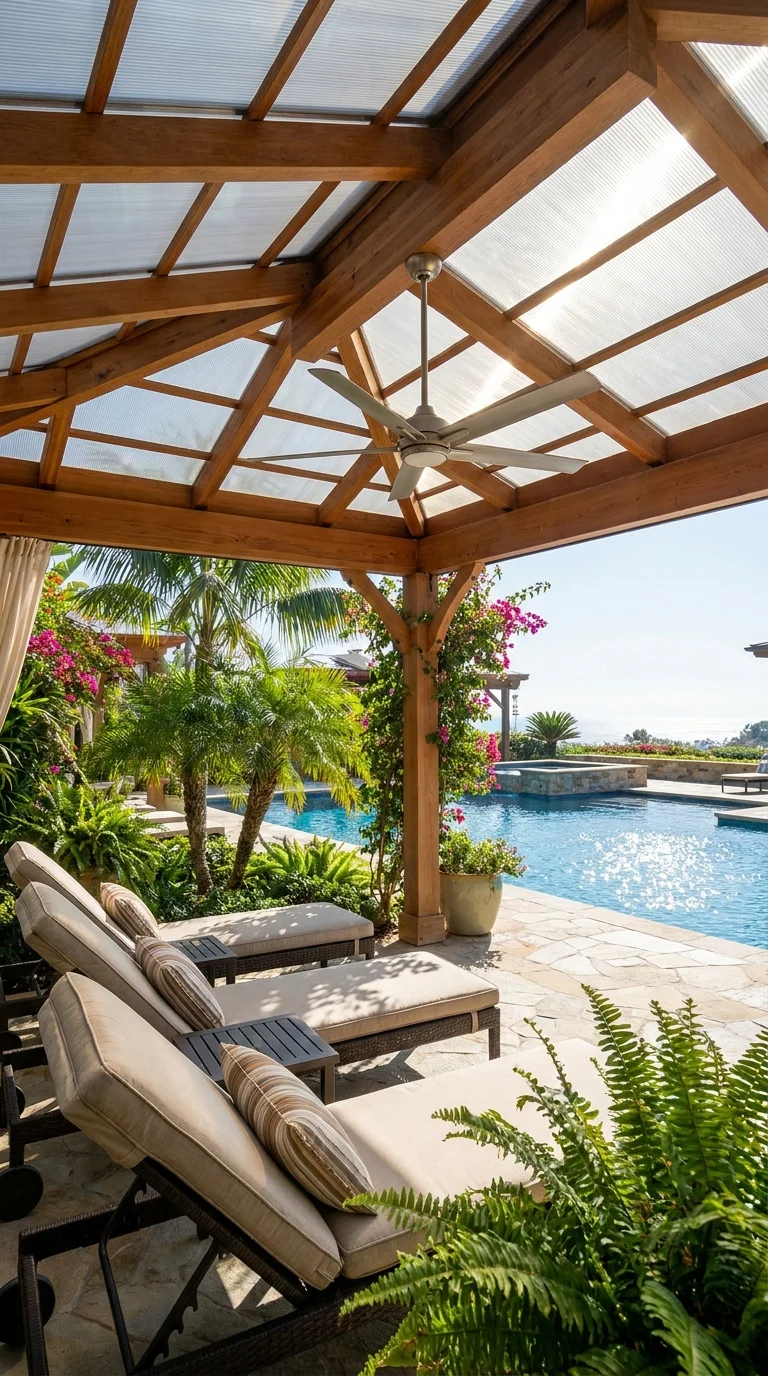
Not everyone wants a fully enclosed structure. If your budget is tighter or your HOA is strict about permanent builds, a poolside cabana shade structure is the answer.
Think of it as a pool house without the walls — a beautiful, roofed structure with support posts, maybe a curtain or two for privacy, and a ceiling fan overhead.
We added one of these on the south side of our pool after our third summer of people huddling under a single patio umbrella. It’s 12×16 feet with a cedar pergola frame and a polycarbonate roof panel (the clear kind, so it lets in light but blocks UV and keeps rain off). Underneath: four outdoor lounge chairs, a side table, and a ceiling fan.
The ceiling fan is non-negotiable. On a still day in midsummer, a shaded area without airflow is still uncomfortably hot. A well-placed outdoor ceiling fan drops the perceived temperature by 8-10 degrees easily.
For the fabric elements — curtains, cushion covers, outdoor pillows — I always recommend Sunbrella fabric. Yes, it costs more than generic outdoor fabric. But it genuinely doesn’t fade, genuinely resists mildew, and we have pieces five years old that still look almost new. It’s worth the premium.
Budget-friendly alternative: A galvanized steel pergola kit from Costco or Home Depot ranges from $800-$1,500. Add some climbing plants (jasmine smells incredible), outdoor string lights, and a ceiling fan, and it looks like something out of a boutique hotel — for a fraction of the cost of a custom build.
8. The Pool House Bathroom — The One You Actually Need
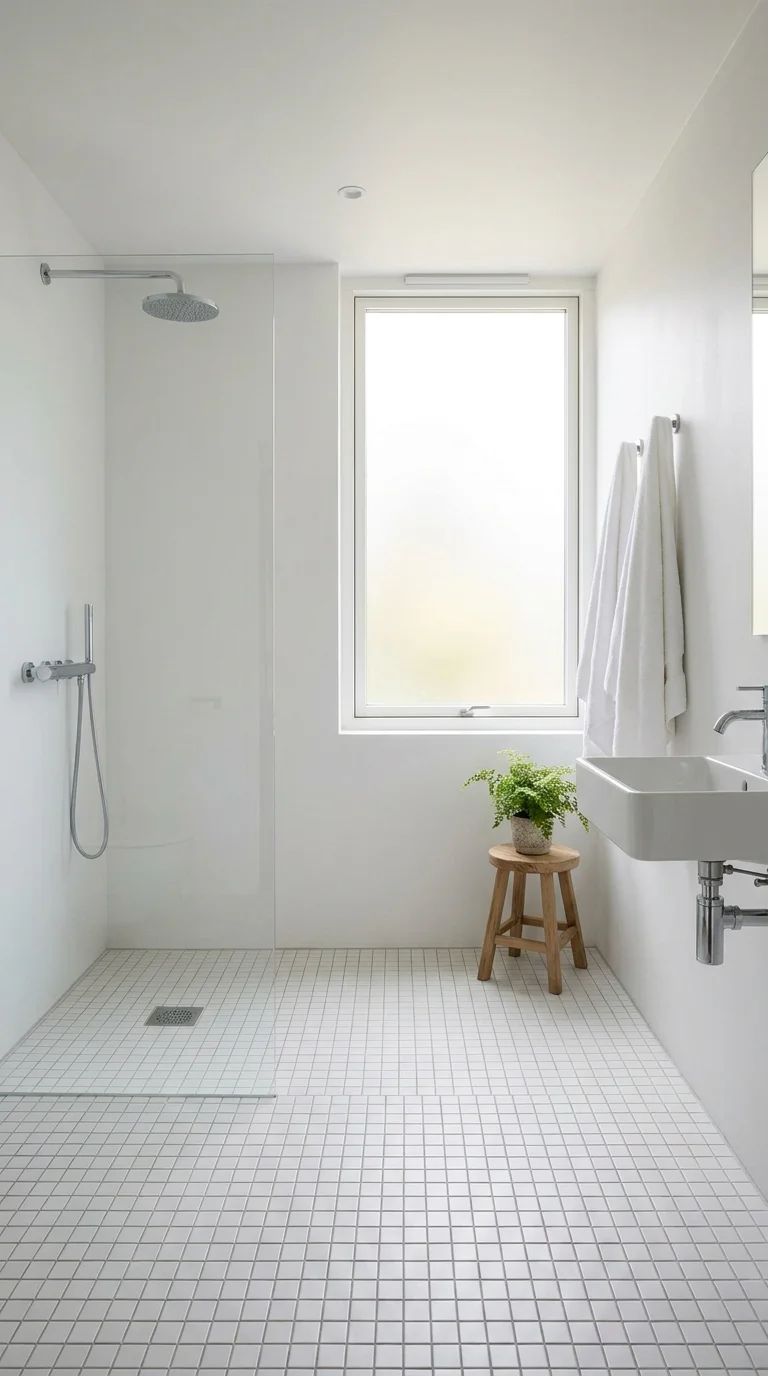
If you only add one functional improvement to your pool situation, make it a bathroom.
The amount of chlorinated footprints tracked through our house from the pool to the bathroom was genuinely damaging our floors. More than that, having guests troop through your living room to use the bathroom is awkward for everyone.
A pool house bathroom doesn’t need to be fancy. At minimum: a toilet and a small shower. A sink is nice, but honestly, people can use the outdoor shower for rinsing hands if needed.
For the floor, use small-format porcelain or ceramic tiles with tight grout joints and good anti-slip rating (look for a COF — coefficient of friction — rating above 0.6 for wet areas). Large format tiles look sleeker but are genuinely more slippery when wet. Learned that the hard way with some beautiful 24×24 marble-look tiles that became a safety hazard after the first wet swimsuit.
For the walls, keep it simple and moisture-resistant. Large-format wall tiles or marine-grade plywood with a waterproof paint (Zinsser has a good one) are both reliable choices.
The shower should be a walk-in with no door or a simple shower curtain — pool house showers are often used for quick rinses, not leisurely showers, and a doorless walk-in is easy to clean and dries fast.
Don’t forget: A proper exhaust fan. Moisture in a small pool house bathroom without ventilation leads to mold faster than you’d believe. Wire the exhaust fan to come on automatically with the light.
9. The Smart Pool House — Tech That Actually Helps
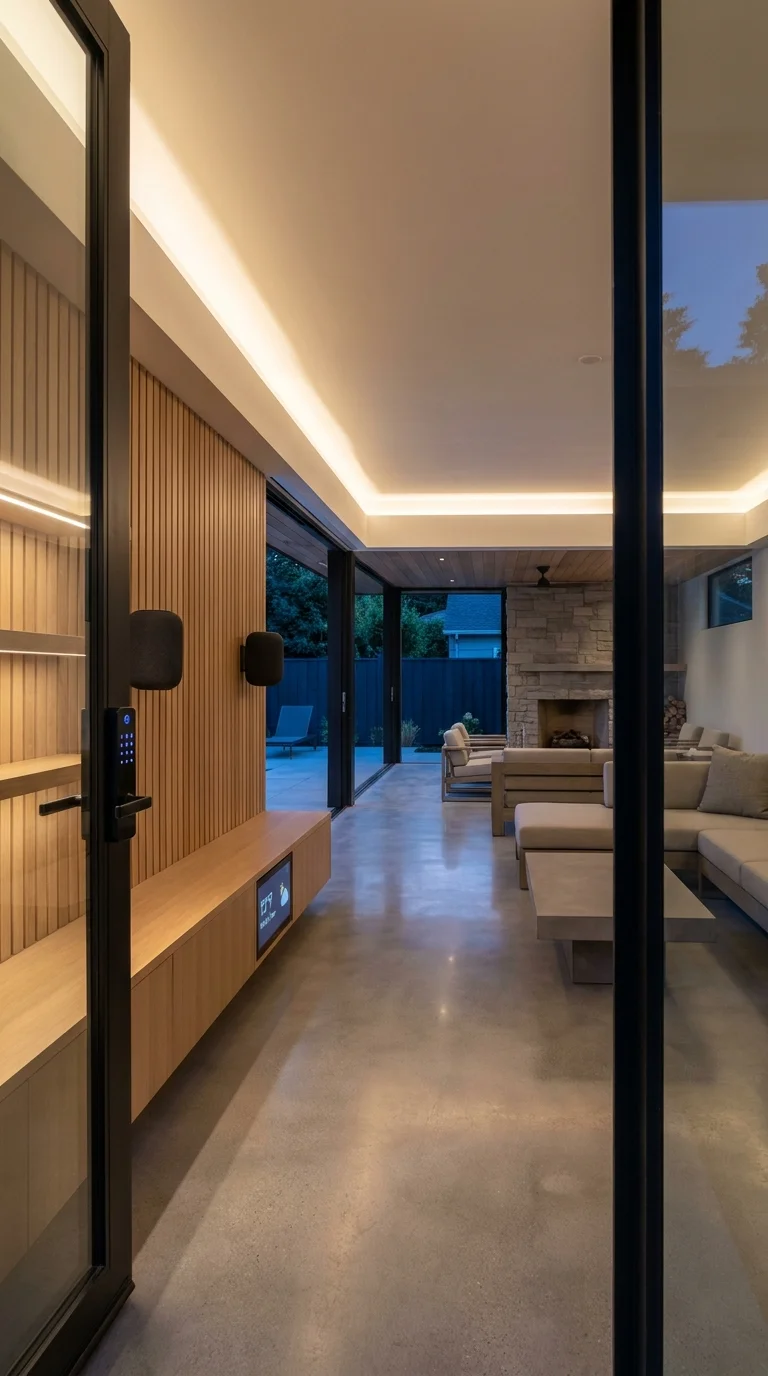
I’m not a huge gadget person when it comes to home projects — I’ve seen too many “smart home” features that create more problems than they solve. But there are a few pieces of tech that genuinely improved our pool house experience.
Outdoor speakers with Bluetooth/WiFi: We have a pair of Sonos Outdoor Speakers mounted under the cabana eaves. They connect to the same app as our indoor speakers, so you can extend the same music from inside to outside without skipping a beat. Pricey at around $900 for the pair, but the sound quality is legitimately impressive, and they’ve handled five years of weather without issue. Budget alternative: Amazon’s Blink outdoor speakers are significantly cheaper and still work well.
A smart lock on the pool house door: This one is purely practical. We installed a Schlage Encode on the pool house door so guests and family members can have their own codes without us needing to hand out physical keys. You can also set access schedules — for example, your pool maintenance service can have a code that only works on their scheduled day.
A small weather station display: We have an Ambient Weather WS-2902 weather station mounted on the fence near the pool. The display inside the pool house shows real-time temperature, humidity, wind speed, and UV index. It tells us when UV is peaking (so the kids get sent back for sunscreen application) and when a storm is rolling in before it shows up visually. Cost: around $170.
A pool chemistry monitor: The Sutro Smart Pool Monitor floats in your pool and sends readings to your phone via WiFi. It tracks chlorine, pH, and alkalinity continuously. Before we had it, we were testing manually every other day and still getting surprised by chemistry swings. Now we get alerts when something needs adjusting. It’s not cheap ($250 plus an ongoing subscription), but for pool owners who struggled with chemistry maintenance, it’s genuinely useful.
10. The Year-Round Pool House — For the Committed Backyard Enthusiast

Most pool houses are used from May through September and then forgotten. But if you design yours right from the start, it can become a genuine four-season space — an outdoor living room you use all year, not just in swimming season.
Here’s what makes a pool house actually functional year-round:
Proper insulation: This cannot be an afterthought. Spray foam insulation in walls and ceiling, a vapor barrier, and insulated flooring (floor insulation is often forgotten and makes a huge difference in winter comfort) are the baseline.
Heating and cooling: A mini-split system (also called a ductless heat pump) is the most efficient choice for a pool house. Mitsubishi’s M-Series and Daikin’s Aurora are both rated for heating in very cold temperatures. A single 9,000 BTU unit handles a typical 200-300 sq ft pool house easily.
Year-round windows: Standard single-pane windows are fine in summer but lose heat rapidly in winter. Double-pane windows with low-e coating make a real difference in both winter warmth and summer heat reduction.
A fire feature: A small gas fireplace insert or even a tabletop bioethanol fire feature makes the pool house feel cozy and inviting in cooler months. We have a small Napoleon wall-mounted gas fireplace in ours — it’s purely for ambiance since the mini-split handles actual heating, but it changes the whole atmosphere on a crisp October evening.
Year-round connection to the outdoors: Install a large folding or sliding glass door on the pool-facing side. When it’s warm, you fold it back completely and the indoors and outdoors merge. When it’s cool, you close it and still get full visual connection to the pool and garden. NanaWall makes beautiful ones, but for a more budget-conscious option, JELD-WEN’s folding door systems are more accessible.
The goal of a year-round pool house isn’t to be fancy — it’s to make your backyard investment work harder for you across more months of the year. If you live somewhere with cold winters, having a warm, comfortable space that overlooks the garden means you actually use your outdoor space in February, not just July.
Common Mistakes People Make When Planning a Pool House
After talking to dozens of neighbors and online communities about their pool house builds, the same mistakes come up over and over. Here are the big ones to avoid:
Underestimating electrical needs. People think, “I just need a few lights and an outlet.” Then they want a mini fridge. And a ceiling fan. And a TV. And an outdoor speaker. Plan for significantly more electrical capacity than you think you need — adding circuits after the fact is expensive and disruptive.
Not thinking about drainage. Pool house floors get wet. Constantly. You need proper sloping toward floor drains, and you need those drains to go somewhere. Flat floors in a pool house become puddle-collection zones, and puddles breed mold, algae, and trips to the ER.
Skimping on the door hardware. Pool house doors take serious abuse — wet hands, salty air in coastal areas, repeated daily use. Cheap door hardware corrodes fast. Invest in marine-grade or stainless steel hardware, and it’ll last for decades.
Building too small. The number one regret I hear from pool house owners is that they didn’t build bigger. Whatever size you’re planning, add 20% if your budget allows. You will fill the space.
Ignoring permits. Many pool house builds technically require building permits. Skipping them might seem like you’re saving time and money, but it creates real problems when you sell your home or make an insurance claim. Check with your local building department before you start digging.
Where to Start If You’re Feeling Overwhelmed?
Okay, I’ve thrown a lot at you. Here’s the simplified version for those of you who are at the very beginning:
Start with your biggest daily pain point. Is it the constant trips inside? Build the changing room and outdoor shower first. Is it the lack of shade and seating? Go with the cabana structure. Are guests tromping through your house? Prioritize the bathroom.
You don’t need to do all 10 of these ideas at once. We built our pool house in phases over three years. First summer: basic structure, changing room, and outdoor shower. Second summer: bar counter and electrical. Third summer: the full bathroom and year-round HVAC.
For inspiration and community, I’ve found the r/DIY and r/homeimprovement subreddits surprisingly helpful for pool house projects. Houzz has an excellent photo search where you can filter by pool house style and size. And for actual product research, nothing beats reading reviews on actual home improvement forums rather than just manufacturer websites.
The most important thing is to start. Even a simple $500 outdoor shower and changing area will transform how you experience your pool.
We spent nearly three summers wishing we had done something, and then two summers absolutely loving what we built. Don’t make the same mistake I did.
Your backyard should be the place you want to spend time — not the place you’re always trying to fix. A thoughtful pool house, even a small and simple one, tips that balance completely.
Now go enjoy that pool.
Have you built or are you planning a pool house? I’d love to hear what ideas resonated most — drop your questions or experiences in the comments below.

Shahid Nawaz is a home and garden content writer at Garden Skillz with over 4 years of experience researching and writing about gardening, plant care, and DIY home improvement. He specializes in turning complex horticultural topics into practical, easy-to-follow guides for beginners and experienced growers alike. Shahid has written extensively on flowering plants, indoor greenery, and seasonal garden care.