“Three summers ago, my front porch was so bare and sun-blasted that my neighbor once asked if we’d ‘just moved in.’ We’d lived there for four years.”
That comment stung a little — not because it was rude, but because she was right. Our south-facing porch got absolutely hammered by the sun from 9 a.m. until the evening. I’d tried growing things out there before. Petunias? Fried by July. Impatiens? Dead within a week. Herbs? Bolted so fast they were unrecognizable.
I kept hearing “just put some planters out there!” like it was the simplest thing in the world. But nobody told me that not all planters — and not all plants — are built for relentless, unforgiving, full sun. There’s a difference between “tolerates sun” and “thrives in six-plus hours of direct sunlight every single day.”
After a lot of trial and error, some embarrassing plant funerals, and eventually some real wins, I figured out what actually works. These are the ten full sun planter ideas I’ve either used myself or seen work beautifully in my neighborhood and community garden. They’re all genuinely low-effort once set up right — and they will change how your home looks from the street.
First: what counts as “full sun” — and why it matters
Before we dive in, let me quickly explain this because I got it wrong for years. Full sun means a spot receives at least six hours of direct sunlight per day — no tree canopy, no building shade, just open sky and blazing light.
If your porch, driveway, pathway, or front steps face south or west and you notice the ground baking in the afternoon, you’re in full sun territory. The challenge: many popular bedding plants can’t handle it. The solution: choose plants and planter setups that were literally made for heat and light.
Idea 01: The Spiller-Thriller-Filler Pot (The Classic That Never Gets Old)
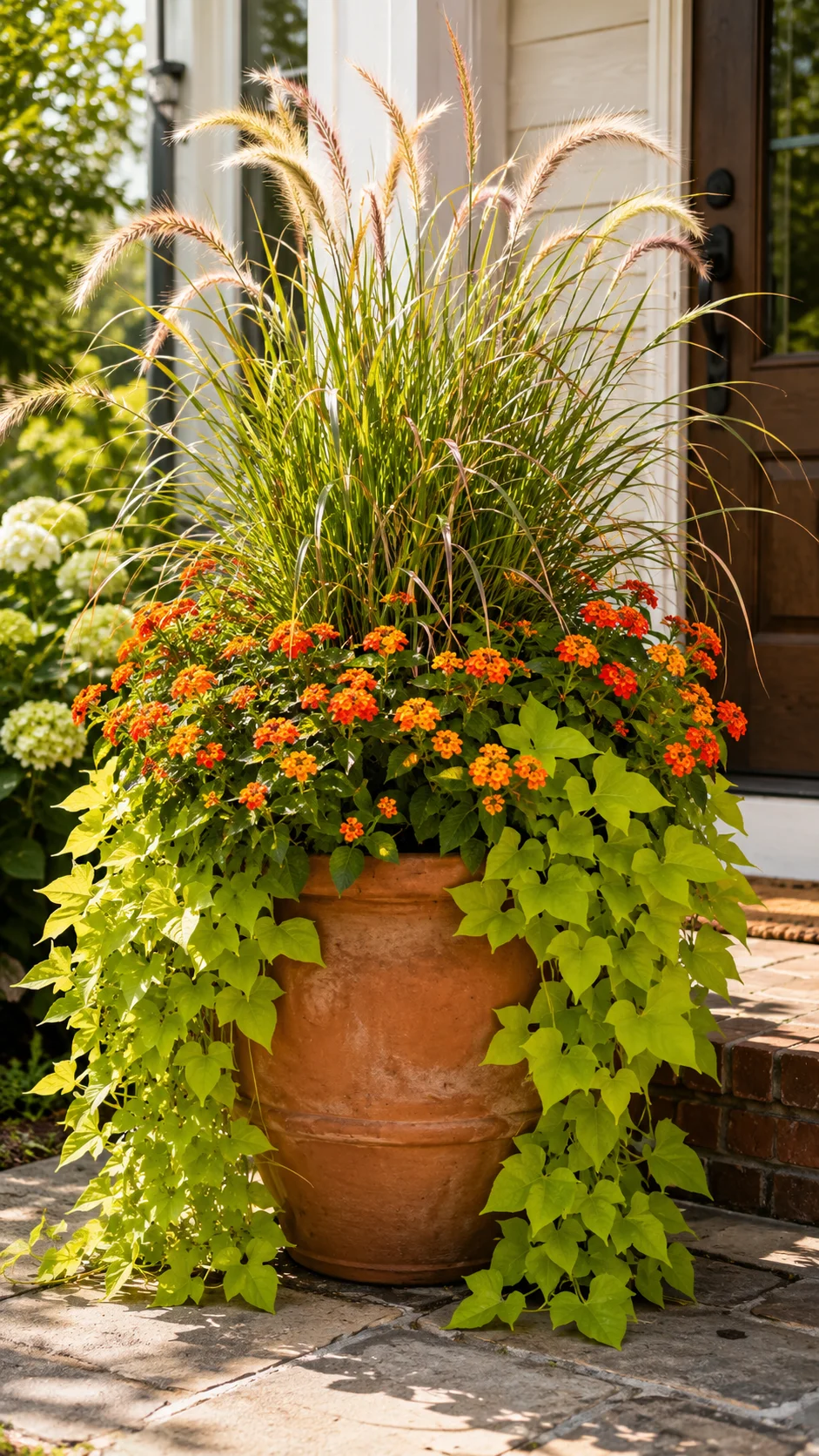
If you’ve spent any time in garden centers, you’ve probably heard this formula. I used to think it was just a catchy sales pitch. Then I tried it and realized it’s basically foolproof — because it uses plant height, texture, and movement together to create something that looks professionally designed without much effort.
Here’s how it works: pick one “thriller” plant that stands tall and grabs attention (think a bold grass, a canna lily, or a majestic Cordyline). Surround it with “fillers” that create a dense, colorful midsection — Lantana and Portulaca are my absolute favorites for full sun because they bloom like crazy in heat. Then let a “spiller” trail over the edges — Sweet Potato Vine (especially the chartreuse ‘Margarita’ variety) is practically unkillable and looks gorgeous cascading down.
My biggest mistake the first time? I put them all in a pot that was too small. They competed for water, and the filler plants got strangled. Use at least a 14–16-inch diameter pot for this combo. Go bigger if you can.
Idea 02: Tall Statement Urns Flanking the Front Door

This one is pure curb appeal drama. Two matching tall urns on either side of your front door — even from the street, this says “this house is cared for.” It’s one of those visual tricks that real estate agents swear by, and honestly, it works.
For full sun situations, I’ve had incredible results with ornamental grasses as the anchor plant. Karl Foerster Feather Reed Grass is tall, architectural, and sways beautifully in a breeze. Pair it with a trailing Calibrachoa (also called Million Bells) in a sunset orange or hot pink — they bloom non-stop from spring through frost with almost zero fuss in full sun.
The key detail people miss: tall urns dry out faster because of their small footprint relative to soil volume. I water mine every single morning during summer — no exception. I even added a layer of pea gravel on top of the soil to slow evaporation. Made a huge difference.
Idea 03: The All-Succulent Drought-Buster Planter
Okay, true story: the summer I had my second baby, I was not watering anything. Not once. I needed plants that could basically take care of themselves, and succulents saved my front porch.
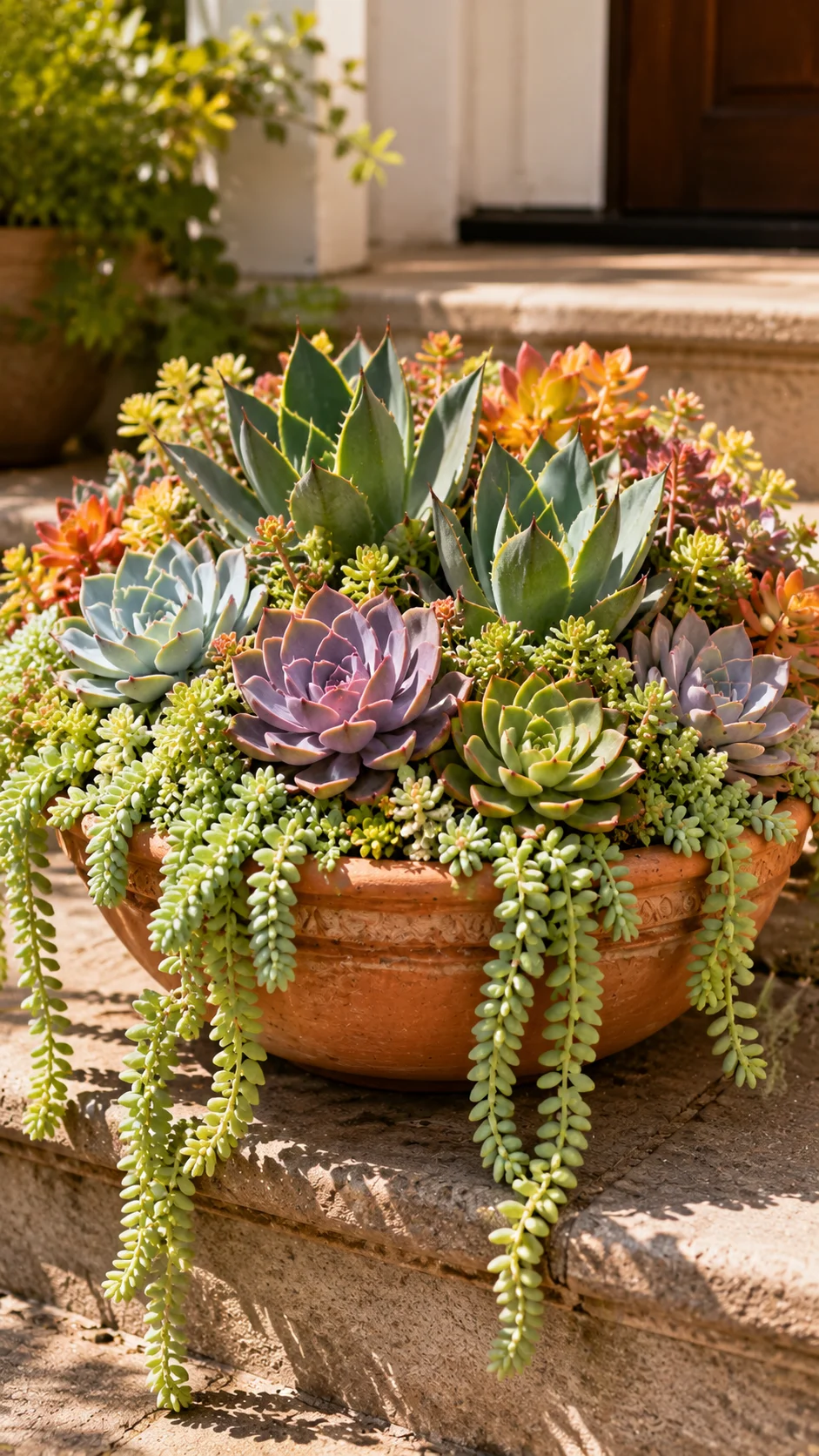
A well-composed succulent planter in full sun is genuinely one of the most low-maintenance, high-visual-impact things you can do. The key is choosing varieties that are rated for your climate — not all succulents are created equal. Echeverias, Agaves, Sedums, and Delosperma (Ice Plant) are all incredible in hot, sunny spots.
For a curb-appeal planter, I like to mix textures: something rosette-shaped (Echeveria), something spiky (a small Agave or Aloe), and something that drapes (Sedum morganianum, or ‘Burro’s Tail’). Put them in a wide, shallow terracotta bowl with fast-draining cactus mix, and honestly, you might water it once a week in peak summer and be done.
The mistake I made early: regular potting soil. It held too much moisture and rotted the roots. Use a dedicated cactus and succulent mix. Non-negotiable.
Idea 04: Window Boxes Overflowing with Lantana
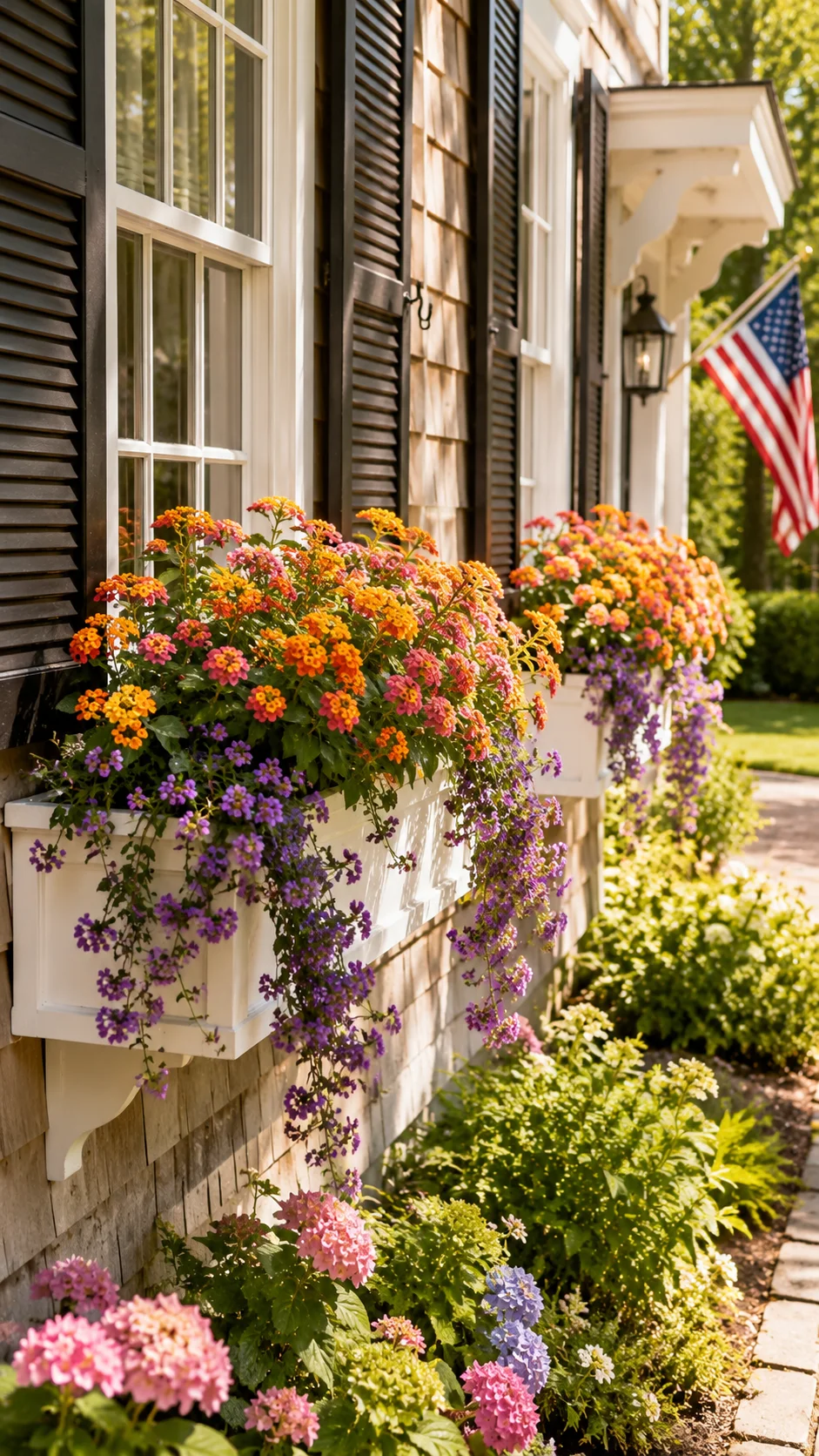
If your home has windows facing south or west, window boxes are one of the fastest ways to transform how it reads from the street. And if you’re in full sun? Plant Lantana and never look back.
Lantana is criminally underrated. It blooms in clusters of tiny flowers that shift colors as they mature — you’ll see yellow, orange, pink, and red all on the same plant at the same time. It thrives in scorching heat, tolerates drought once established, and butterflies absolutely love it. It’s also deer-resistant, which matters a lot in my neighborhood.
I fill my window boxes about 75% Lantana and then tuck in some trailing Verbena at the front edges. From May through October, those boxes are non-stop color. I fertilize once every two weeks with a liquid bloom fertilizer (I use Jack’s Classic Blossom Booster — nothing fancy, just diluted per the bottle instructions) and deadhead occasionally to keep things tidy.
Idea 05: A Cascading Bougainvillea Planter (Go Big or Go Home)
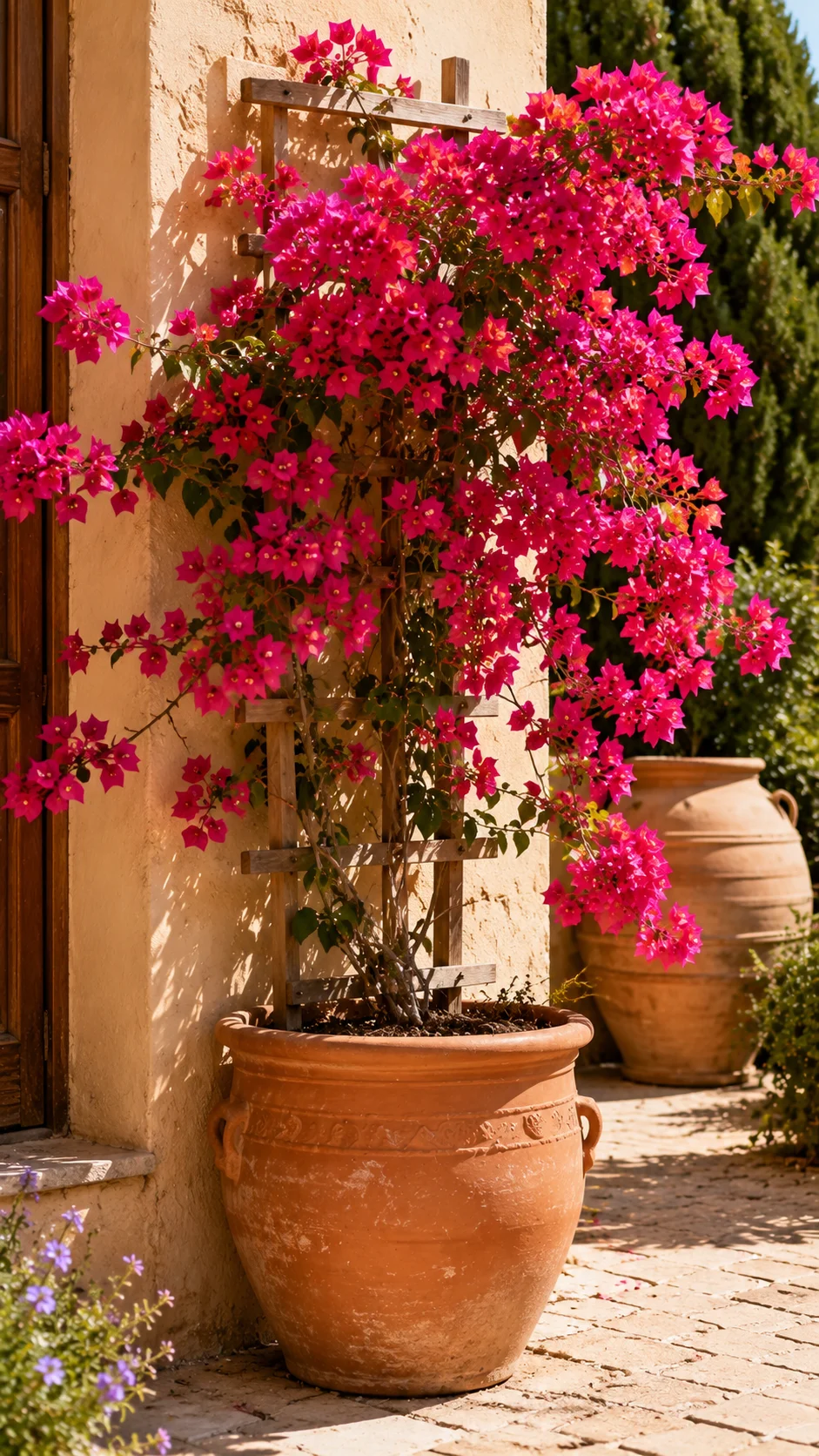
This one is for people in warmer climates — zones 9 through 11 — or for those willing to treat it as an annual. Bougainvillea in a large planter is absolutely jaw-dropping. I saw it done on a neighbor’s driveway gate and literally stopped my car to stare.
Bougainvillea loves — no, demands — full sun. The more heat and light it gets, the more it blooms. What you see as “flowers” are actually colorful bracts (modified leaves), and they come in hot pink, orange, purple, white, and red. In a big terracotta pot or a half-whiskey barrel, trained up a small trellis or allowed to cascade over the edge, it becomes a living piece of art.
The trick with Bougainvillea in a pot: stress it slightly. Let the soil dry out a bit between waterings. Water when you see the leaves start to go slightly limp. It sounds harsh, but this is what triggers it to bloom instead of just putting out leaves. I learned this the hard way after keeping mine too wet the first season — all foliage, zero flowers.
Also, wear gloves when handling it. Those thorns are not messing around.
“The best curb appeal planters aren’t the fussiest ones — they’re the ones that were set up thoughtfully once and then basically take care of themselves.”
Idea 06: An Herb Garden Planter That’s Actually Practical
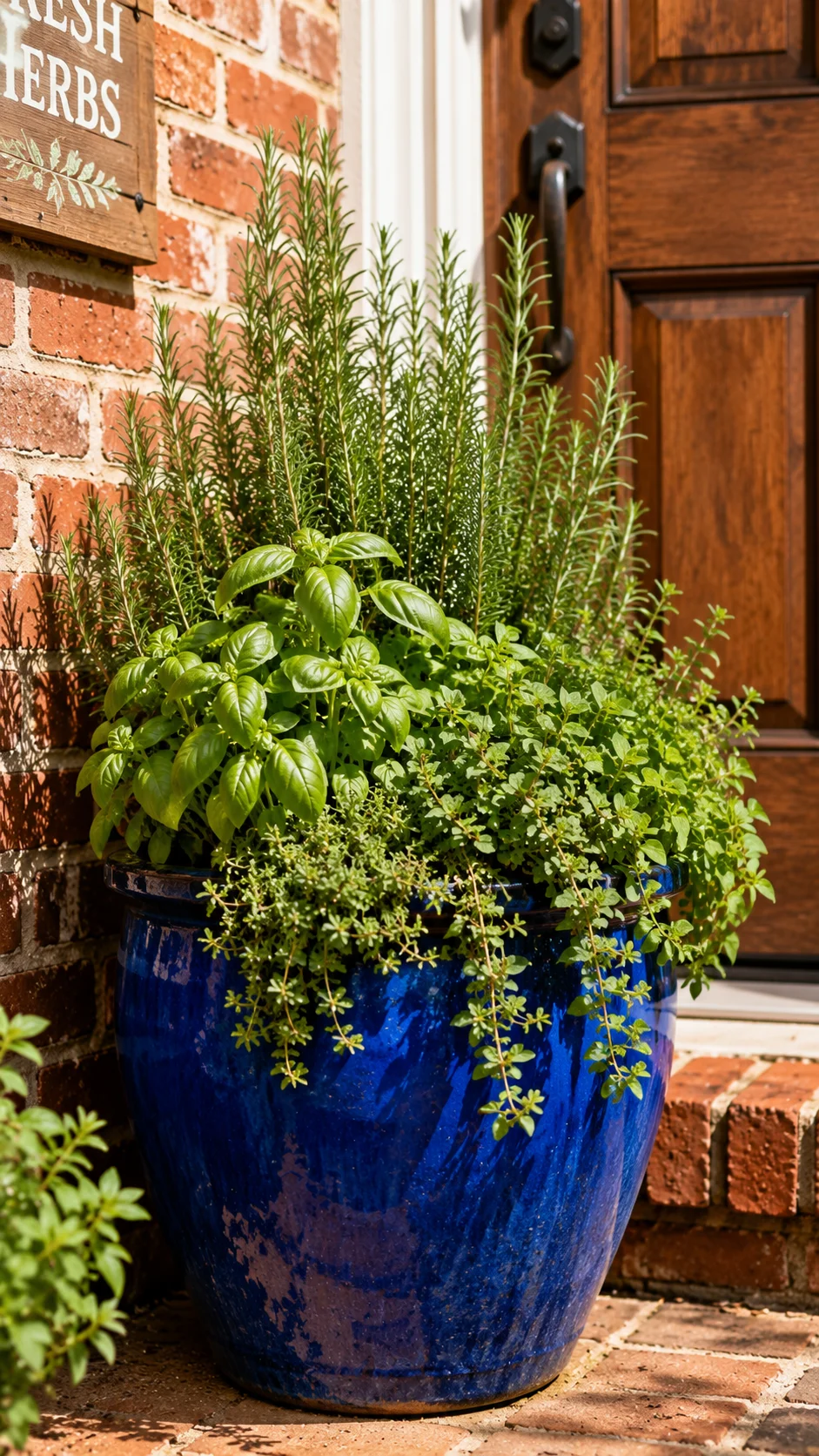
Here’s something I wish someone had told me earlier: most cooking herbs love full sun. Basil, rosemary, thyme, oregano, sage — all of them want at least six hours of direct light a day. Which means your hottest, sunniest spot is actually perfect for a kitchen herb planter right by your front or back door.
This is a planter that gives back. You clip fresh herbs for dinner every night, and the planter looks gorgeous year-round. Rosemary especially grows into this beautiful, woody, architectural shrub. I keep one in a large cobalt blue glazed pot that absolutely pops against my red brick exterior.
A few things I’ve learned: basil is the diva of the group — it wants water consistently and hates the cold. Thyme and rosemary are practically bulletproof. If you’re new to herbs, start with those two and add basil once you’ve got a feel for watering frequency.
Also: plant mint in its own separate pot, always. It will take over and bully everything else. I made this mistake exactly once.
Idea 07: The Repetition Trick: Matching Planters Down a Pathway
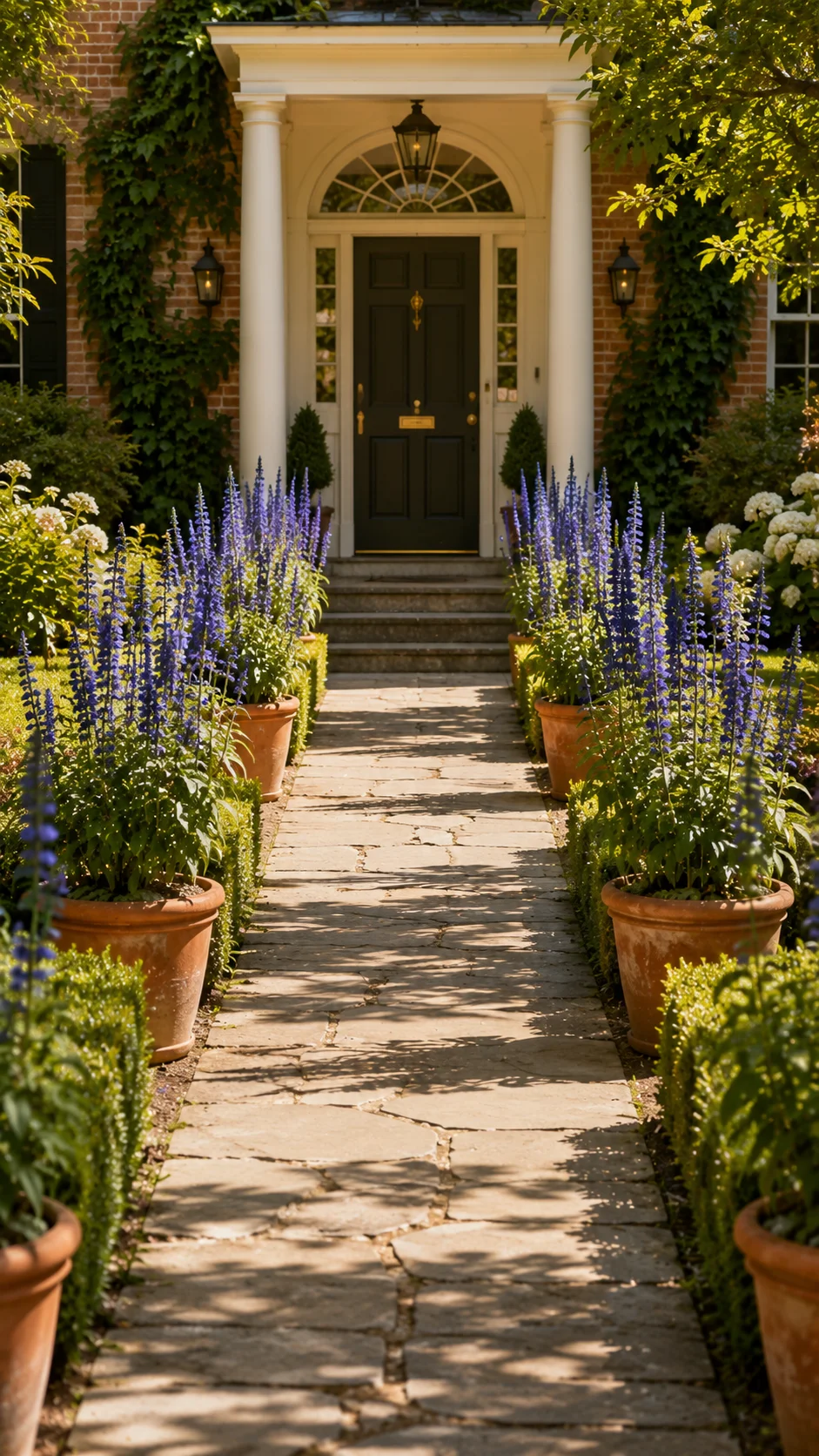
This is probably the single highest-impact, lowest-effort thing I’ve done to my property. Instead of one planter by the door, I placed four identical medium terracotta pots — two on each side — lining the pathway from the driveway to the front steps.
Each pot has the same plant: Salvia ‘Black and Blue,’ which produces incredible deep blue flowers on tall spikes and is one of the toughest, most sun-tolerant perennials I’ve grown. The repetition creates a sense of intention and welcome that a single planter can’t achieve. It literally looks designed.
You don’t need expensive planters for this idea to work — in fact, identical plain terracotta pots from the garden center (about $8–12 each) look better here than mismatched decorative ones. Uniformity is the point. The plants are the star, not the pots.
Choose one plant species and repeat it for a clean, sophisticated look. Some other great full sun options for this treatment: Agapanthus, ornamental grasses, dwarf Knock Out Roses, or a tidy Lavender.
Idea 08: A Self-Watering Planter with Portulaca (for the Forgetful Gardener)
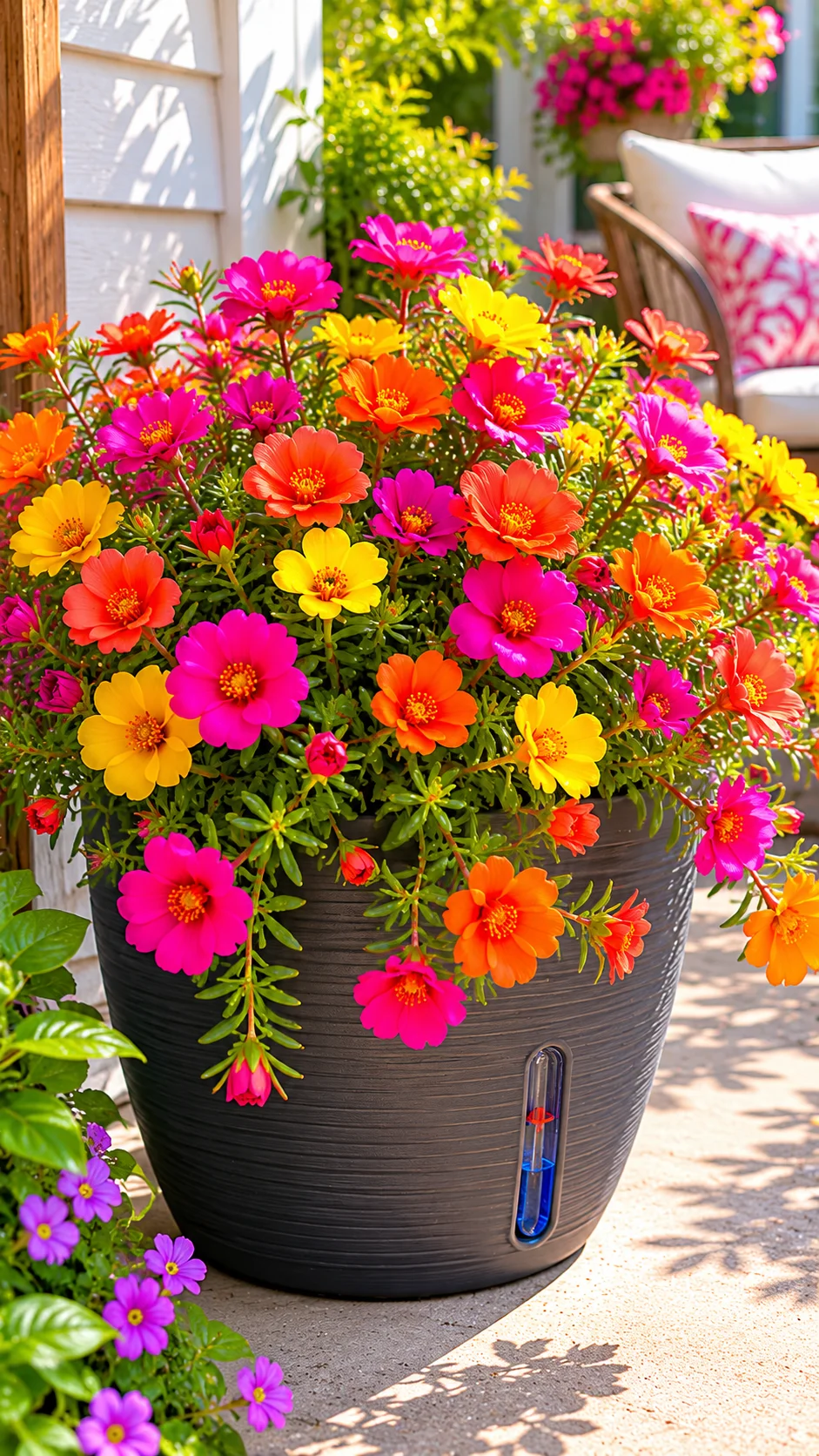
I’m going to be honest with you: I forget to water things. Especially in the chaos of summer — kids, travel, work, life. For years, this meant sad, crispy plants by August. Then I discovered two things that changed everything: self-watering planters and Portulaca.
Self-watering planters have a reservoir at the bottom that wicks moisture up to the roots as needed. Brands like Lechuza and Bloem make really solid ones. You fill the reservoir every week or so and the plant essentially drinks what it needs. In full sun, I still check more frequently — but it cuts my watering workload by about half.
Portulaca (also called Moss Rose) is the most sun-tolerant flowering annual I’ve ever grown. It produces cheerful, jewel-toned flowers in neon orange, hot pink, yellow, and red. It loves sandy, dry soil and actually performs worse when overwatered. In a self-watering planter set to minimal flow, Portulaca is essentially a zero-effort color machine from June to October.
This combination is especially great for front-door areas where you want consistent color but can’t always commit to daily watering.
Idea 09: Raised Planter Box with Ornamental Grasses and Black-Eyed Susans

This is my “cottage garden meets modern farmhouse” combination, and I love it so much. A low raised wooden planter box — cedar or pine, stained dark — filled with a mix of ornamental grasses and Black-Eyed Susans (Rudbeckia) creates this incredible naturalistic look that moves in the breeze and looks just as good in late summer as it does in spring.
Black-Eyed Susans are native wildflowers in much of North America, which means they’re adapted to exactly the kind of hot, sunny, sometimes-neglected conditions that defeat other plants. They’re also perennials in most zones, meaning they come back year after year. Pair them with ‘Karl Foerster’ grass or ‘Shenandoah’ Switchgrass, and you have a planter that essentially maintains itself.
I built my own raised box using cedar fence boards from the hardware store — total cost about $35 in materials. There are about a thousand YouTube tutorials for this, and it’s genuinely a beginner-friendly project. If building isn’t your thing, Fiskars and Greenes Fence both make attractive, ready-to-assemble raised planter boxes.
Idea 10: The “Edible and Beautiful” Planter: Tomatoes, Peppers, and Basil

I saved this one for last because it’s slightly unconventional as a “curb appeal” idea — but hear me out. A large, well-tended container vegetable garden is genuinely beautiful. When tomatoes are heavy on the vine, when pepper plants are laden with glossy fruits, when basil is full and lush — it’s a gorgeous thing. And in full sun? These plants absolutely thrive.
The trick is presentation. Don’t use a random black nursery pot. Invest in a large, attractive planter — I use a 24-inch round glazed terracotta pot in a deep olive green. Use a proper tomato cage or a decorative bamboo trellis for vertical interest. Choose compact varieties: ‘Patio’ tomatoes, ‘Sweet Banana’ peppers, or ‘Tumbling Tom’ for a spilling tomato effect.
This kind of planter tells a story about who lives in the home. It’s warm, it’s alive, it’s something that changes and grows over the season. People always comment on it — it starts more conversations with passersby than any purely ornamental planter I’ve ever had.
Just make sure you’re fertilizing consistently. Container vegetables are heavy feeders. I use a slow-release granular fertilizer at planting and then liquid tomato feed every two weeks. The results are absolutely worth it.
Common mistakes that kill full sun planters (I’ve made most of these)
Don’t let these trip you up
Quick checklist before you buy
- Count actual sun hours in the spot — use an app like Sun Seeker or Sun Calc to confirm
- Choose pots at least 12 inches in diameter for most arrangements (14–16 for thrillers)
- Pick plants specifically labelled “full sun” — not “sun/part shade.”
- Add perlite to your potting mix if you’re in a very hot climate
- Plan for watering: daily in peak summer is normal for containers
- Consider a slow-release fertilizer mixed in at planting time
- Think about color relative to your home’s exterior — contrast is your friend
- Group odd numbers of planters (1, 3, 5) for a more natural, pleasing look
One last thing from someone who’s been there
Curb appeal doesn’t require a landscape architect or a big budget. Most of the transformations I’ve made to my front yard have cost less than $100 and a Saturday afternoon. What they required was knowing what works in the conditions I actually have — not the ones I wished I had.
Full sun is genuinely a gift. Yes, it’s demanding. But it opens up a world of the most vibrant, colorful, high-impact plants available. Lantana, Portulaca, Salvia, Bougainvillea, Black-Eyed Susans — these aren’t fussy. They want heat and light and a bit of water, and in return, they give you season-long color that stops people in their tracks.
Start with one planter. Get the spiller-thriller-filler combo right on a single 14-inch pot. See how it makes you feel. I’d bet money you’ll be back for more by late June.
Your neighbors are watching. Give them something beautiful to see.
Ready to get started?Pick one idea from this list and commit to it this weekend. Even a single well-planted pot can change how your home feels — from the street and from the front door. Good luck out there.

Shahid Nawaz is a home and garden content writer at Garden Skillz with over 4 years of experience researching and writing about gardening, plant care, and DIY home improvement. He specializes in turning complex horticultural topics into practical, easy-to-follow guides for beginners and experienced growers alike. Shahid has written extensively on flowering plants, indoor greenery, and seasonal garden care.