When I moved into my first apartment, my bedroom was a total mess — and not the cute, lived-in kind. I’m talking mismatched furniture, a duvet cover I’d had since uni, and a bedside table that was literally a cardboard box with a lamp on it. I knew I wanted to do something about it, but I also had about £300 to my name after paying the deposit and first month’s rent.
I’d been deep in Pinterest rabbit holes for weeks at that point, and everything I kept falling in love with had this calm, clean, effortless look. Turns out, there’s a name for it: Scandinavian design. Or as most people call it — Scandi style.
The thing is, most of the bedroom inspo I was pinning looked wildly expensive. White oak bed frames, linen bedding, sheepskin rugs, those little woven wall hangings… I assumed it was out of my budget. But here’s what I discovered after months of experimenting, thrift shopping, and a few very satisfying IKEA trips: Scandi style is actually one of the most budget-friendly design aesthetics out there. The whole philosophy is built around simplicity, natural materials, and buying less but better. That’s basically the budget decorator’s dream.
So, whether you’re starting from scratch or just trying to refresh your bedroom without spending a fortune, here are 10 gorgeous Scandi bedroom setups that genuinely won’t break the bank — along with the exact steps I took (and mistakes I made) to get there.
Setup 1: The “All-White Foundation” Bedroom
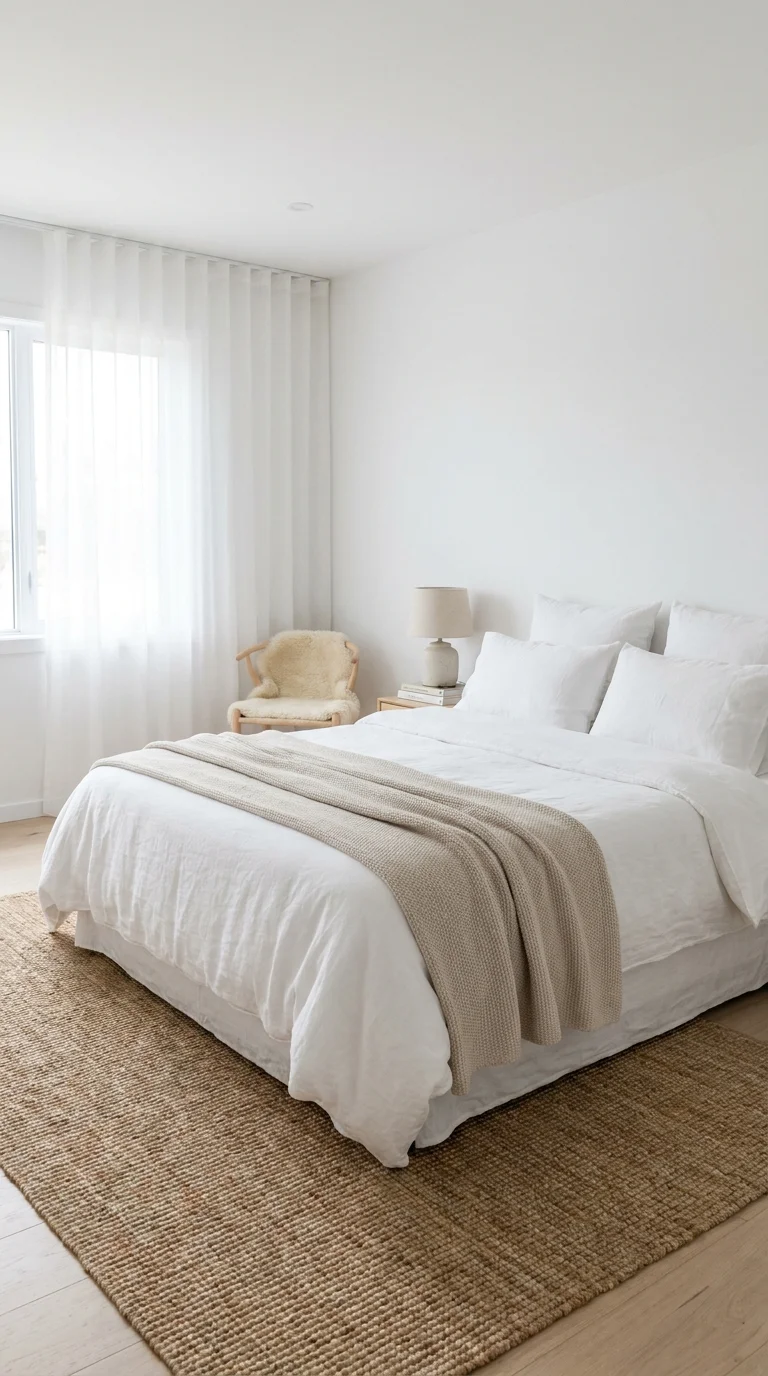
This is where most Scandi bedrooms start, and it’s the most affordable setup of all because the base is simply: white walls and white bedding.
I know, I know — “white everything” sounds boring or too sterile. But here’s the trick: it’s not about making the room feel clinical. It’s about creating a blank canvas where natural textures and small, deliberate pops of warmth do all the work.
How to do it on a budget:
Start with a white or off-white duvet cover. You don’t need expensive linen — a good brushed cotton from somewhere like Primark Home or Dunelm can look genuinely beautiful if you iron it once and keep it tucked in neatly. Layer a cream or oatmeal throw across the foot of the bed. That throw does more visual work than almost anything else in the room.
For the walls, if you’re renting and can’t paint, removable white peel-and-stick wallpaper panels can give you a fresh, clean look without the landlord drama. If you can paint, a warm white (not a stark, brilliant white) makes the room feel cosy rather than cold.
Budget breakdown for this setup: White duvet cover (£12–£20), cream throw (£8–£15 from H&M Home or IKEA), two white pillow cases (often already owned). Total: under £40.
The mistake I made: I went for the cheapest pure-white duvet cover I could find, and it looked… yellow after two washes. Lesson learned — spend a little more on bedding, because it’s the first thing your eye goes to.
Set up 2: The Warm Wood Accent Bedroom
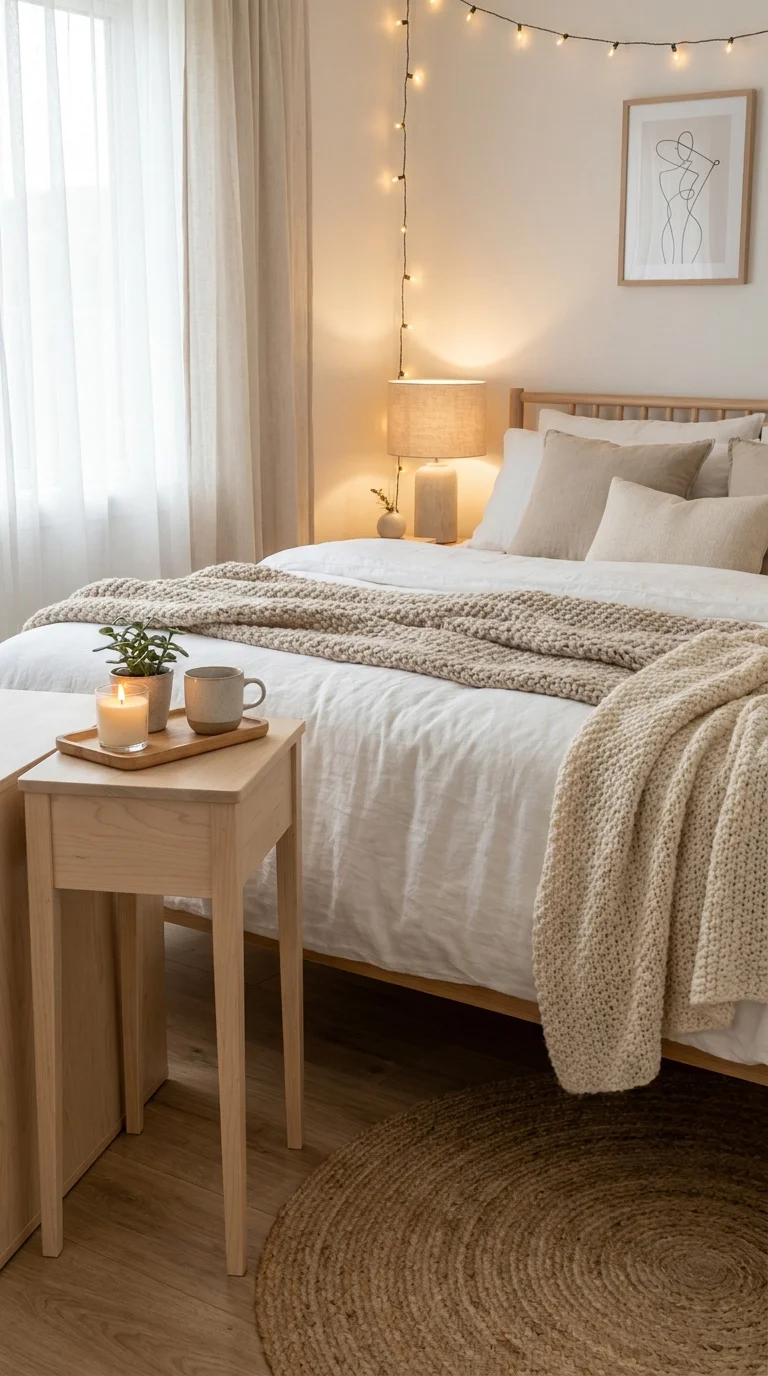
Scandi design relies heavily on natural wood tones. Think light birch, pale ash, and honey pine — not the dark mahogany stuff your grandparents had.
You don’t need to buy a whole new bed frame to get this look. Here’s my shortcut: pick up one or two small wooden accent pieces and let them anchor the whole room.
A small wooden side table (or even a wooden stool used as a side table — IKEA’s FROSTA stool is around £15 and looks great styled this way), a wooden picture frame, and a little wooden tray on your dresser. These small details read as intentional and cohesive without costing much.
Budget tips:
- Check Facebook Marketplace and Vinted for wooden furniture. I found a solid pine bedside table in perfect condition for £5. Sanded it lightly, added a coat of clear wax, and it looked brand new.
- IKEA’s KNARREVIK bedside table is under £20 and has that perfect slim Scandi look.
- Charity shops and car boot sales are genuinely goldmines for wooden trays, frames, and small accent furniture.
What to avoid: Anything with a heavy, dark stain or ornate carved detailing — that’s the opposite of Scandi. You want clean lines and natural grain.
Setup 3: The Textured Neutral Bedroom

Here’s something I didn’t fully understand at first: Scandi bedrooms aren’t minimalist in a cold, empty way. They’re layered with texture. Different fabrics, materials, and finishes — all in the same neutral palette — give the room depth and warmth.
This setup is about building a bedroom that looks rich and curated, even though every single item is affordable.
The layers:
- Bedding: A neutral duvet cover (white, oatmeal, or light grey)
- Throw: A chunky knit or waffle-weave throw in a slightly different neutral
- Cushions: One or two with a subtle texture — boucle, ribbed cotton, or woven
- Rug: A flat-weave or low-pile rug in natural tones
- Curtains: Linen-look curtains (even the polyester ones from IKEA look convincing in photos)
I did this entire layer-up for under £80 by shopping H&M Home’s sale section, Dunelm’s clearance, and one lucky Marketplace find (a barely-used boucle cushion for £2).
The result looked like a hotel room. My mum asked if I’d hired someone to style it. I hadn’t. It was just layers.
Set up 4: The Plant-Based Scandi Bedroom
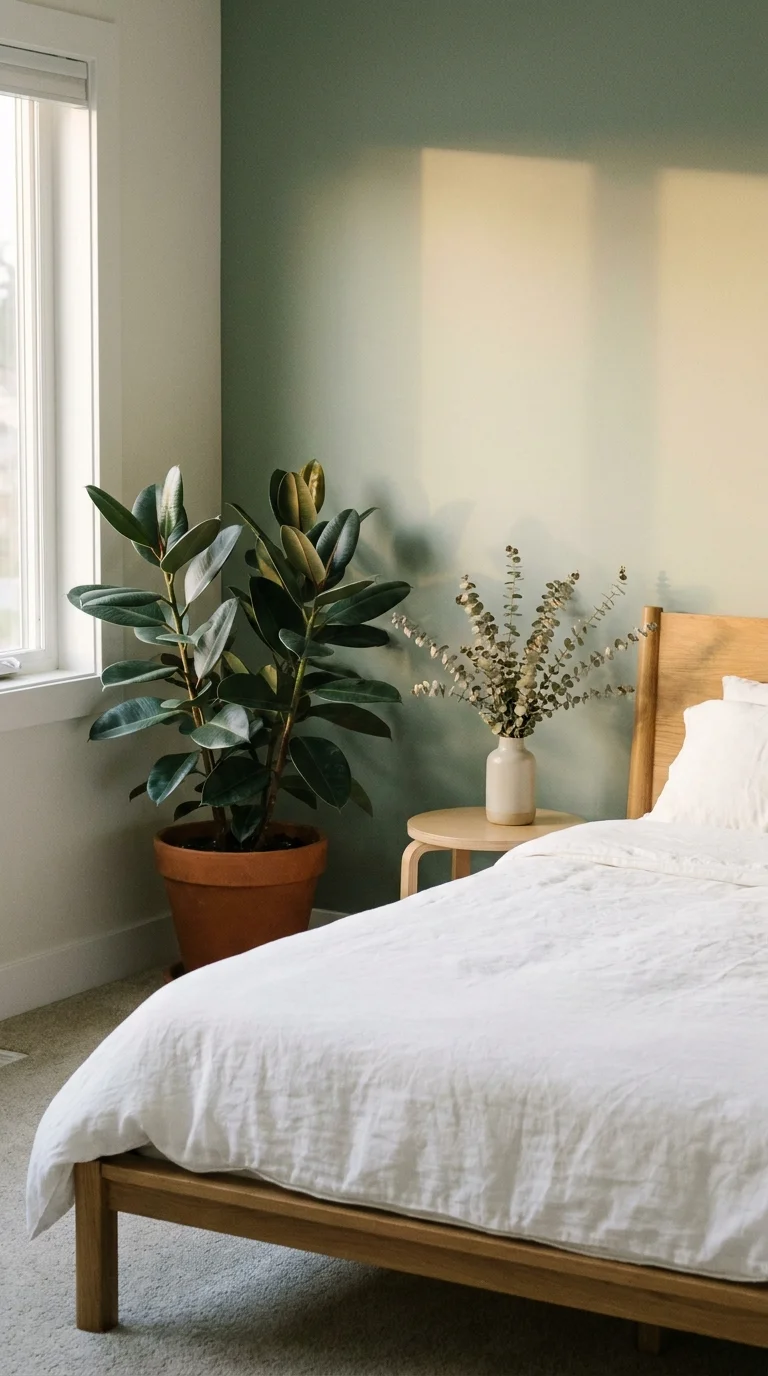
Plants are huge in Scandinavian interiors. Not in a jungle/maximalist way, but one or two well-placed, unfussy plants that bring a little life to an otherwise restrained space.
The plant choices matter, though. Scandi interiors tend to favour:
- Rubber plants (bold, architectural, easy to care for)
- Monstera (classic, sculptural)
- Snake plants (low-maintenance, upright)
- Eucalyptus stems in a vase (dried or fresh — even a single bunch from Lidl or Aldi adds that perfect organic touch)
Budget plant sourcing: Aldi and Lidl do brilliant seasonal plant deals — I’ve gotten a healthy monstera for £4.99 and a trailing pothos for £2. Garden centres often have end-of-season sales too. And honestly, propagating cuttings from friends is free.
For pots, skip the expensive ones and look for simple terracotta or white ceramic. IKEA’s MUSKOT and CITRUSMÅLLA pots are under £3 and look exactly like the expensive ones from boutique homeware shops.
Common mistake: Over-planting. One bold plant in the corner, one small plant on the windowsill, one dried stem arrangement on the bedside table. That’s it. More than that, and you lose the clean Scandi feel.
Set up 5: The Monochrome Minimalist Bedroom
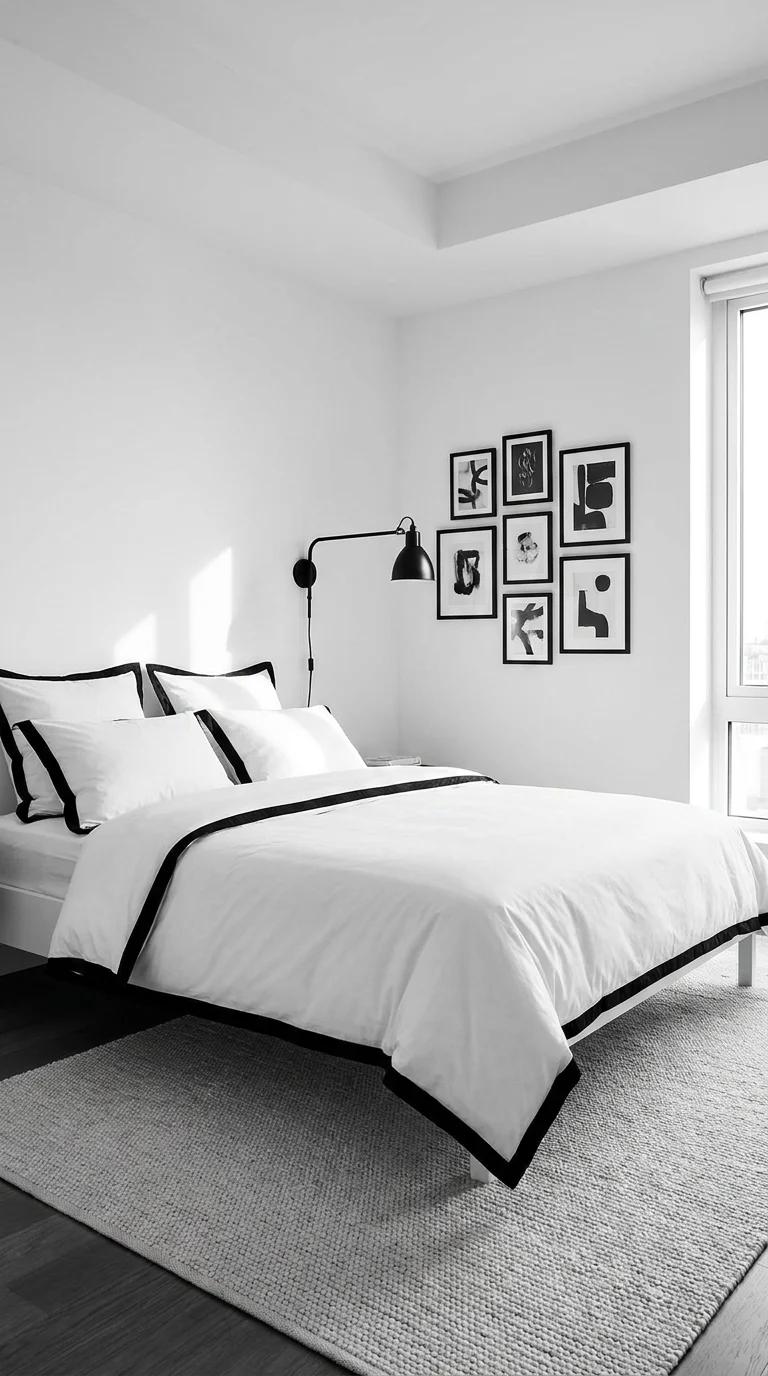
If white-and-wood feels too safe, go monochrome. Black and white Scandi bedrooms are striking, dramatic, and still incredibly calm — which sounds contradictory but makes total sense once you see it.
The key here is keeping the ratio right: about 70% white, 20% grey, 10% black. The black should be used for small, deliberate accents — a black picture frame, a matte black lamp, black pillow piping, a thin black-framed mirror.
Budget options for this look:
- IKEA’s SKURUP wall lamp in black (around £25) gives an instant Scandi-industrial feel
- Black picture frames from Poundland or IKEA (RIBBA range)
- A black and white abstract print you can download for free and print at home or at a Boots photo kiosk for under £3
I printed three A4 black-and-white prints at home, framed them in matching black frames, and hung them in a simple grid. It looked like a curated gallery wall. Total cost: about £9.
Set up 6: The Cosy Hygge-Inspired Bedroom
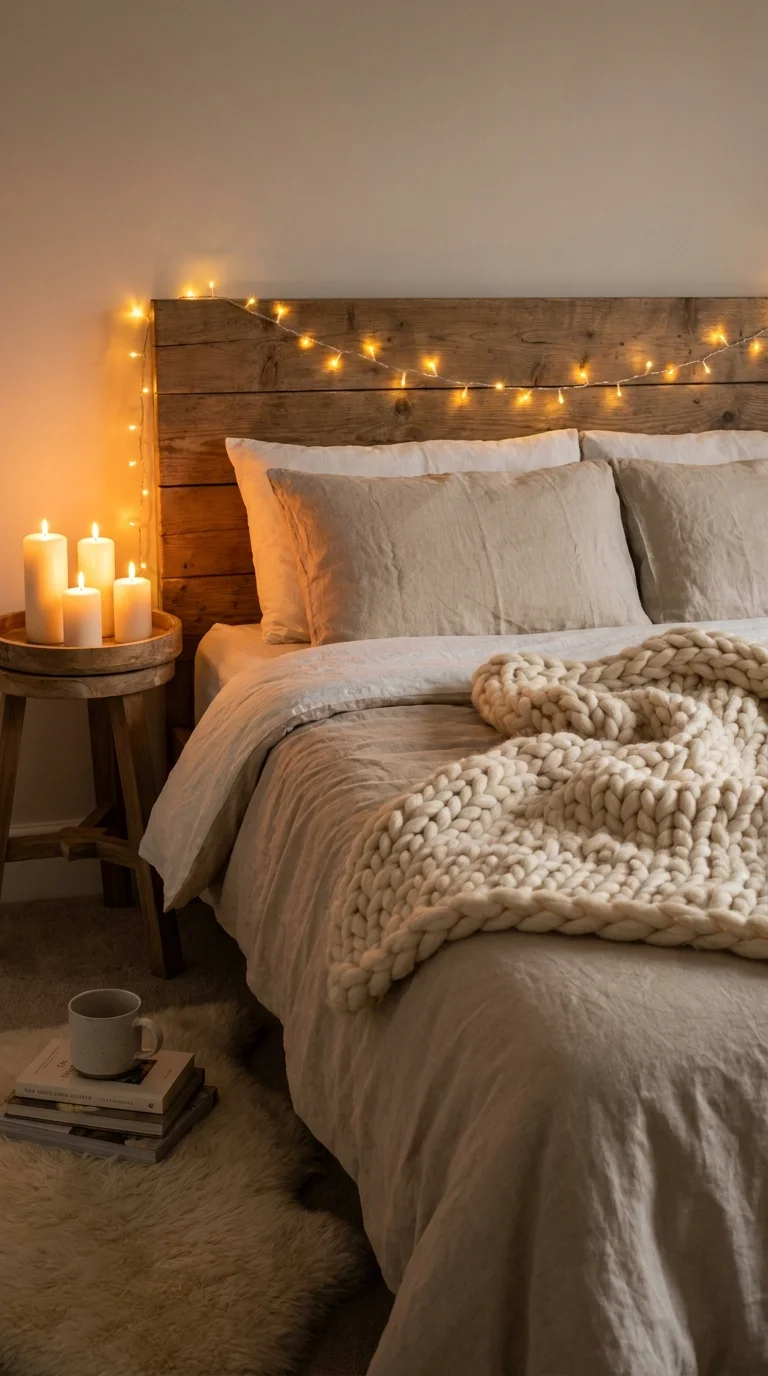
“Hygge” (pronounced HOO-gah) is the Danish concept of cosiness, warmth, and wellbeing — and it’s closely tied to Scandi bedroom design. This setup leans into that: warm lighting, soft layers, and a sense that the bedroom is genuinely the most comfortable place in the world.
The hygge essentials on a budget:
Lighting is everything here. Overhead lighting in a bedroom is basically the enemy of hygge. You want soft, warm, low light. A string of warm LED fairy lights (not the cool-toned ones — warm white only) draped along the headboard or around a window can completely transform a room. These cost around £5–£8 from IKEA or Amazon.
A plug-in wall lamp next to the bed (rather than a traditional bedside lamp) saves surface space and looks incredibly intentional. IKEA does several in the £10–£25 range that nail the Scandi look.
Candles are another hygge classic. You don’t need fancy scented ones — a cluster of plain white pillar candles on a wooden tray looks just as good.
My hygge fail: I put candles on my windowsill because it looked beautiful in photos. The first time I lit them and opened the window, one nearly caught my curtain. Keep candles away from anything flammable. Safety first, aesthetics second.
Set up 7: The Scandi Gallery Wall Bedroom
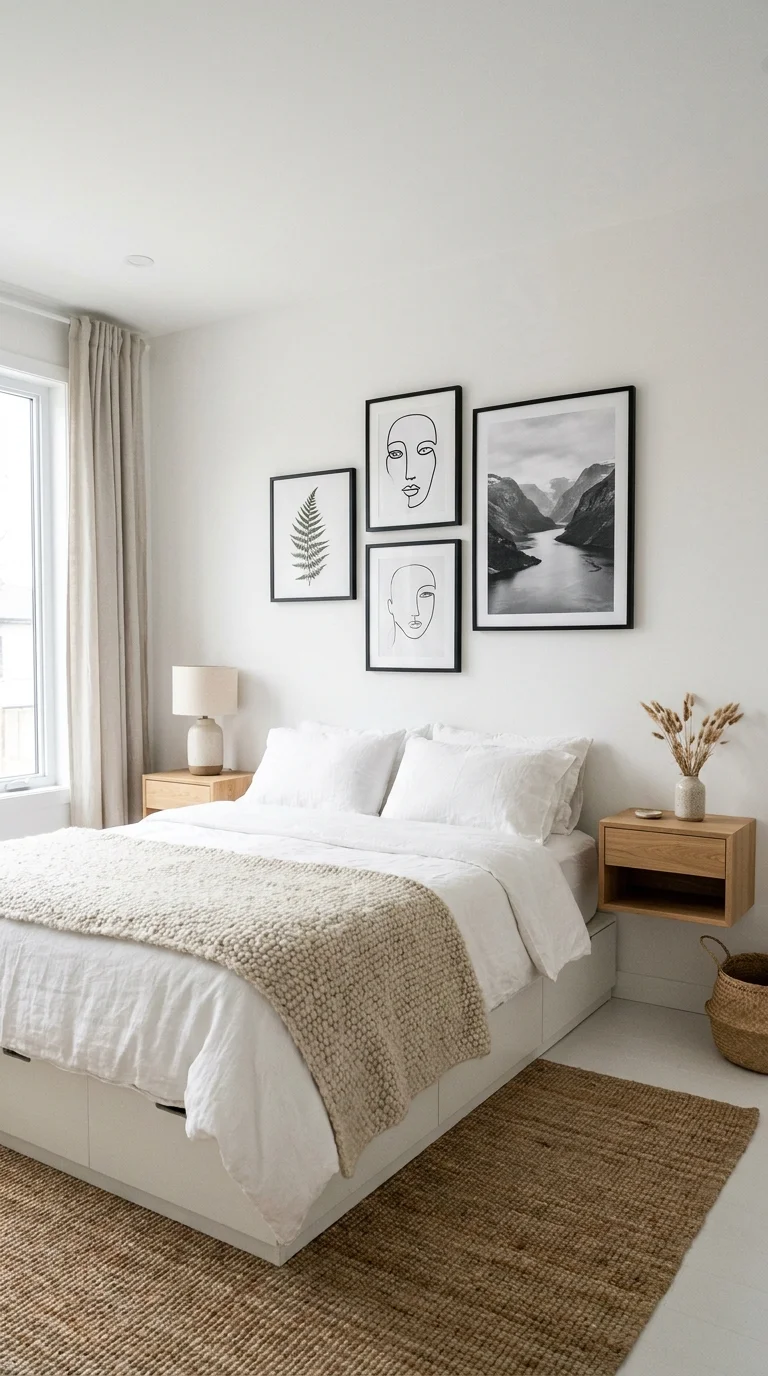
Gallery walls often feel maximalist, but a Scandi version is restrained, intentional, and mostly neutral.
The formula is simple:
- 3–5 frames, all the same colour (white or black)
- Mix of art types: one nature print, one abstract, one typography, or simple line art
- Odd spacing — not perfectly symmetrical, just deliberately arranged
Free art sources that work brilliantly:
- Unsplash — free high-res photography (search “minimal nature” or “black and white architecture”)
- Canva free tier — simple line art and abstract prints you can customise
- Etsy — loads of digital downloads for £1–£3 that you print yourself
I once made an entire gallery wall for £11. Three frames from IKEA (£3 each), two prints from Etsy downloads (£1.50 each printed at Boots), and one photo I took myself of a frost-covered leaf. It got more compliments than anything in that room.
Setup 8: The Scandi Bedroom with a Statement Headboard

A headboard is the focal point of any bedroom, but buying a nice one is expensive. Here’s the workaround.
Option 1: The fabric panel headboard. Buy a wooden canvas frame from a craft shop (usually under £10), stretch a piece of linen fabric over it, and hang it on the wall behind your bed. It looks custom, it’s incredibly easy to make, and it costs a fraction of a real headboard.
Option 2: The painted wall headboard. Paint a panel of colour directly on the wall behind the bed. A soft sage green, muted dusty blue, or warm terracotta in a simple arch or rectangular shape creates the illusion of a headboard without any furniture at all. This is huge on Pinterest right now and costs just the price of a small tester pot of paint (around £3–£5).
Option 3: Secondhand headboard makeover. Headboards come up on Facebook Marketplace constantly for next to nothing. An old fabric headboard that looks dated can be transformed with a can of spray paint (for wooden ones) or by recovering it with fresh fabric and a staple gun.
I did option two, and it genuinely changed the entire energy of my bedroom. Took about an hour and cost me £4 for a tester pot of sage green. People still ask where I bought my headboard — and I tell them I painted it. The reactions are always brilliant.
Setup 9: The Decluttered, Functional Scandi Bedroom

This might sound less exciting than the others, but honestly? It made the biggest difference in my bedroom. Scandi design is fundamentally about function and intentionality. Every item has a purpose. Nothing is there just to fill space.
The declutter step is free, and it might be the single most impactful thing you can do.
The Scandi declutter process:
Go through your bedroom and ask of every single item: does this need to be here, or am I just used to it being here? Charging cables draped everywhere, stacks of books you haven’t read in years, random bits on your dresser, decorative items you don’t actually love — all of it goes.
Then, address storage intentionally:
- Baskets are your best friend. A simple wicker or seagrass basket (under £10 from IKEA or H&M Home) hides clutter while looking beautiful
- A small wooden tray on your bedside corrals items so they look curated, not dumped
- Under-bed storage boxes keep things out of sight without expensive built-ins
The mistake almost everyone makes: They redecorate without decluttering first. You can add every beautiful Scandi item in the world, but if there’s still visual clutter underneath, it’ll never look right. Declutter first. Always.
Set up 10: The Complete Budget Scandi Bedroom Overhaul

This is the one I did myself — an end-to-end Scandi bedroom transformation on a strict budget of £150.
Here’s exactly what I bought and where:
| Item | Source | Cost |
|---|---|---|
| White linen-look duvet set | Dunelm sale | £18 |
| Cream chunky knit throw | H&M Home | £20 |
| Two boucle cushion covers | Marketplace | £4 |
| KNARREVIK bedside table x1 | IKEA | £18 |
| Plug-in wall lamp | IKEA (RANARP) | £22 |
| Jute rug (small) | IKEA (LOHALS) | £15 |
| Sage green wall paint (tester) | B&Q | £4 |
| Three black RIBBA frames | IKEA | £9 |
| Printed photos (Boots kiosk) | Boots | £3 |
| Eucalyptus bunch | Aldi | £3 |
| Small terracotta pot + plant | Lidl | £5 |
| Candles + wooden tray | TK Maxx | £9 |
| Total | £130 |
And I had £20 left over, which I spent on a bag of tea lights and a basil plant for the windowsill because I was on a roll.
The result? A bedroom that looks like it belongs in a Scandi interior magazine. My friends thought I’d spent thousands. I hadn’t. I’d spent less than a night out.
The Mistakes That Cost Me Time (and Some Money)
Since I want this to be genuinely useful and not just a pretty list, here are the things I wish I’d known before I started:
Mistake 1: Buying everything at once. I got excited and ordered a load of things online before I’d seen how they looked together. Two cushions got returned, a lamp didn’t suit the space at all, and I wasted money on delivery. Build the room slowly, one piece at a time. Live with each addition before buying the next.
Mistake 2: Going too cool-toned. Early on, I made my bedroom feel cold and clinical rather than warm and Scandi. The difference is in the undertones: go for warm whites (not blue-white), warm wood (not grey-washed), and warm lighting (2700K bulbs, not daylight).
Mistake 3: Ignoring scale. I bought a rug that was too small for under the bed, so it looked like a bath mat. In Scandi bedrooms, rugs should be large enough to extend a foot or two on each side of the bed. A bigger rug from IKEA (like the STOENSE or GASER) costs more but makes the room look twice as expensive.
Mistake 4: Copying instead of curating. The best Scandi bedrooms feel personal. A few items that genuinely mean something to you — a photo you love, a plant you grew yourself, a blanket from a trip — make it feel real rather than showroom-staged. Don’t just recreate a Pinterest board. Make it yours.
A Few Tools That Helped Me Along the Way
If you want to plan before you buy, the IKEA Place app lets you use augmented reality to see IKEA furniture in your actual room. It’s free and genuinely useful for checking the scale before you commit.
For finding secondhand Scandi-style pieces, Facebook Marketplace, Vinted (yes, they now do homeware), and Depop are all worth checking regularly. Set up saved searches for “linen”, “oak”, “wooden lamp”, “scandi”, and you’ll be notified when new things are listed.
Pinterest boards are brilliant for reference, but I’d suggest creating a dedicated “bedroom” board and only saving things you’d actually buy — not just things you admire. It helps keep your vision focused and stops you from buying random pretty things that don’t work together.
Finding Your Own Scandi Style
The beautiful thing about Scandi design is that it’s not prescriptive. No rule says you must have a sheepskin rug and a geometric pendant light. The principles — simplicity, natural materials, warmth, function, and a bit of cosiness — can be applied in a thousand different ways.
Some people’s Scandi bedrooms are almost entirely white. Others are built around warm, earthy tones and lots of texture. Some lean into the hygge coziness; others prefer the cleaner, more architectural Nordic look.
The through-line is always intentional. Every item is chosen, placed, and loved. Nothing is accidental. Nothing is there by default.
That’s what makes Scandi style so achievable on a budget — because buying less, more intentionally, is literally the point. You’re not trying to fill a space. You’re trying to create one.
My bedroom today looks nothing like the cardboard-box-bedside-table situation I started with. It’s calm, warm, and genuinely my favourite room in the flat. And almost everything in it came from IKEA, a charity shop, a marketplace listing, or a tester pot of paint.
You really don’t need to spend much. You just need to spend thoughtfully.
Start with one setup from this list — whichever feels most like you — and build from there. I promise, once you start, it’s hard to stop. In the best possible way.

Shahid Nawaz is a home and garden content writer at Garden Skillz with over 4 years of experience researching and writing about gardening, plant care, and DIY home improvement. He specializes in turning complex horticultural topics into practical, easy-to-follow guides for beginners and experienced growers alike. Shahid has written extensively on flowering plants, indoor greenery, and seasonal garden care.