I killed a lot of plants before I figured this out.
Not because I didn’t care — honestly, I was too careful with some of them. Watering every day, fussing over them, moving pots around, trying to find “the perfect spot.” But the south-facing side of my yard? Total wasteland for years. Baking hot, bone dry by noon, no shade in sight. I watched hostas shrivel. I saw impatiens turn to crispy little ghosts. I even tried some “heat-tolerant” annuals from the garden center that lasted maybe three weeks before they gave up.
Then one summer, my neighbor — a retired woman who has gardened for 40 years — walked over and said, “Honey, stop fighting your yard. Work with it.”
She handed me a list of perennials. Full sun, drought-tolerant, and blooms every year without you lifting a finger.
I planted them. And everything changed.
That was four years ago. Most of those plants are still going strong. Some have spread so much that I’ve had to divide them and give starts away to friends. A couple of self-seeded and popped up in new spots on their own.
This article is basically that list she gave me — expanded with everything I’ve learned since. If you’ve got a hot, sunny spot that’s been killing everything you put in it, this one’s for you.
What “Full Sun” Actually Means (And Why It Matters)?
Before we get into the plants, let’s clear something up. “Full sun” on a plant tag means at least 6 hours of direct sunlight per day. But there’s a huge difference between 6 hours of morning sun and 6 hours of afternoon sun.
Morning sun is gentler. Afternoon sun — especially in zones 6 through 9 — is intense. It bakes the soil, stresses the roots, and punishes anything that isn’t truly adapted to heat.
Most of the plants I’m going to recommend can handle afternoon sun just fine. Some actually prefer it. That’s why they’re on this list and not the dozens of “full sun” plants I tried before them that quietly failed.
Also worth knowing: full sun perennials that “always bloom” aren’t magic. They need decent soil to start, at least a little water while they’re getting established in the first season, and some basic care once a year. But after that first year? They’re essentially on their own.
The 15 Proven Full Sun Perennials
1. Black-Eyed Susan (Rudbeckia hirta)

If I had to pick one plant to recommend to every beginner, it would be this one. No contest.
Black-eyed Susans are cheerful, golden yellow, and almost aggressively easy to grow. They bloom from midsummer all the way through fall, sometimes into October if you don’t get a hard frost too early. I planted three small plugs four years ago. This year, I have what can only be described as a colony.
They self-seed freely, which some people love, and others find annoying. If you want to keep them contained, deadhead them before the seeds drop. If you want them to spread, just let them do their thing.
They’ll grow in clay, sandy soil, lean soil — they honestly don’t care. The one thing they hate? Consistently wet feet. Make sure they have reasonable drainage and they’ll reward you for years.
Bloom time: July – October
Height: 2–3 feet
My tip: Cut them back by half in late June (the “Chelsea chop”) to get a second flush of blooms and sturdier stems that don’t flop over.
2. Coneflower (Echinacea purpurea)
Coneflowers are iconic for a reason. They’re tough as nails, beautiful, and pollinators absolutely lose their minds over them.
I planted a mix of purple, white, and coral coneflowers along my fence line three years ago. Every single one came back. The purple ones actually got bigger and started spreading, while the white variety stayed put and bloomed reliably. The coral ones were slightly more finicky but still came back strong in years two and three.
One lesson I learned: don’t deadhead them too aggressively. The seed heads feed goldfinches all winter long, which is one of the best gardening perks imaginable. I trim the plants down to a few inches in early spring, then let them grow.
They can handle drought once established, though they appreciate a deep watering during really dry stretches. I use a soaker hose on a timer for my main perennial bed — a $35 setup from Amazon — and I run it for about 30 minutes twice a week in July and August. That’s it.
Bloom time: June – September
Height: 2–4 feet
My tip: Buy named varieties from a reputable nursery. The cheap mixed packs from big box stores can produce weak plants that don’t come back reliably.
3. Lavender (Lavandula angustifolia)
Here’s where I made my first big mistake.
I bought English lavender, planted it in rich, amended soil because I thought that was “the right thing to do,” and watched it struggle and eventually die over the winter. Turns out lavender hates rich soil. It evolved on rocky Mediterranean hillsides. It wants lean, alkaline, fast-draining soil.
Second attempt: I mixed in a ton of pea gravel, raised the bed about 4 inches, and planted Hidcote and Munstead varieties (both are more cold-hardy than French lavender). That was three years ago. They’ve come back every spring, bloomed each summer beautifully, and filled the entire area with the most incredible scent on a warm evening.
If you’re in zone 5 or colder, put a thin layer of gravel around the base in fall — it helps prevent the wet/freeze cycle that kills lavender more often than actual cold does.
Bloom time: June – August
Height: 1–2 feet
My tip: Cut it back by about a third right after flowering, but never cut into old woody stems. New growth only comes from green wood.
4. Salvia (Salvia nemorosa)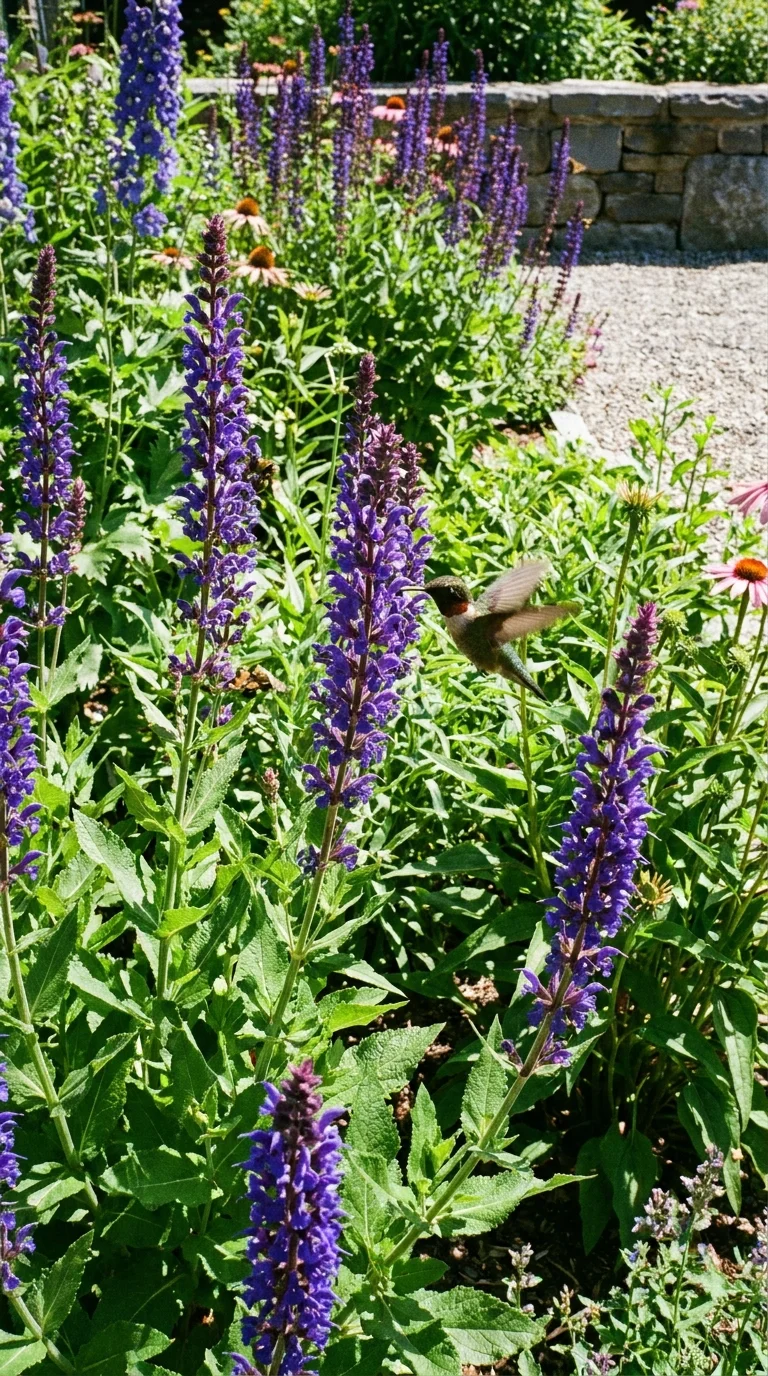
Catnip’s more glamorous cousin. Salvia produces tall spikes of deep purple or blue flowers that hummingbirds and bees can’t resist.
It’s one of the longest-blooming perennials I grow. The ‘May Night’ variety starts in late spring, and if you shear it back after the first flush, it blooms again — and sometimes a third time before frost.
It’s also one of the most deer-resistant plants on this list, which matters a lot where I live. The deer have eaten my hostas down to stumps, but they walk right past the salvia.
Plant it in groups of three or five for the most visual impact. Lone plants look a little spindly. When you get a big clump of them blooming together, it stops people in their tracks.
Bloom time: May – September (with deadheading)
Height: 18–24 inches
My tip: ‘Caradonna’ has darker stems and a slightly more elegant habit than ‘May Night.’ Worth seeking out.
5. Daylily (Hemerocallis)
The name “daylily” comes from the fact that each flower only lasts one day. But a single plant has dozens of buds, so the overall show goes on for weeks.
I have a row of ‘Stella de Oro’ along my driveway — these are compact, reblooming, and they’ve been there for six years. I divided them once, gave half to a friend, and they just kept going. I also have some of the big orange “ditch lily” types that came with the house when I bought it. Those things are virtually indestructible.
Daylilies tolerate clay soil, sandy soil, neglect, competition, and general abuse. They won’t bloom well in deep shade, but anything from part sun to full blasting sun is fine.
One thing to be aware of: daylilies are extremely toxic to cats. Not a problem if you don’t have cats, but worth knowing.
Bloom time: June – August (reblooming varieties extend to September)
Height: 1–4 feet depending on variety
My tip: Deadhead spent blooms daily — it takes 30 seconds and keeps the plant looking clean and puts energy toward new buds.
6. Yarrow (Achillea millefolium)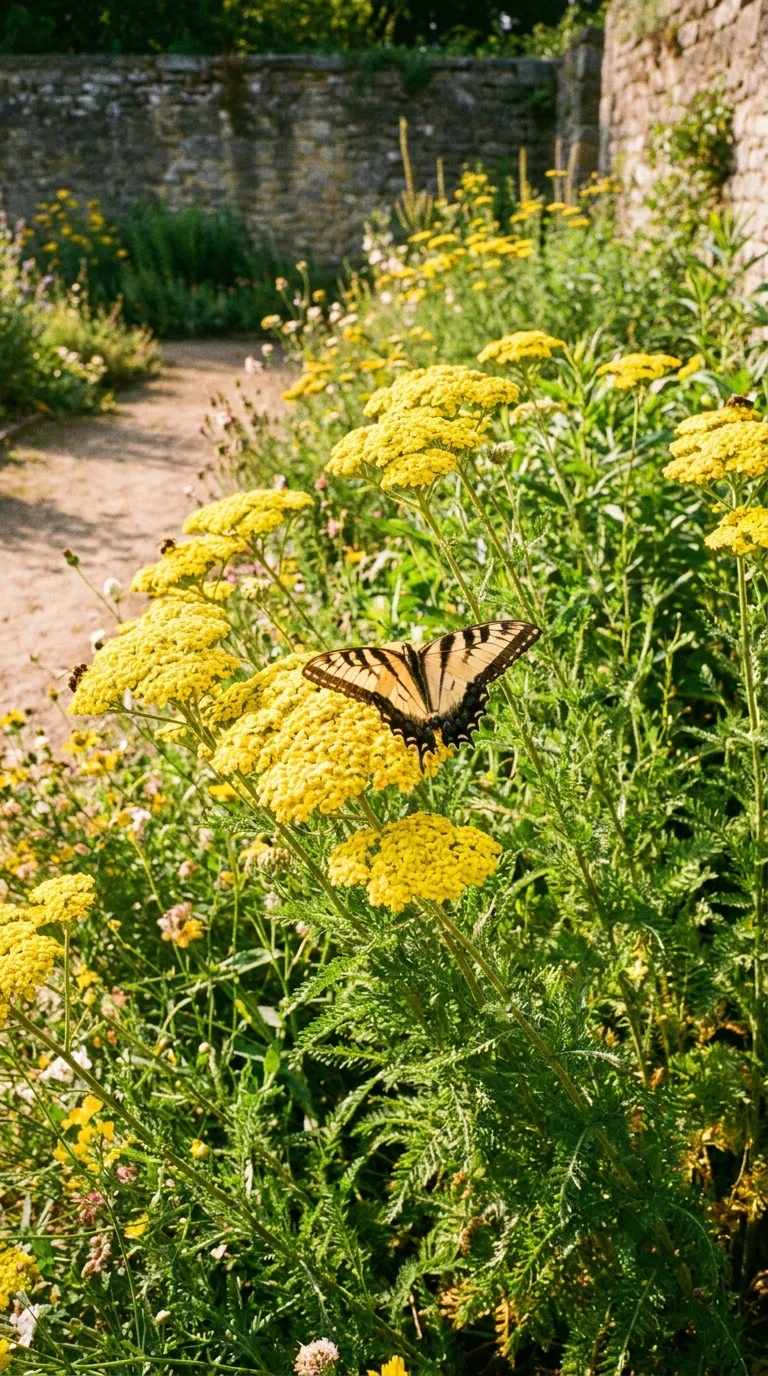
Yarrow is one of those plants that looks delicate but is actually incredibly tough. The feathery foliage, the flat-topped flower clusters in yellow, red, pink, or white — it has a wildflower feel that works beautifully in naturalistic gardens.
It blooms for a long time, tolerates poor dry soil better than almost anything, and spreads in a manageable way. I’ve never had it become invasive, though I’ve read it can get aggressive in very rich soil. Keep it lean.
Butterflies love it. I watched a swallowtail spend about 20 minutes on a single yarrow cluster one afternoon. It’s become one of my favorite plants, partly for the wildlife it brings.
Bloom time: June – September
Height: 2–3 feet
My tip: Cut the whole plant back by half after the first bloom to encourage a second flush. The dried seed heads are also beautiful and hold through winter.
7. Russian Sage (Perovskia atriplicifolia)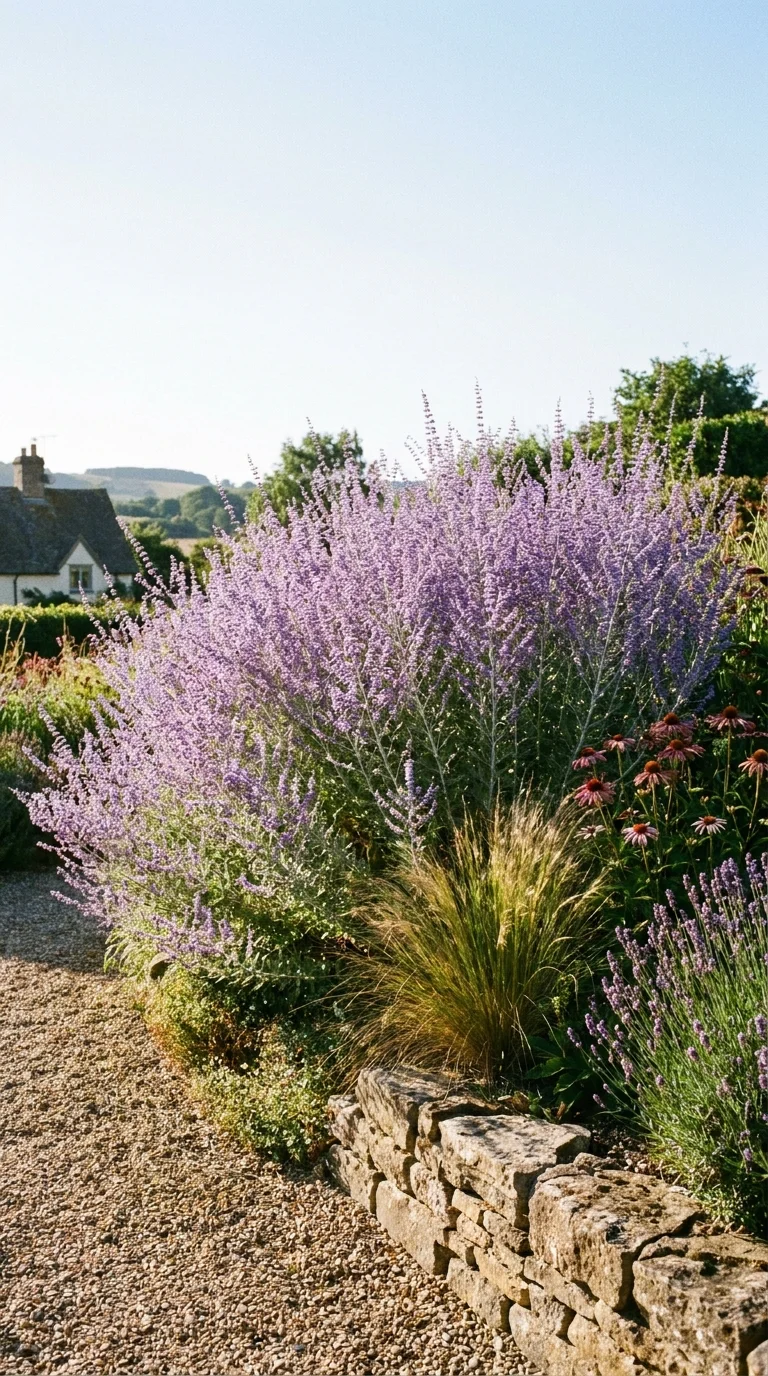
If you’ve ever seen a plant that looks like it’s producing a haze of purple mist, that was probably Russian sage.
This is a big, bold perennial. Give it space — it can get 3 to 4 feet wide and tall. But when it blooms, it’s absolutely stunning. The silvery stems and lavender-blue flowers catch light beautifully, and it blooms for months.
It’s also one of the most drought-tolerant plants on this list. Once established, it basically doesn’t need supplemental water at all in normal rainfall years. I have a patch that gets zero water from me — just rain — and it’s been thriving for four years.
Cut it back hard in spring (to about 6 inches) once you see new green growth starting. It looks dead through winter — don’t panic and dig it up in March. Give it until late April.
Bloom time: July – October
Height: 3–4 feet
My tip: It’s technically a sub-shrub, not a true perennial, but it behaves like one. Plant it where it has room to spread, and it’ll be one of your best performers.
8. Coreopsis (Coreopsis grandiflora or verticillata)
Coreopsis is sunshine in plant form. Bright yellow flowers, fine-textured foliage, blooms from early summer until frost if you keep it deadheaded.
The threadleaf types (C. verticillata) like ‘Moonbeam’ and ‘Zagreb’ are especially reliable. I’ve had ‘Moonbeam’ come back for five consecutive years. ‘Zagreb’ is a brighter yellow and slightly more compact.
One thing to know: the big-flowered grandiflora types are sometimes short-lived perennials — they might only last 2-3 years. But they self-seed, so you’ll always have new plants coming. The verticillata types are more reliably long-lived.
They want full sun and decent drainage. In wet clay soil, they’ll struggle. In sandy or amended beds, they’re basically unstoppable.
Bloom time: June – September
Height: 1–2 feet
My tip: Shear the whole plant back by about a third in July — it looks rough for a week, then explodes back with fresh blooms.
9. Sedum/Stonecrop (Hylotelephium spectabile — formerly Sedum)
The tall sedums — ‘Autumn Joy’ being the most famous — are workhorses of the late-season garden. They don’t bloom until late summer, but when everything else is winding down, they’re just hitting their stride.
I grow ‘Autumn Joy’ and a newer variety called ‘Maestro,’ which has darker stems. The flower heads open as light pink and deepen to dusty rose, then rust, then copper — and the dead seed heads look beautiful through winter and provide seeds for birds.
They’re also incredibly easy. Plant them, water them once or twice while they settle in, and then basically forget about them. They’ll do their thing.
Monarch butterflies and bees cover them in September when other food sources are getting scarce. This alone makes them worth growing.
Bloom time: August – October
Height: 18–24 inches
My tip: In early summer, when they’re about 6 inches tall, you can divide the clumps and stick new divisions in other spots. They root almost instantly.
10. Catmint (Nepeta faassenii)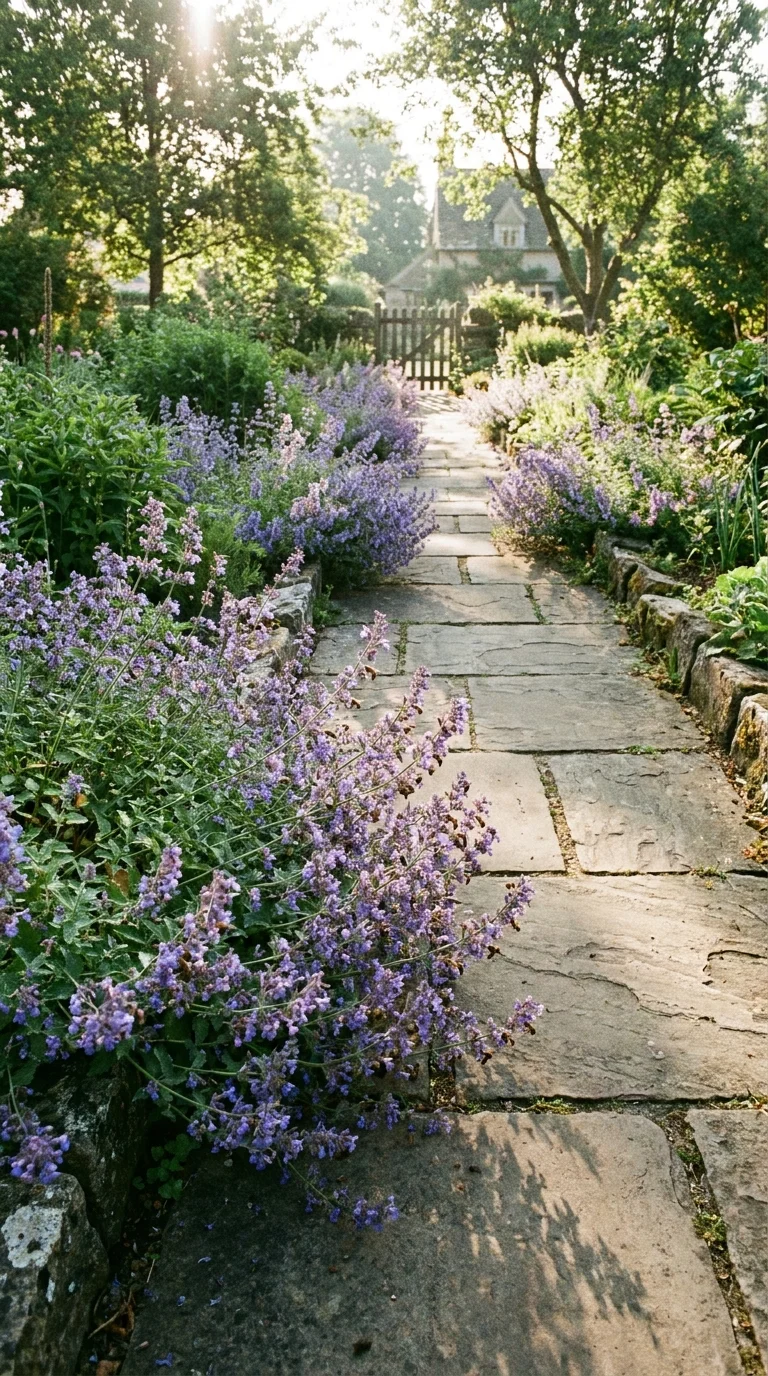
Not to be confused with catnip (though yes, cats are drawn to it). Catmint is a sprawling, soft-looking perennial with lavender-blue flowers that blooms massively in spring and then again in late summer after a trim.
I edge one of my pathways with it. It softens the edge beautifully, spills over just enough to look natural, and the bees adore it. I probably have 15 feet of it total now, all grown from three small plants I started with.
After the first big bloom in May-June, cut it back by about half or two-thirds. It looks terrible for about two weeks, then comes back lush and blooms again by August. This two-flush bloom habit makes it one of the best bang-for-your-buck plants in the garden.
Bloom time: May – June, then August – September
Height: 12–18 inches
My tip: ‘Walker’s Low’ is a misnomer — it gets 2-3 feet wide and about 18 inches tall. Give it more space than you think it needs.
11. Blanket Flower (Gaillardia x grandiflora)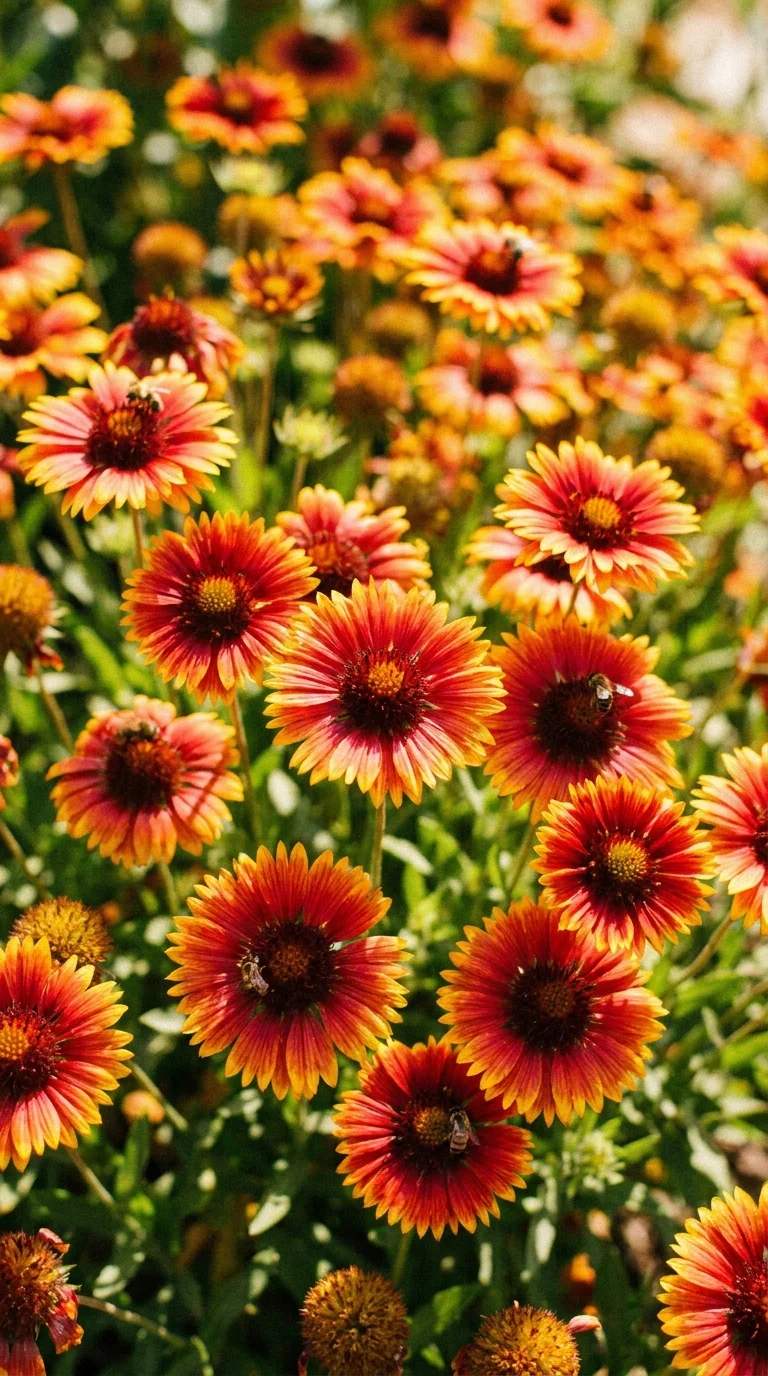
Blanket flowers look like someone painted them. The concentric rings of red, orange, and yellow are almost too vivid to be real. They’re native to North America, which means they’re perfectly adapted to heat, drought, and poor soil.
They bloom from June until frost with minimal deadheading. I’ve found they’re one of the most consistent bloomers in my hot south-facing bed.
The one caveat: they can be short-lived in heavy, wet soil. In well-drained or sandy soil, they’ll come back reliably for years and self-seed lightly. In clay, they might only last 2-3 years. Still worth growing — even as a short-lived perennial, they provide so much color.
Bloom time: June – October
Height: 12–24 inches
My tip: ‘Arizona Sun’ is a compact variety that stays about 12 inches tall and is one of the longest-blooming. Great for the front of a border.
12. Penstemon (Penstemon digitalis or barbatus)
Penstemons are tubular-flowered beauties that hummingbirds specifically seek out. The white-flowered ‘Husker Red’ variety (which has burgundy foliage) is one of the easiest and most striking.
I planted four ‘Husker Red’ penstemons three years ago. They’ve all survived, spread into nice clumps, and self-seeded a few extra plants around them. The foliage alone is attractive all season — the flower stalks are a bonus.
They want full sun and good drainage, and that’s pretty much it. They’re native to the American Midwest and East, so they’re cold-hardy through zone 3.
Bloom time: June – July
Height: 2–3 feet
My tip: Leave the seed heads over winter for the birds, then cut the plant back in early spring before new growth starts.
13. Shasta Daisy (Leucanthemum x superbum)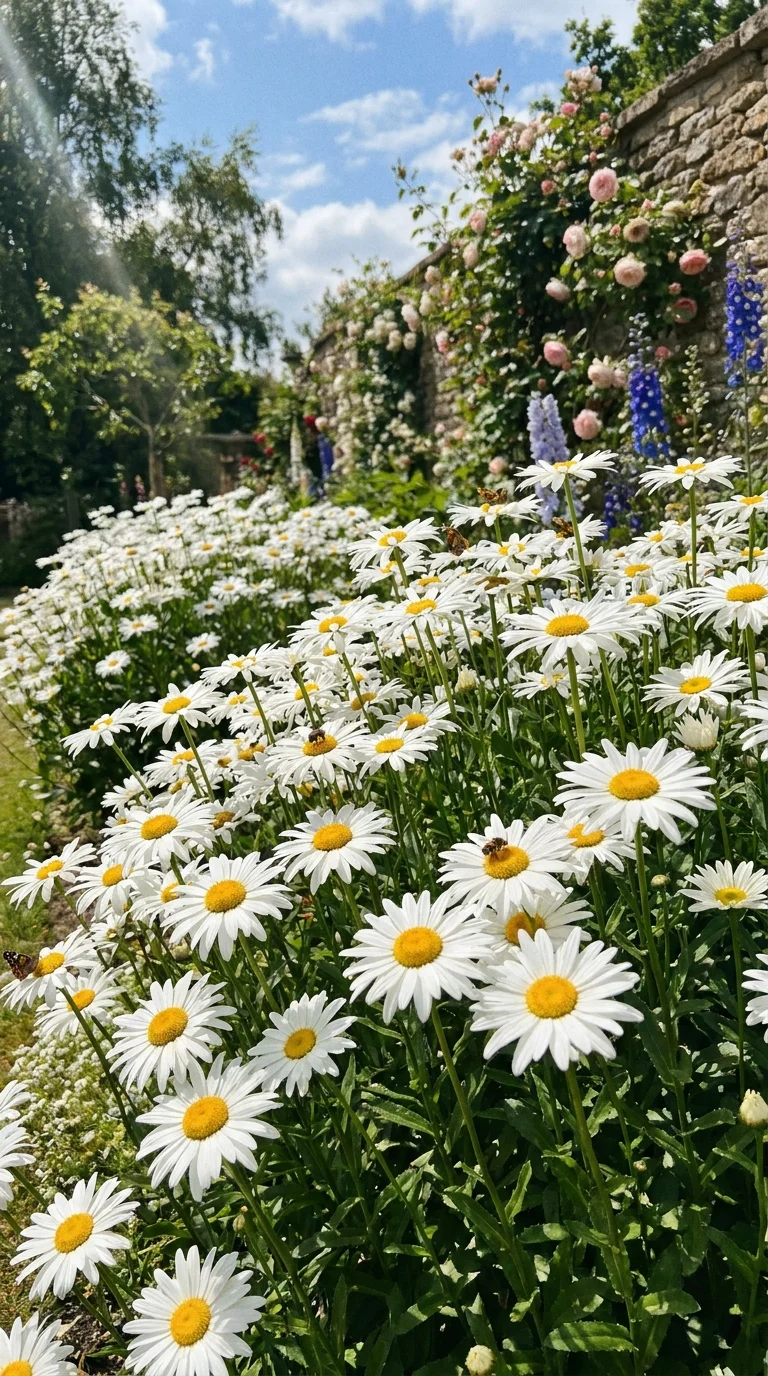
Classic, cheerful, and clean-looking. Shasta daisies have that crisp white-and-yellow look that goes with everything. They bloom heavily in early summer and can be coaxed into a second bloom if you deadhead consistently.
I have ‘Becky’ growing in my main border — it’s one of the tallest and sturdiest varieties, doesn’t need staking, and comes back reliably every year. I also tried ‘Snowcap,’ which is more compact and good for the front of a border.
They need decent soil — they’re not quite as tolerant of lean, dry conditions as some others on this list. But in an average garden bed with decent moisture, they’re very reliable.
Bloom time: June – August
Height: 2–3 feet (‘Becky’) or 12 inches (‘Snowcap’)
My tip: Divide them every 3-4 years in spring or fall. The centers die out if you don’t, and you get more blooms from fresh divisions anyway.
14. Agastache (Agastache foeniculum / rupestris)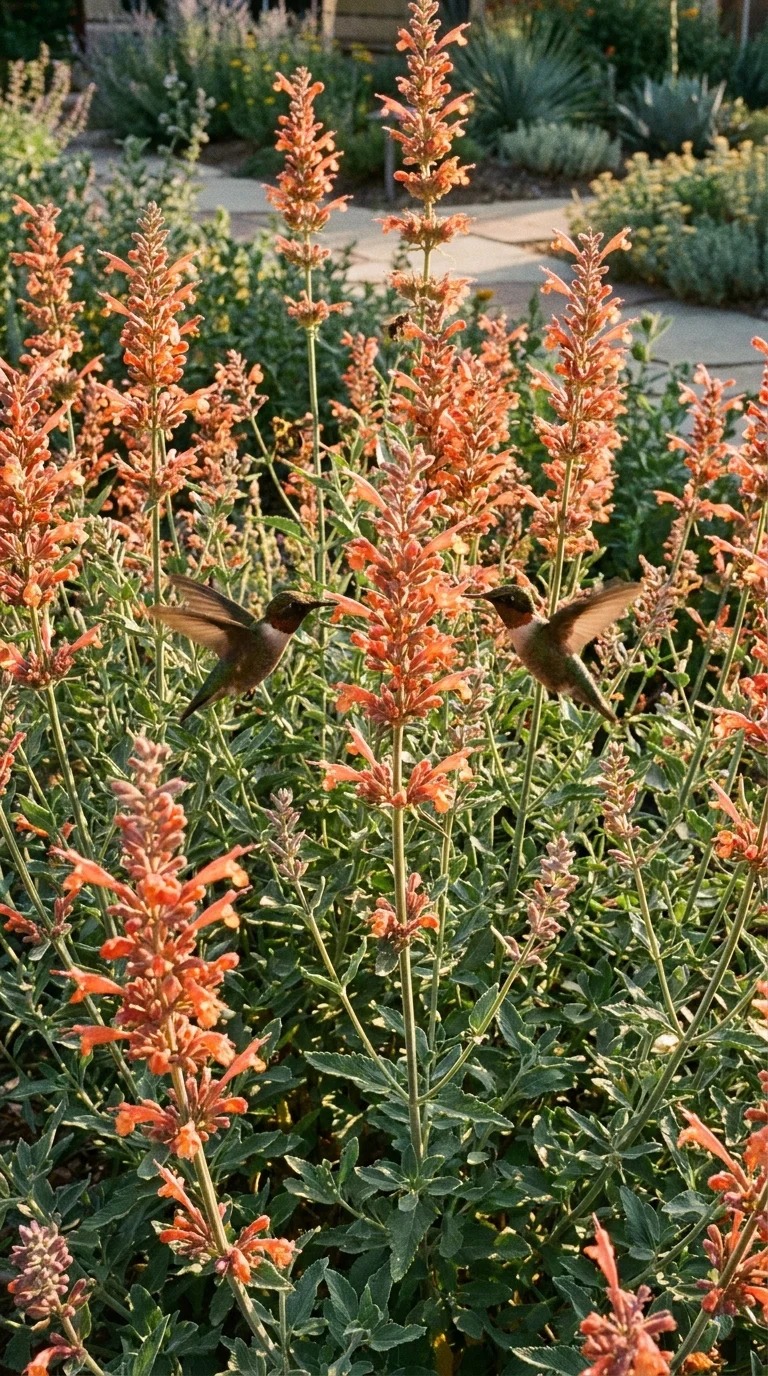
Agastache — sometimes called hyssop or hummingbird mint — is one of the most underused perennials out there. The flower spikes in orange, pink, purple, or blue are held upright for months, and hummingbirds are genuinely obsessed with them.
I’ve grown ‘Blue Fortune,’ ‘Kudos Coral,’ and ‘Rosie Posie.’ All three came back reliably in zone 6, all three bloomed from July through late September, and all three attracted hummingbirds daily.
The anise-scented foliage is also a deer deterrent — deer find it unappealing. Another big win.
They want excellent drainage. In wet winters, they can rot. A slightly raised bed or adding pea gravel to the planting hole helps a lot.
Bloom time: July – October
Height: 2–4 feet depending on variety
My tip: ‘Blue Fortune’ is the hardiest variety and comes back most reliably in cold zones. Start there before trying the more exotic colors.
15. Rudbeckia fulgida ‘Goldsturm’
Yes, it’s another Rudbeckia — but it deserves its own spot on this list because it’s different enough from the common black-eyed Susan to warrant separate attention.
‘Goldsturm’ is a specific cultivar that forms a very tidy, upright clump. It doesn’t self-seed aggressively (a plus if you want a more controlled garden), blooms incredibly reliably, and the flowers are almost perfectly round and symmetrical. It’s won multiple garden awards for good reason.
I use it as a “filler” plant between larger perennials. It holds its own from late July through October, and the seed heads feed birds all winter. It’s also incredibly easy to divide — I’ve split my original plants four times now, and every division took root without any issues.
Bloom time: Late July – October
Height: 18–24 inches
My tip: Plant it in masses of three to five for the biggest visual impact. A single plant looks fine; a drift of them looks incredible.
Setting Up Your Full Sun Bed: The Basics
Okay, so you’ve got your plant list. Here’s how to actually set up the bed so these plants thrive.
Soil prep matters most in year one. You don’t need to do this every year, but getting the soil right at planting makes a huge difference. For most full-sun perennials, you want:
- Good drainage (if your soil stays soggy for more than a day after rain, amend it with coarse sand or raise it)
- Average fertility (don’t go crazy with compost — many of these plants prefer leaner conditions)
- A neutral pH around 6.5–7.0
If you’re starting from scratch, I’d loosen the soil about 12 inches deep, remove any weeds, and work in a 2-inch layer of compost. That’s it. Don’t fertilize heavily — you’ll get lots of leaves and fewer flowers.
Mulch is your best friend. A 2-3 inch layer of shredded wood mulch keeps the soil cooler in summer, retains moisture, and suppresses weeds. I refresh mine every spring. This single step probably cuts my watering needs in half during summer.
Water deeply but infrequently. The goal is to train roots to grow deep, where moisture is more consistent. Frequent shallow watering keeps roots near the surface, where they’re more vulnerable to heat and drought. I water deeply once or twice a week during establishment, then back off to once a week (or less) once plants are settled in.
Mistakes I Made (So You Don’t Have To)
Planting too close together. I consistently underestimated how big things get. Russian sage, catmint, and coneflowers especially — they need more space than you think. Now I plan for 18-24 inches minimum between most plants, even when they look tiny at planting.
Not deadheading. Leaving spent blooms shortens the bloom season significantly on many of these plants. I keep a small pair of Fiskars pruning snips ($12 at any garden center) hanging near the back door and spend 5 minutes walking through the beds every few days. Game changer.
Skipping the Chelsea chop. This is a technique where you cut plants back by one-third to one-half in late May or early June. It sounds scary but it delays bloom time slightly and results in shorter, sturdier plants with more flowers. I now do it every year on black-eyed Susans, rudbeckia, and asters.
Watering in the evening. I used to water at night out of convenience. It kept the foliage wet overnight, which is a fast track to fungal issues. I switched to morning watering and lost a soaker hose timer to make it automatic. Much better.
Buying the wrong lavender. French lavender is gorgeous but not hardy in cold winters. English lavender (angustifolia) is the one to buy if you’re in zones 5-7. I learned this the expensive way.
The Tools That Actually Help
I’m not one of those gardeners with $500 worth of specialty tools. My setup is pretty simple:
- Fiskars bypass pruners — I’ve had mine for 8 years. Clean cuts, easy to use, affordable.
- Soaker hose on a timer — This is the single best gardening investment I’ve made. I use a basic mechanical timer (about $10) connected to a flat soaker hose I run through my beds.
- Garden Answers app — When I see something weird happening to a plant, I take a photo, and this app identifies it almost instantly. Saved me from misdiagnosing problems a dozen times.
- A wheelbarrow — For moving soil, mulch, and dividing large clumps. The folding kind is great if you’re short on storage space.
When Things Don’t Come Back?
Every gardener has had that experience of going out in spring, looking at where a beloved plant was, and seeing… nothing. Here’s what’s usually happening:
Heaving — Freeze-thaw cycles in late winter can literally push shallow-rooted plants out of the ground. If you see roots exposed, gently press the plant back down and mulch around it. Happens most often with new plantings.
Rot — Wet winter conditions kill more “full sun perennials” than cold does. If you have drainage problems, address them. Raised beds or adding grit to planting holes helps a lot.
They need more time — Some plants, like agastache and Russian sage, are really slow to show life in spring. I marked my Russian sage with a small stake after I almost ripped it out, thinking it was dead. Give things until late May before giving up.
Incorrect hardiness — A plant rated “zone 6” can still die in zone 6 if it was planted late in fall and didn’t get established before the ground froze, or if you had an unusually brutal winter.
Putting It All Together
If I were starting a new full-sun perennial bed from scratch tomorrow, here’s what I’d plant:
For early season color: Salvia, Catmint, Penstemon
For mid-summer punch: Coneflower, Coreopsis, Black-Eyed Susan, Daylily, Yarrow
For late season: Sedum, Russian Sage, Agastache, Blanket Flower, Rudbeckia ‘Goldsturm’
For structure and fragrance: Lavender, Shasta Daisy
That’s a bed that would bloom continuously from May through October, need minimal water after the first season, feed pollinators all season long, and come back every year without me starting from scratch.
The hot, sunny side of my yard used to be the part of my garden I was embarrassed about. Now it’s the part I’m most proud of. Not because I did anything complicated — but because I finally stopped fighting my conditions and started working with them.
Your problem spot? It’s not a failure waiting to happen. It’s just waiting for the right plants.
Have a question about a specific plant on this list, or a full-sun perennial I didn’t mention that you love? Drop it in the comments — I read every one.

Shahid Nawaz is a home and garden content writer at Garden Skillz with over 4 years of experience researching and writing about gardening, plant care, and DIY home improvement. He specializes in turning complex horticultural topics into practical, easy-to-follow guides for beginners and experienced growers alike. Shahid has written extensively on flowering plants, indoor greenery, and seasonal garden care.